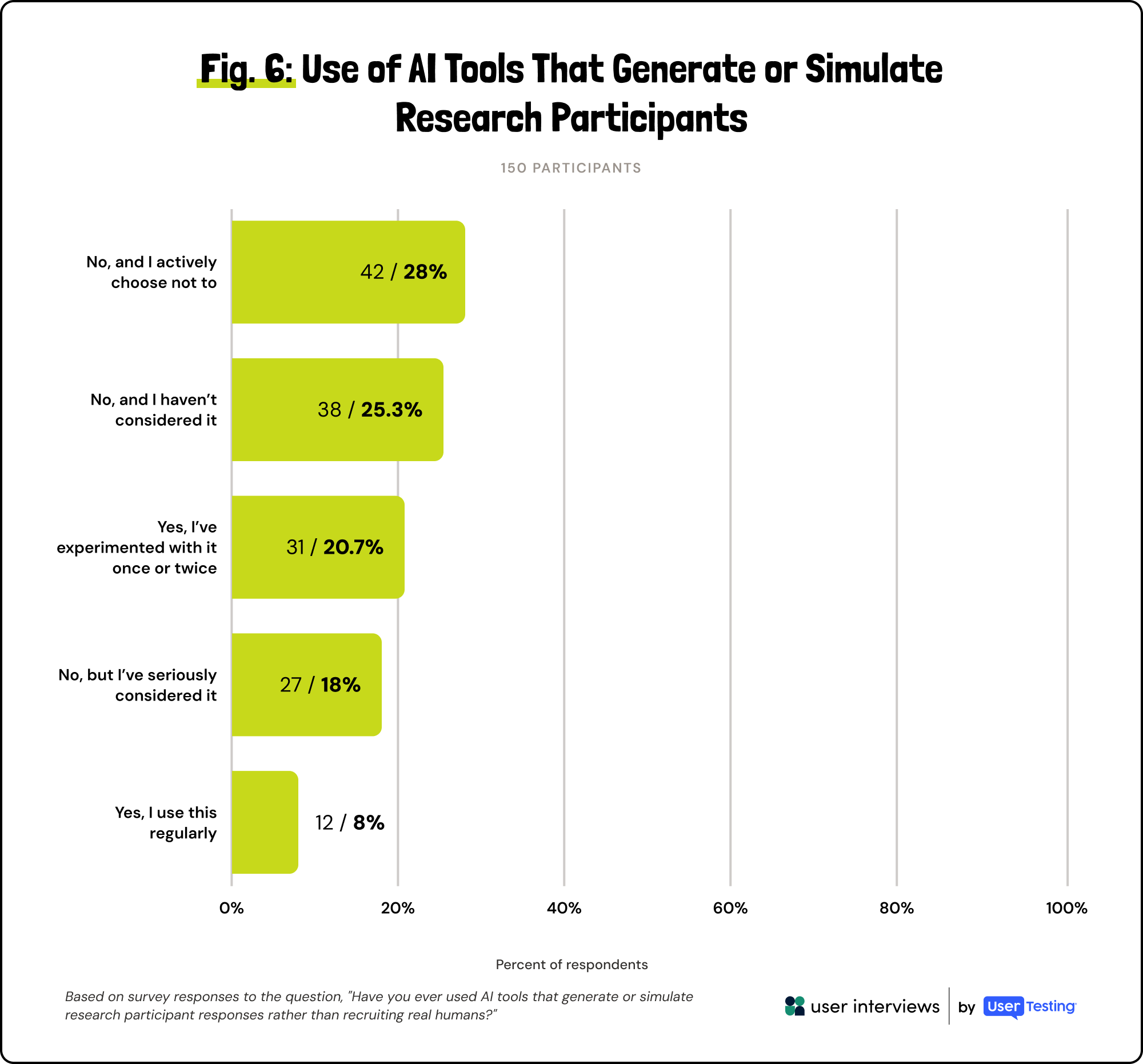

Synthetic users have made their way into the research zeitgeist—from how they’re defined to pointed conversations around guardrails and governance. The topic of synthetic users has also invited its fair share of punditry—with some researchers seeing synthetic users as a means of “helping teams extend the value of every research dollar”1 while others have characterized synthetic outputs as “shallow” and “sycophantic”2.
But how do researchers actually feel about synthetic users today? And does the increased attention around this recent research phenomena reflect its practical applications and true sentiment within the community?
In May 2026, we surveyed 150 researchers on their use of synthetic users and supplemented our quantitative analysis with five in-depth moderated interviews of senior practitioners to help us cut through the noise and get closer to answering these questions, and just as importantly, understand the role synthetic users can play now and in the future.
More on our key takeaways, analysis, and methodology below. You can also download the anonymized dataset to take your own deep dive into the data, along with guidance on best practices sourced from the research community.
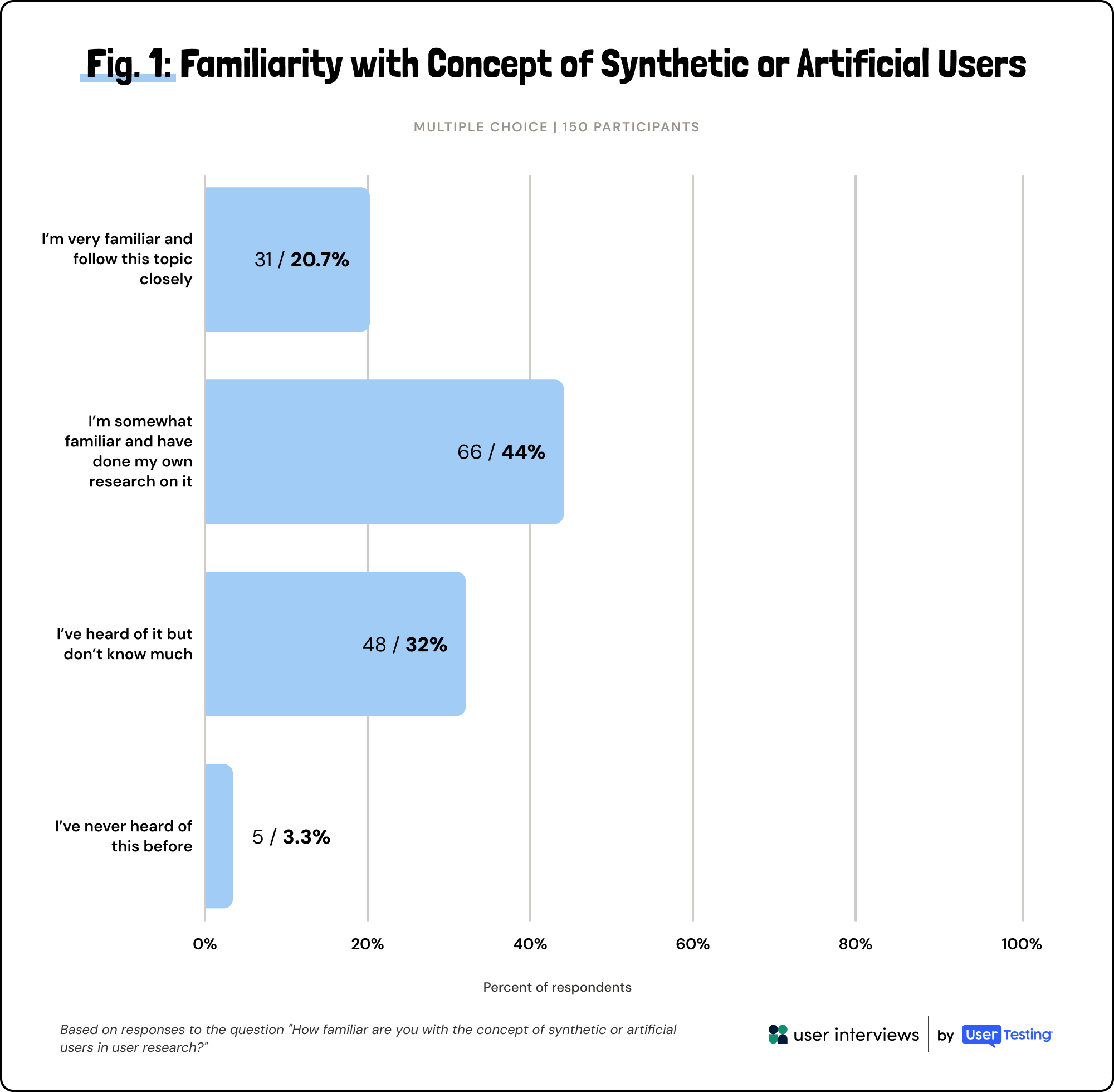
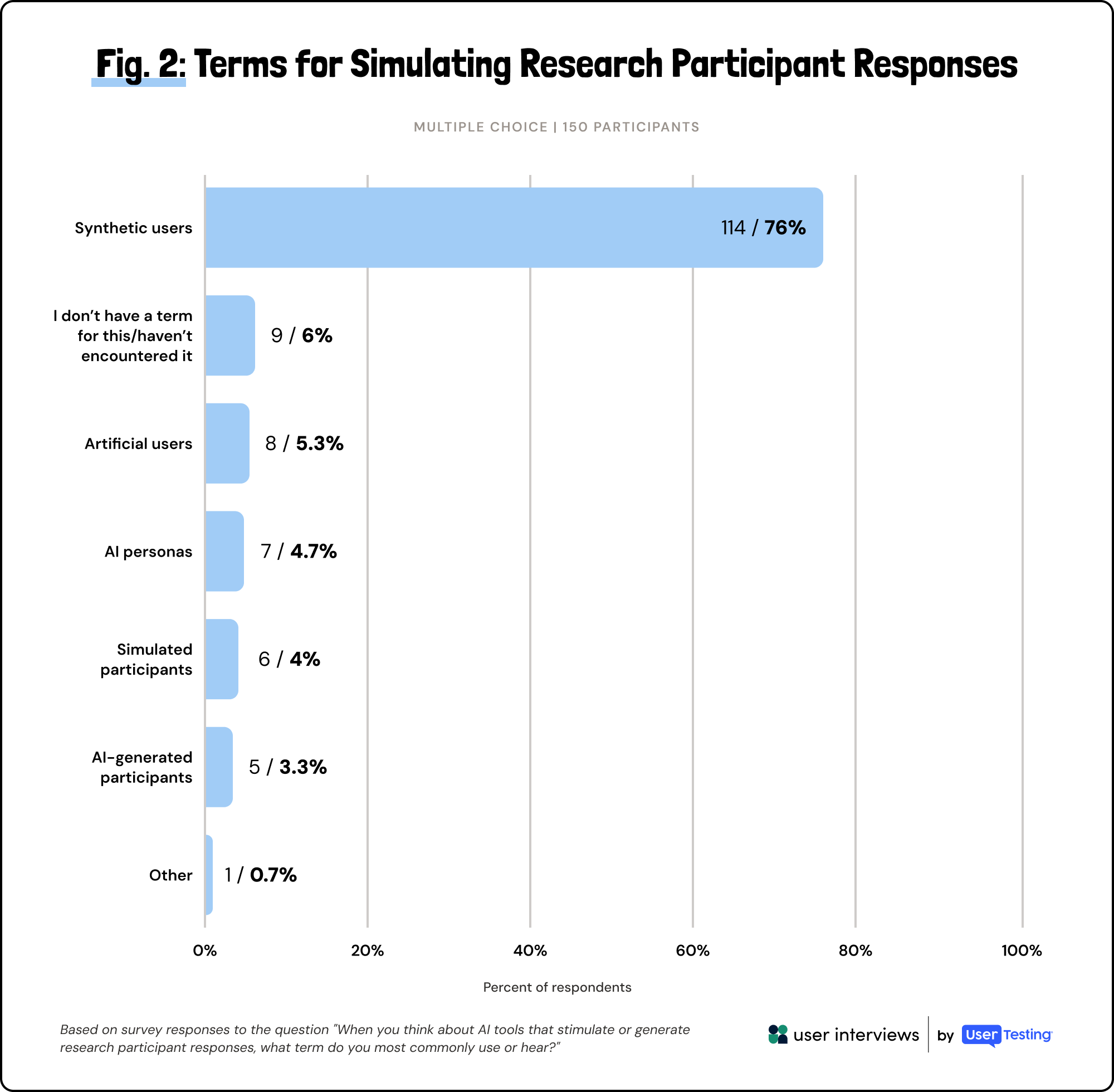
Researchers have moderate-to-high familiarity with synthetic users, with 44% reporting at least some familiarity. However, terminology across the market remains inconsistent. “Synthetic users” is the dominant term (75%), but others use the terms “artificial user” or “digital twin”.

How familiar are researchers with synthetic users today?
Our sample reported having moderate-to-high familiarity with synthetic users, with 44% responding that they have at least some level of familiarity with the subject.
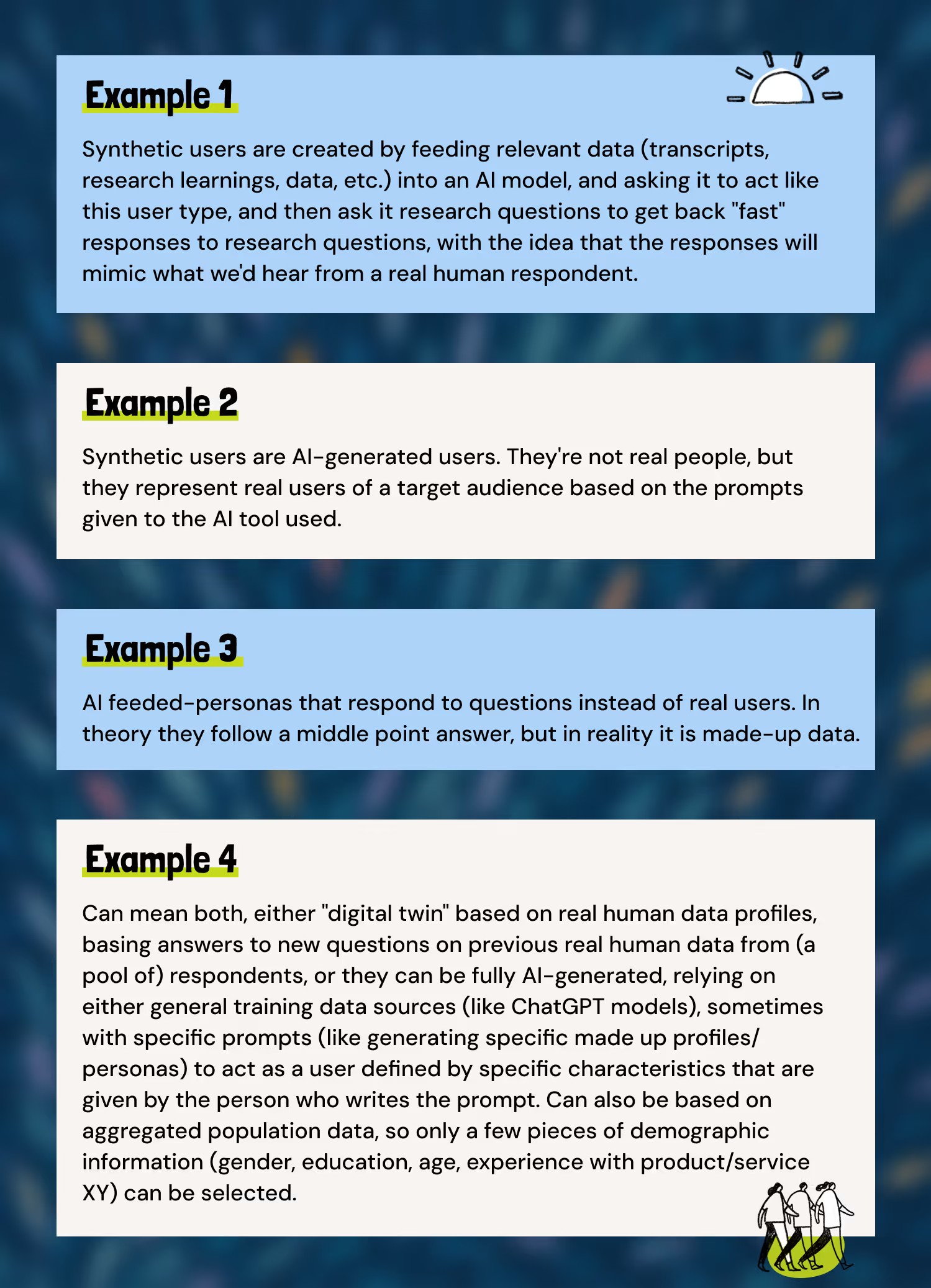
But has that familiarity translated to a consensus around defining synthetic users? It appears so, according to our findings. Researchers consistently defined synthetic users as AI-generated personas or profiles that simulate users by being trained on actual data, demographics, and behavioral patterns to serve as stand in’s for human participants in research and testing. Most researchers emphasized that these profiles are not actual users but artificial or simulated.
And despite there not being a standardized industry term used to describe simulating or generating research participants, a majority of respondents (76%) used the term “synthetic users”.
That said, we’ve also seen instances of terms such as synthetic customers3, synthetic respondents4, and synthetic participants or "silicon participants"5 join the vernacular during our review of insights on the topic.

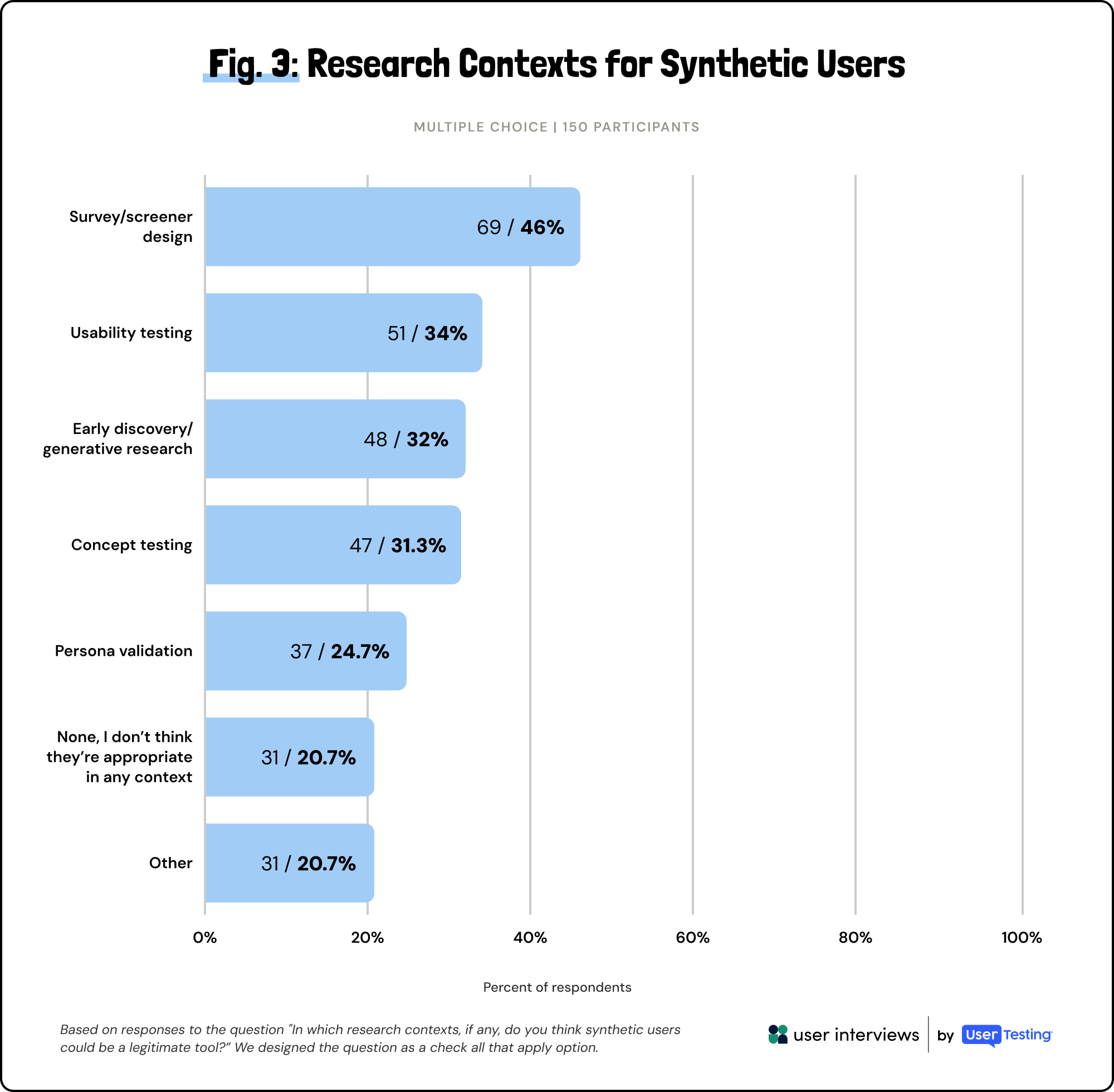
The most common methods were survey/screener design (46%), usability testing (34%) and early stage research (32%), with our interviewees noting their appeal in resource-constrained environments or for reaching hard-to-access personas like executive-level buyers.
What have synthetic users done for researchers lately? The researchers we spoke with summed up their primary value as convenience—the ability to gather rapid feedback without the logistical pains of recruiting participants, a challenge that is felt far and wide across the field6.
Synthetic users were also viewed as an additional tool (i.e., a complement to human insights) rather than a replacement for existing research processes.
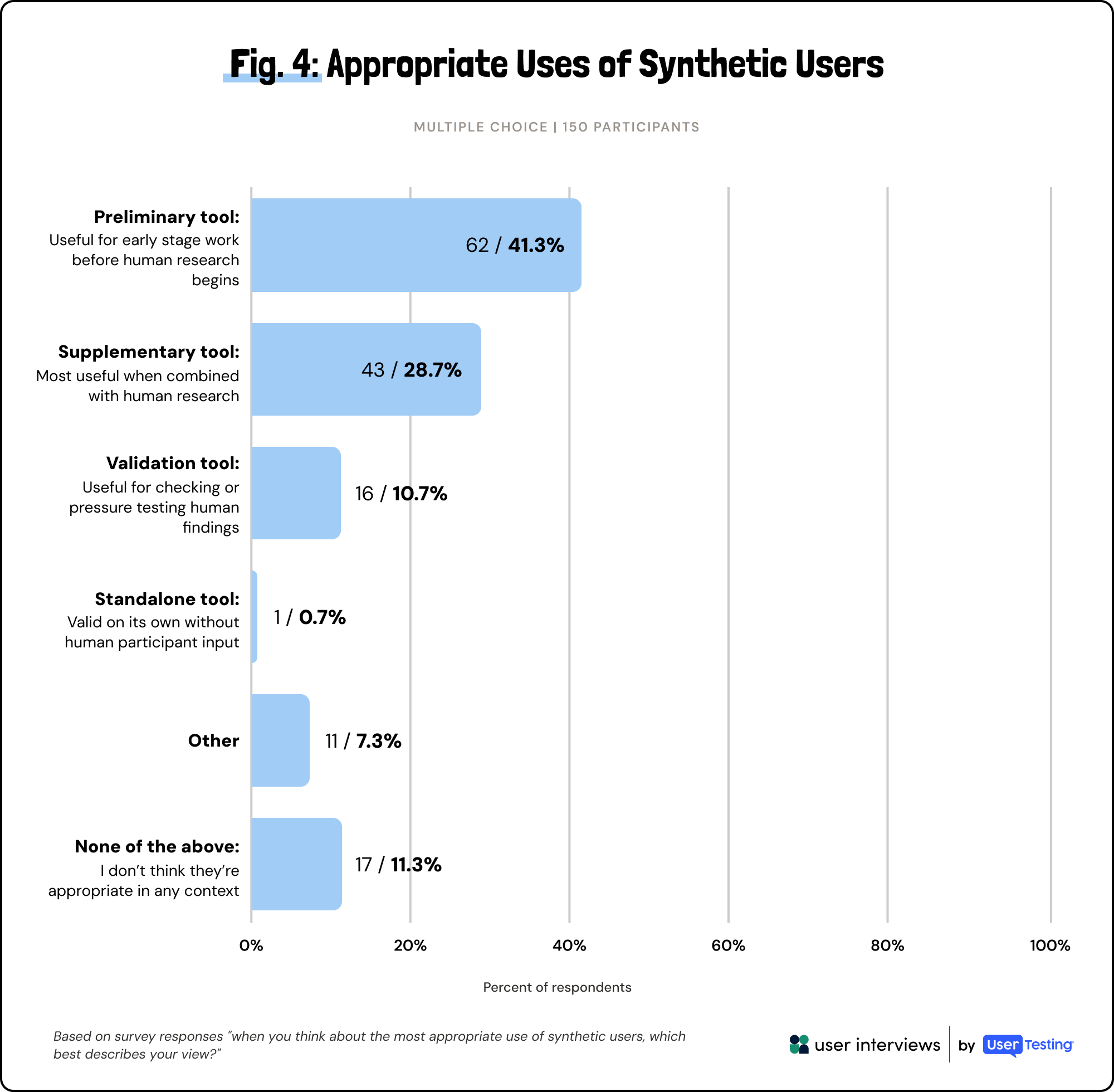
When it comes to their place among widely-used research methods, researchers described synthetic users as being most valuable in survey/screener design (46%), along with gathering directional signals via usability testing (34%) and generative research (32%).
In contrast, 21% mentioned they did not see synthetic users being appropriate in any context. One leader we spoke with was strongly opposed to synthetic users. They described the data as being “inauthentic and similar to fake Amazon reviews, unrepresentative of real consumer opinions, and lacking real research value.”
And they’re not entirely alone. This brand of skepticism is echoed in a recent study7 by Eduard Kuric, Peter Demcak, and Matus Krajcovic, which identified "misleading believability" as one of four fundamental issues of synthetic users, noting that these outputs can superficially appear like real data while lacking the latent depth and contextual awareness that makes human research valuable.
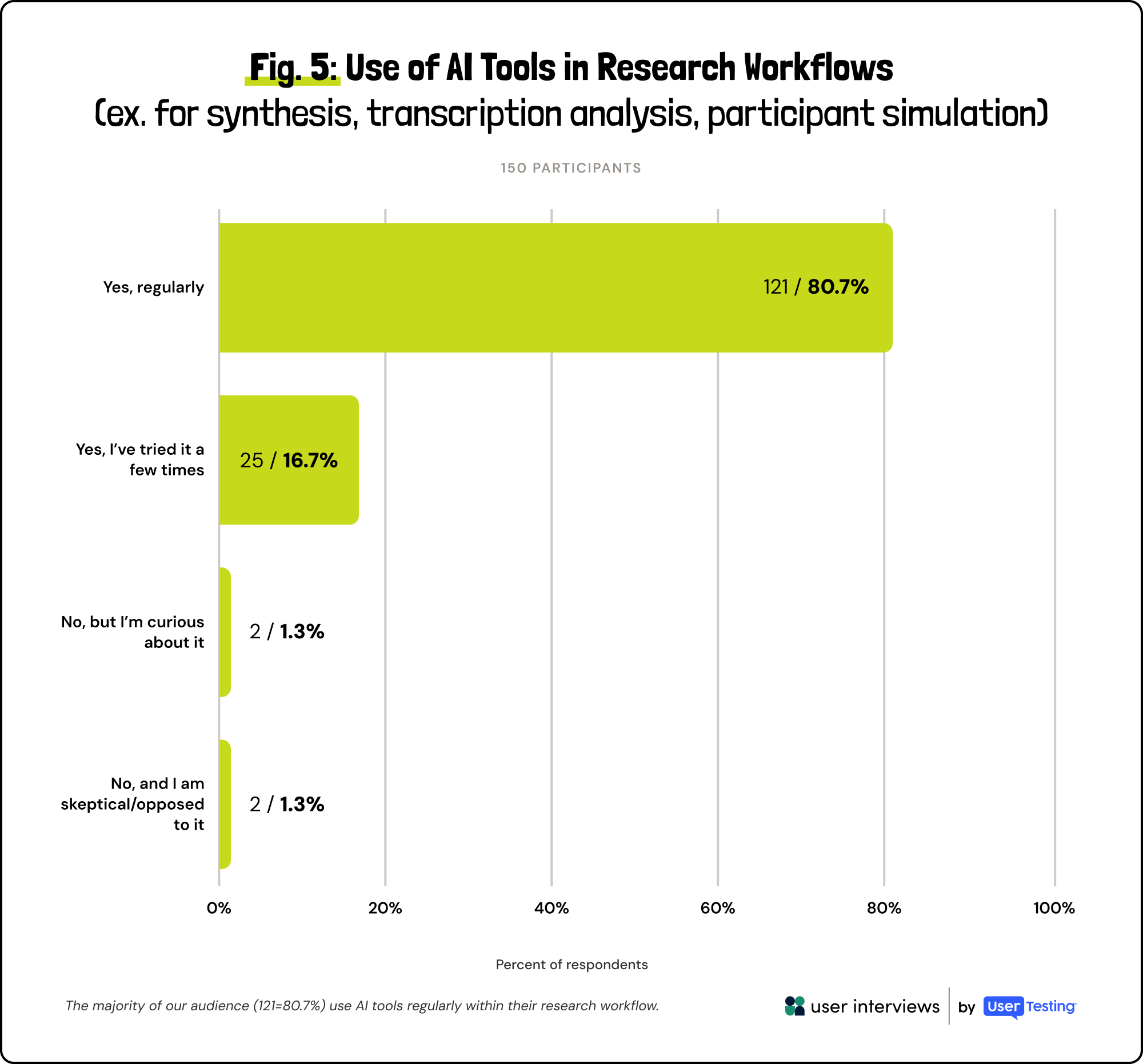
When we asked our sample about AI usage in support of research, a majority (80%) of respondents described using AI regularly within their work.
This echoes our State of User Research, which showed how AI might be enabling researchers to experiment with new methods—both in tool use and for developing AI tools themselves—which more than half of researchers (54%) said they did in 2025.
For their part, researchers describe AI usage as spanning multiple areas of their practice, according to our interviews. Mike Blight, a senior researcher from Figma, describes AI as an accelerant for various research tasks. During conversations researchers described a number of ways they're currently integrating AI into their workflows, including:
Leo Hoar, a senior researcher and founder of the UXR Institute, explains the importance of AI being used with good research methodologies:
"AI has to be paired with good methodology. That's a lot harder than it might sound because you need to be well versed in it to start with. The researcher needs to be the methodological guide. If you just upload transcripts and ask it to generate insights it’s not going to work. You need to instruct it step by step with prompting techniques so it’s very difficult for it to skip ahead. So knowing the rigorous steps in thematic analysis."

Researchers described human participants as offering a distinct value versus synthetic users because they bring their lived experiences, emotional authenticity, environmental context, and new insights to studies. In contrast, synthetic users are trained on existing data rather than new data.
"Whether they think your product or service or idea is terrific or horrible, they're [humans] getting paid regardless So they have nothing to lose by saying, ‘I would never eat this.’ This looks like dog food versus, like, ‘I can't wait to try it and I would for sure buy it if it was available in the grocery store today.’ There's nothing that they gain from that."
– Research leader from our moderated sessions

Research from Kuric et al.'s systematic review of 182 studies8 suggests this limitation is structural, not a temporary shortcoming of current models. As the authors put it: "LLMs are predictors of plausible text," not embodied beings with sensory experience, memory-as-personal-history, or lived constraints — and these differences produce documented gaps in how synthetic users respond compared to real humans.”
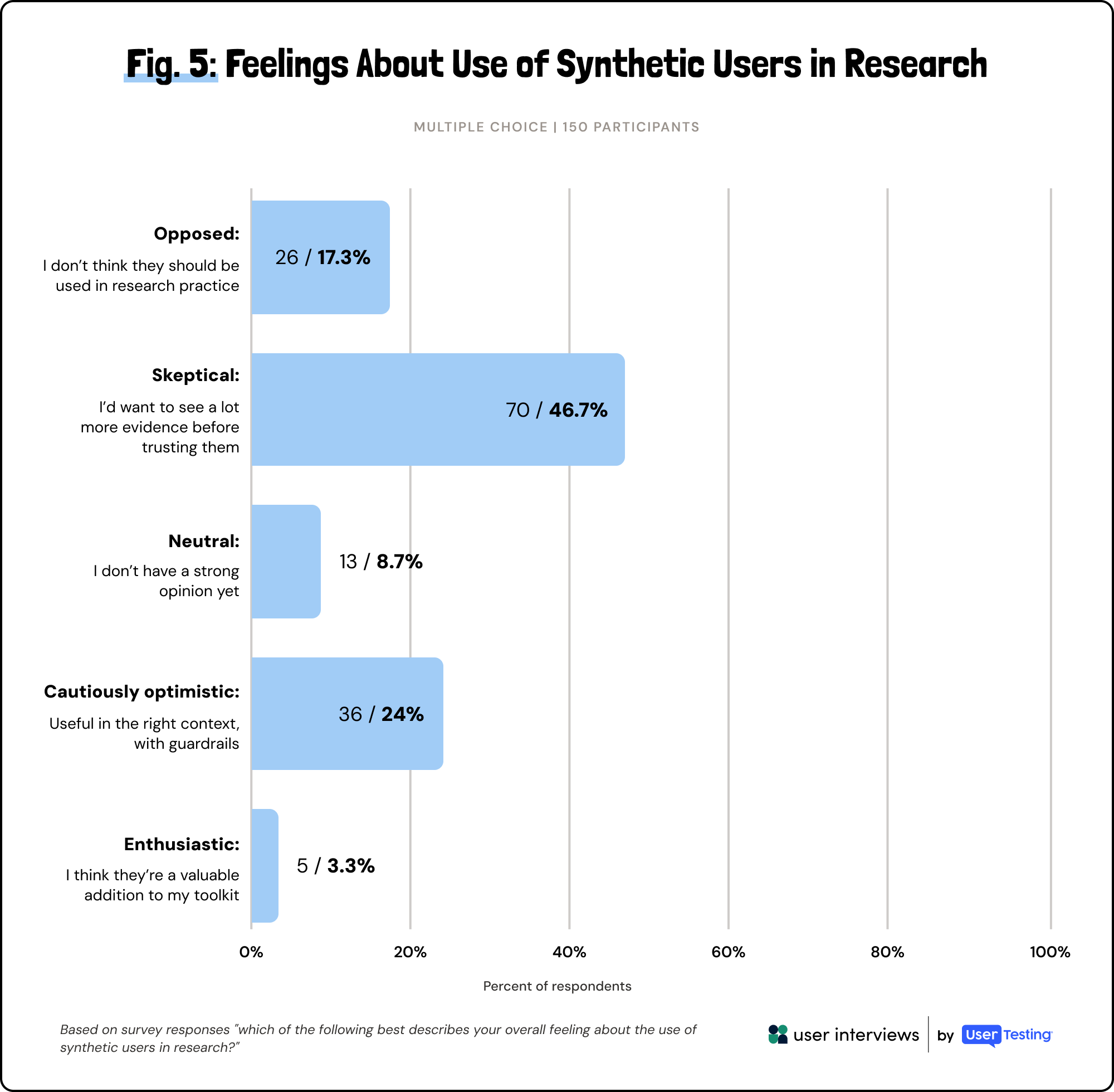
Respondents to our survey described themselves as skeptical and wanting more evidence before trusting them (47%), while 24% reported being cautiously optimistic and seeing synthetic users being useful in the right context.
Sentiment around synthetic users ranges from skeptical to cautiously optimistic and enthusiastic, according to our findings.
Nearly half (47%) described themselves as “skeptical” and “wanting more evidence before trusting them”, while 24% were “cautiously optimistic” and felt synthetic users could be “useful in the right context”.
On the other end of the spectrum, 17% described themselves as “opposed” in terms of thinking they should not be used in their research practice.
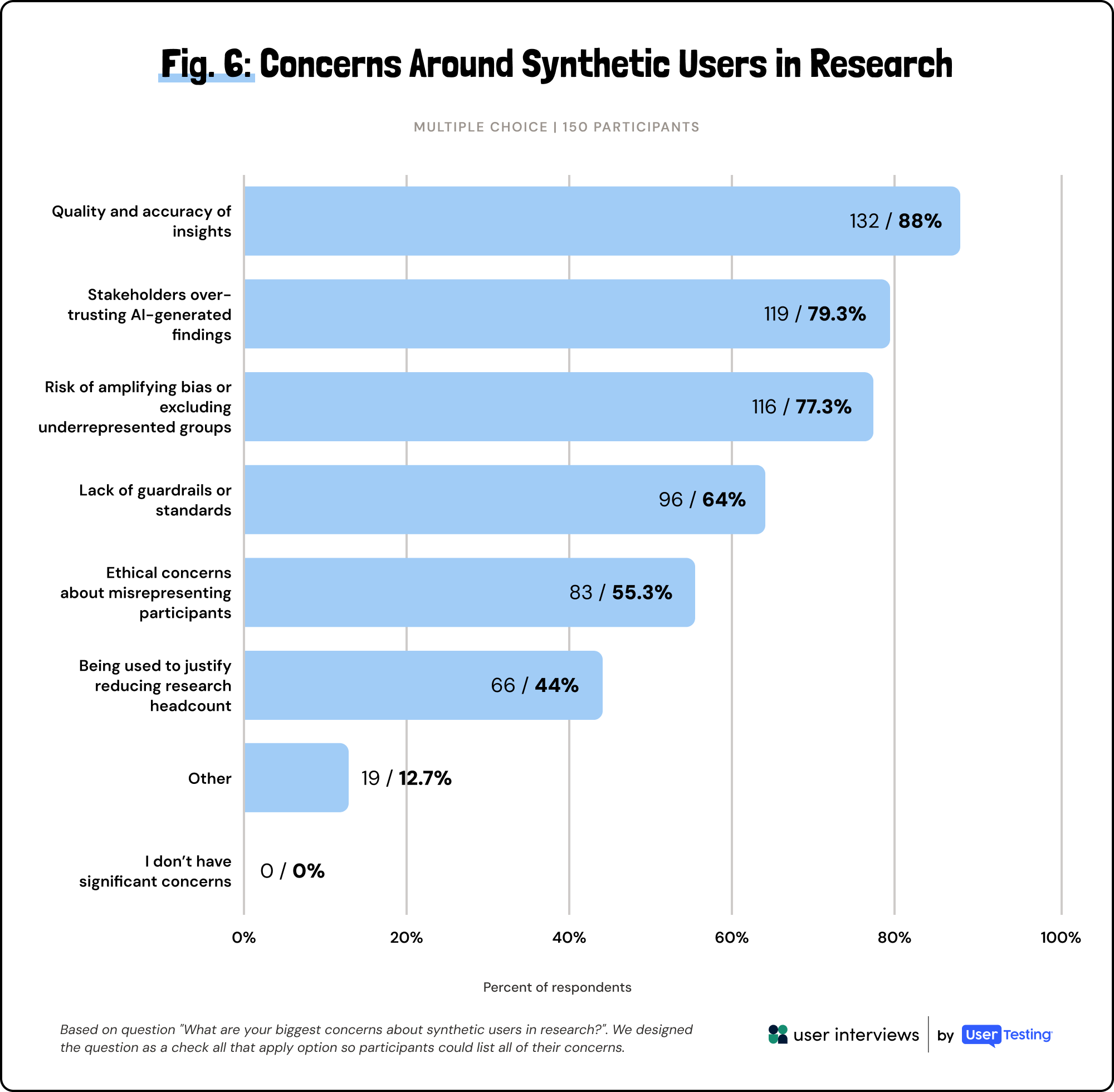
So what has their attention? Researchers described a range of concerns around synthetic users including:
When we asked senior researchers what concerned them about synthetic users, here’s what three of them said:
Senior Researcher and AIxUXR Community Founder Kaleb Loosbrock identifies several limitations of synthetic users, including their inability to capture lived experiences, emotional authenticity, environmental context, and net-new market insights due to being based on existing training data.
Senior Researcher and UXOutloud Founder Eniola Abioye described worrying about synthetic users creating echo chambers by reverberating the same data that it was trained by and missing outlier perspectives.
Another senior research leader described concerns around researchers being able to manipulate question design in order to get desired answers from these synthetic populations.
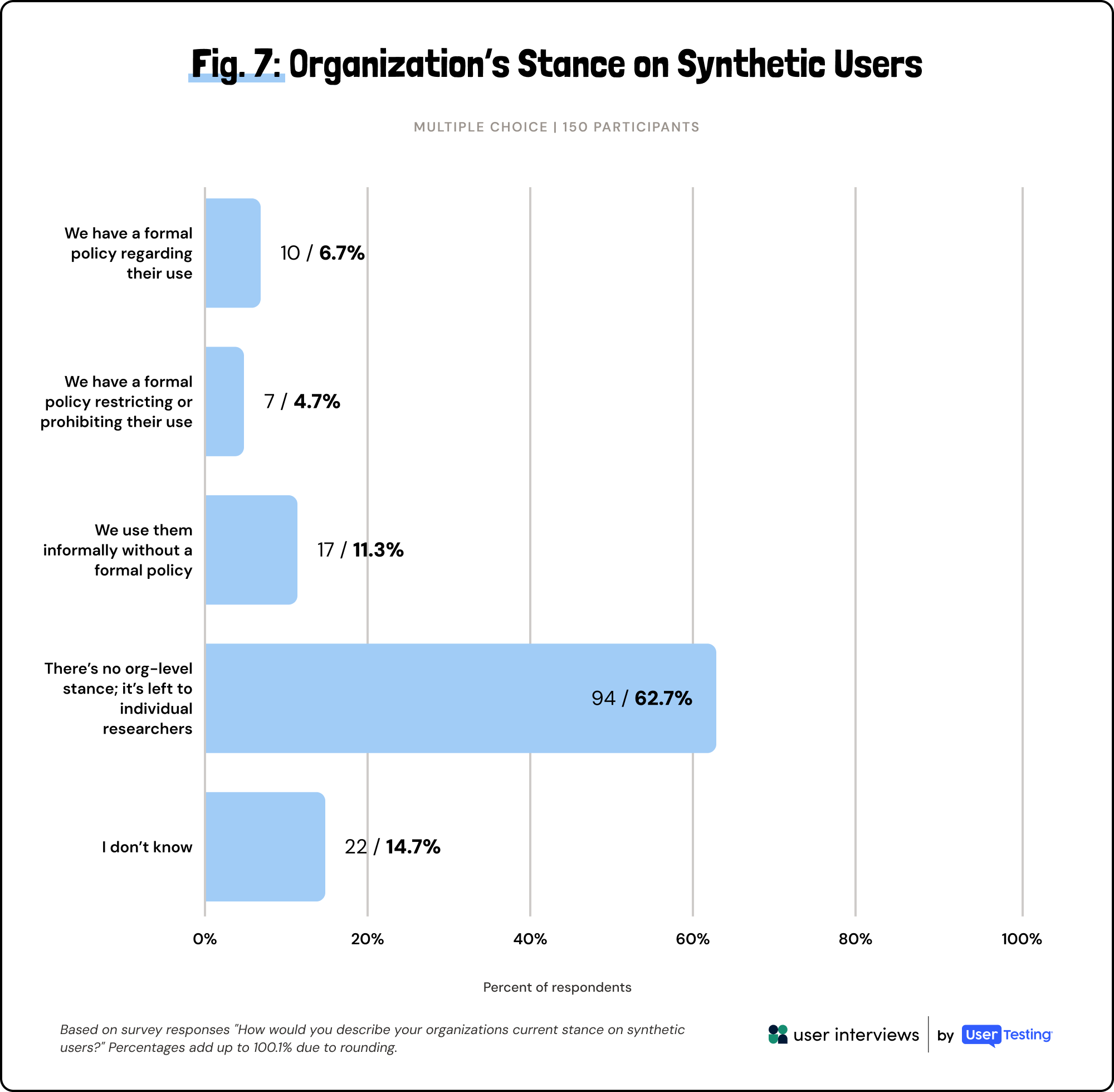
More than 62% of researchers described their teams as having no guidance around the use of synthetic users in their work, leaving a massive opportunity to lead the conversation and governance around its ethical use.
There is still room for growth in how organizations build policies around the use of synthetic users, which creates a massive opportunity for researchers to lead the charge.
“Ideally in my optimistic viewpoint, I would say research steps up, we decide to lead. In the age of AI we’re really good at bias detection, qualitative, fuzzy data. So we can actually help teams think through how they would do something like address bias.”
- Kaleb Loosbrock
Our study showed that nearly 63% of researchers described their teams as having no guidance around the use of synthetic users in their work (translation: it’s mostly left up to the individual researchers to determine best practices around their use).
The flip side of that dynamic is that there’s ample space for researchers to lead, rather than follow, the push for best practices around this newer phenomena.
When we asked senior researchers about ethical guardrails, here’s how they suggested organizations begin moving in the right direction:

Synthetic users have a lot of curb appeal to be excited about—their promise in providing inexpensive, rapid insights is music to every researcher’s ears.
However, our conversations and survey findings showed that researchers were also grounded in the reality that organizations will continue to need hands-on experience with customers so they can develop the muscle memory and knowledge to drive strategic product decisions (and, ideally, the data that will power future synthetic user research they can turn back to later).
So how can organizations begin to understand the best place(s) for synthetic users in their research arsenal, if any? To get started, it’s worth considering these five questions:
If there’s a case for synthetic users, here’s a few areas to consider when evaluating solutions, based on our research:
Now go forth—put our findings to use to determine whether synthetic users are right for your organization, and our insights to guide best practices for utilization at your organization.
Download the dataOur State of Synthetic Users survey and moderated interviews were created and conducted by Roberta Dombrowski This report was written by Nick Lioudis. The webpage was designed and built in Webflow by Holly Holden with graphic support by Jane Izmailova.
With synthetic users being a fairly new phenomenon in research, we aimed to get first-hand data from researchers to understand their usage, challenges, and overall sentiment around this topic.
We utilized a two-part approach to this study. First, we conducted moderated interviews with five participants: four were researchers and one was in Research Operations. Of those participants, two described themselves as actively experimenting with synthetic users, two considered it, and one was vehemently opposed to it.
Second, we ran a follow-up survey with 150 participants to quantify themes and trends we uncovered in our moderated interviews.
From May 11 to May 22, 2026, we collected 150 qualified responses via social media, our weekly newsletter (Fresh Views), and an in-product slideout. We also posted the survey in research-related groups on LinkedIn and Slack; and members of our team and friends within the UX research community shared the survey with their own professional networks.
We are extremely grateful to our five moderated interview participants (four of which we'll name here): Eniola Abioye, Mike Blight, Leo Hoar, and Kaleb Loosbrock. We’d also like to thank our partners and everyone from the research community who shared the survey and contributed to the success of this report.
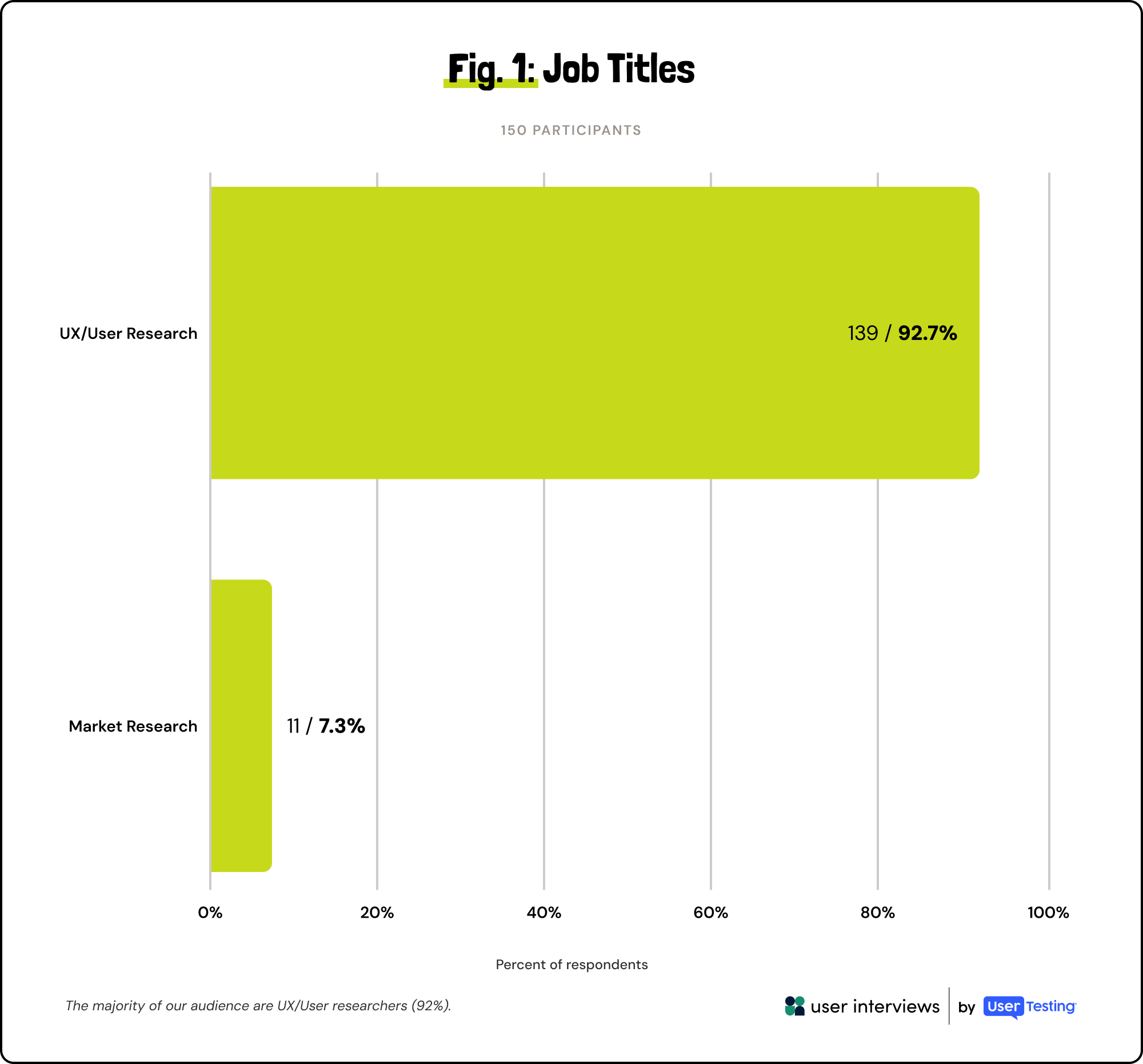
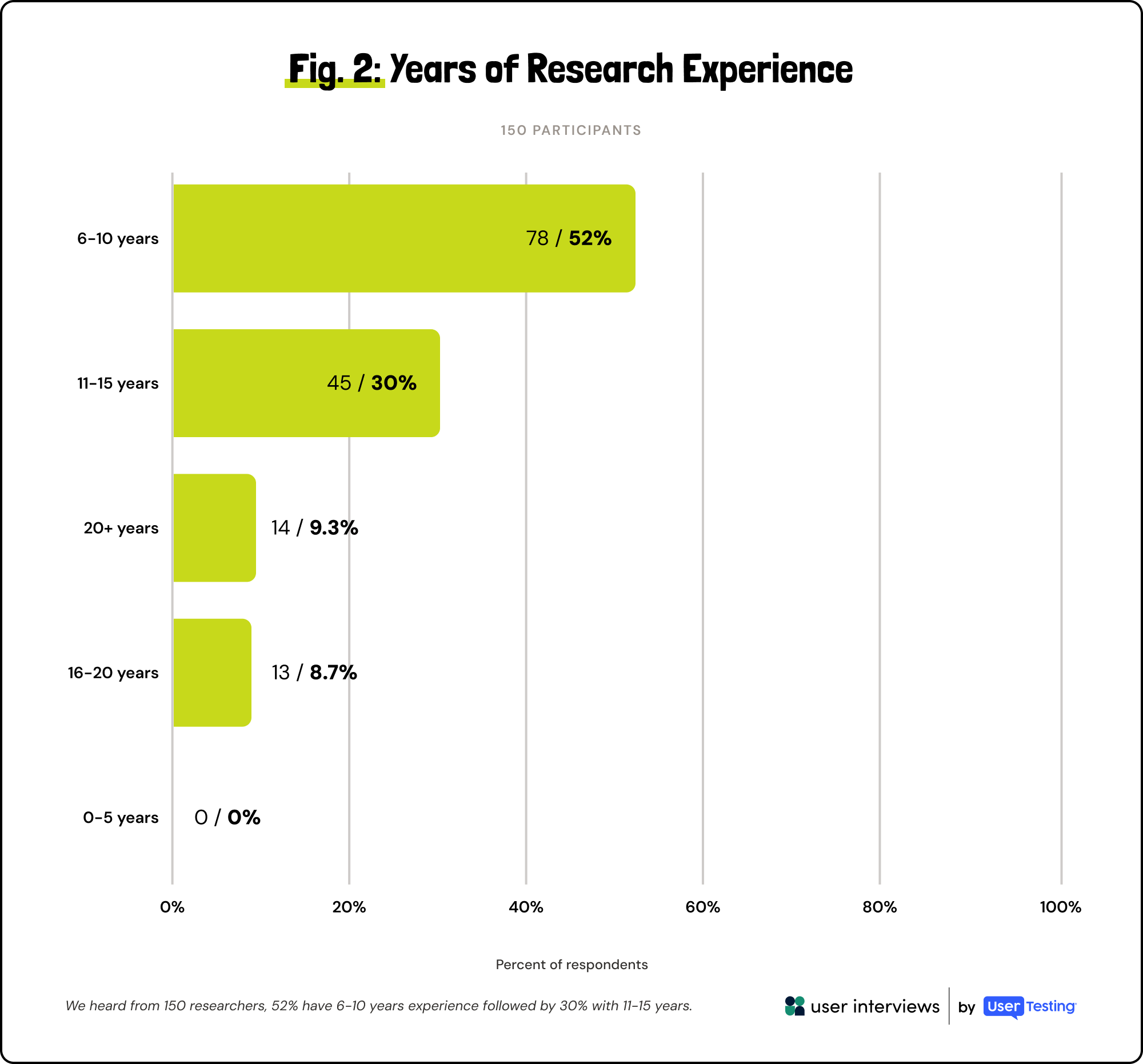
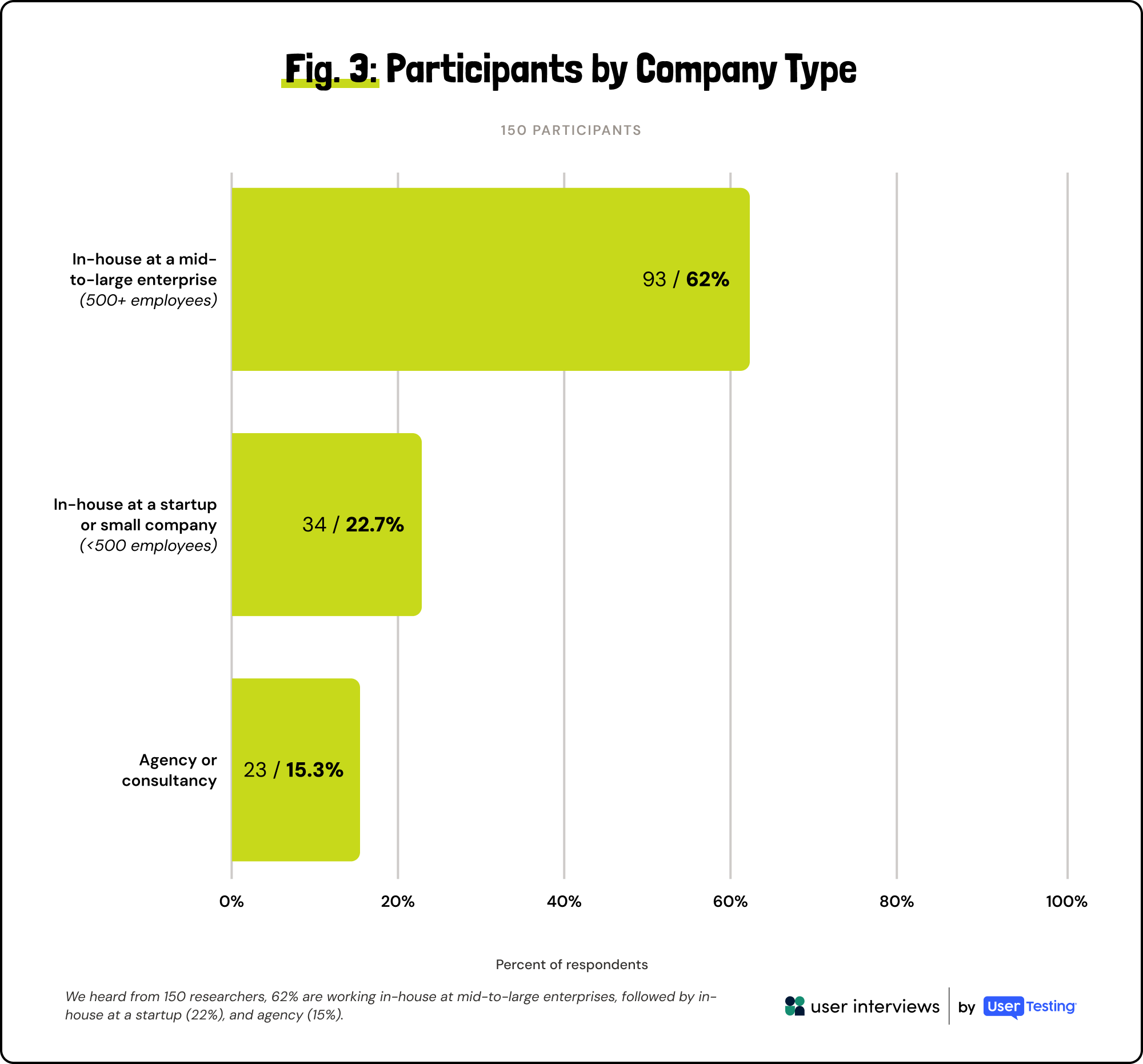
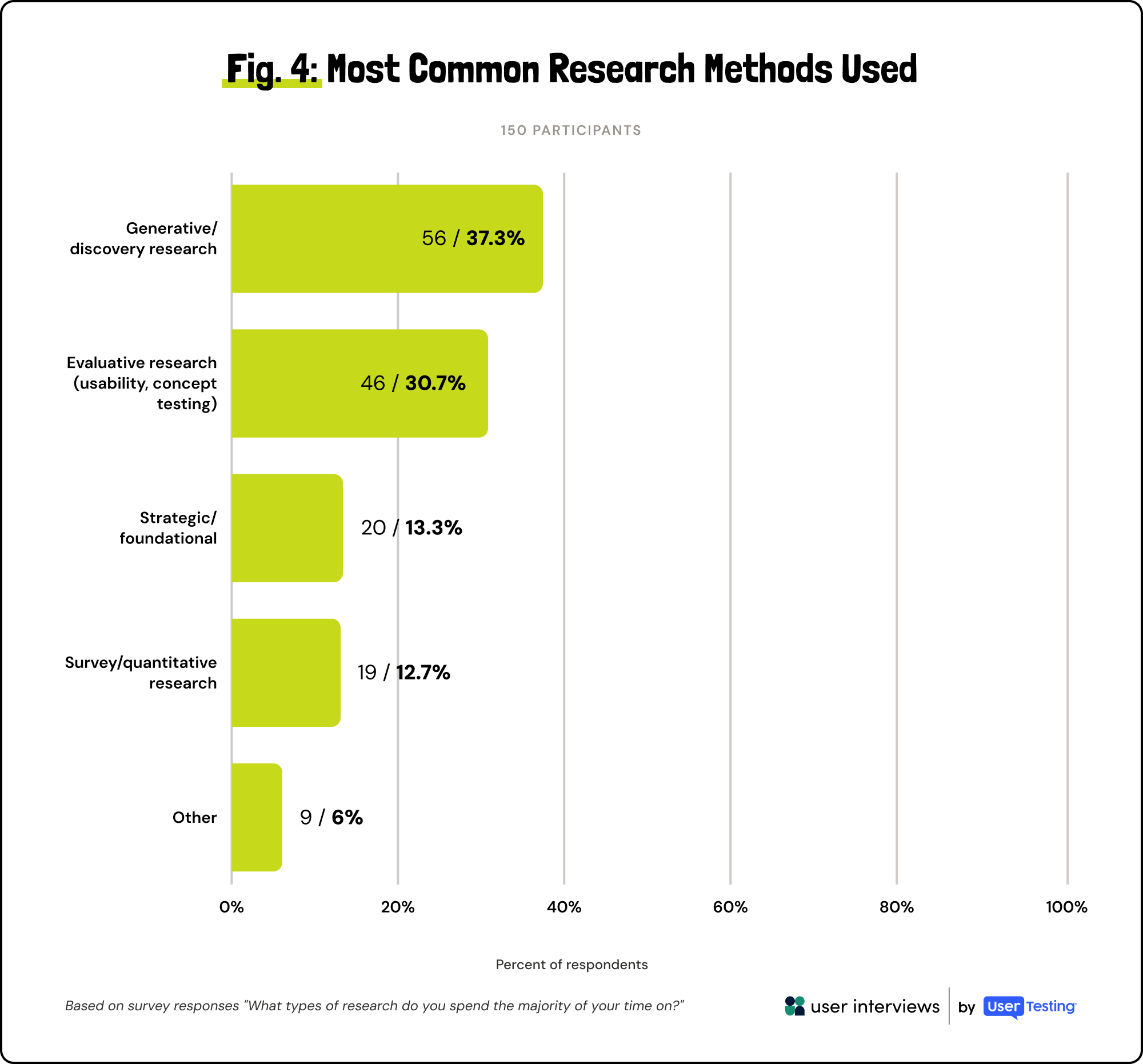
For our report on synthetic users, we turned to human insights for both our quantitative analysis and five moderated interviews. Below, a breakdown of our 150 survey respondents across demographics that include job titles, years of experience, and company type.
User Interviews by UserTesting enables organizations to craft exceptional customer experiences through fast, actionable human insights. With the world’s strongest participant network, AI-powered analysis, expert services, and seamless integrations, we help teams validate ideas, optimize experiences, and build products that drive measurable business outcomes.
As the leader in human insights, UserTesting empowers teams to co-innovate at scale and embed customer feedback into every stage—from ideation to launch—eliminating guesswork and aligning stakeholders. Trusted by 3,000+ customers, including 75 of the Fortune 100, UserTesting delivers an average 4—6x ROI, depending on size and scale of deployment. Helping companies make smarter decisions, reduce costs, and exceed customer expectations.


Explore the State of Synthetic Users dataset to take a deeper dive into our analysis, then use our quickstart guide to determine the best use case for synthetic users at your own organization.