



Let's be real: when shouldn't you do research? When the decision is already made, when you can just Google it, or when it's just for political buy-in. We follow a "decision-driven" framework: research should always inform a specific, company-wide decision. This is how you prioritize and prove your impact. This article breaks down the 4 types of decisions (Vision, Strategy, Definition, Evaluation) and the right methods for each, so you can stop doing "research for the sake of research."
Companies are placing increasing value on UX research.
In fact, our State of User Research 2025 report found that 86% of researchers say their organizations have dedicated UXRs, 71% say they have PwDR (people who do research), and 35% even have a dedicated Research Operations presence.
But, often, the demand outweighs the supply, leaving many product and UX research teams overworked and under-resourced. Effectively prioritizing research projects can help maximize impact without wasting time, money, or resources.
So what’s a good rule of thumb for determining when you should actually do UX research?
Roberta Dombrowski, the former VP of UX Research at User Interviews, created this framework for our team’s internal playbook. It helps our team focus on research that drives decisions—not research that wastes time, money, and bandwidth.
What works for one organization may not always work for another, but we hope these guidelines can help you become more intentional, timely, and transparent. Use this framework to learn what’s worked for us and apply similar guidelines to your own research.
In this article, you’ll learn:
- How we think about research at User Interviews
- What is “decision-driven research”?
- The 4 types of decisions research can inform
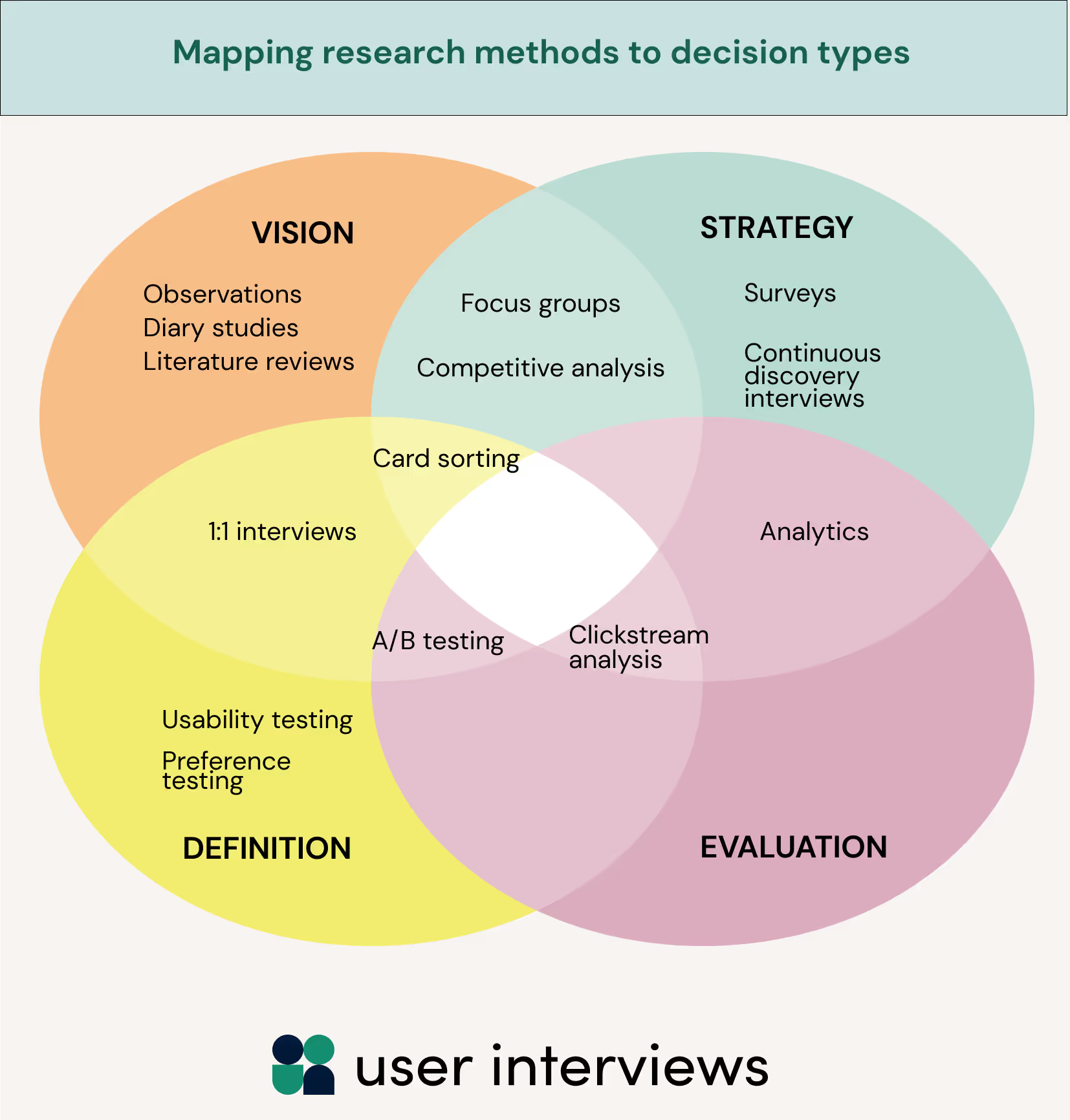
- Our map of research methods by decision type
- How to determine when research is not needed (seriously)
Research @ UI
Before we dive into the actual framework, let’s get meta and give you some context on how we think about research.
When we formed the Research Team at User Interviews back in July 2021, we've had one focus: Use collaborative research to inform company-wide decisions. We do this by building a shared understanding of our customers—their needs, motivations, and behaviors.
Besides leading our own research, our Research Team also enables PWDRs (people who do research who aren’t full-time Researchers). This includes our Product Managers, Product Designers, Marketers, and Customer Success folks.
So how do we know whether our research insights actually drives business decisions? We sharpened our focus on “decision-driven research.”
What is decision-driven research?
Decision-driven research is information collected through research that is used to inform company-decisions.
Simple, right?
But just like many other organizations, our team is small and resources are limited. We never want to do research for the sake of research. We want to be sure we’re collecting information that will be used to drive our business forward.
We cut out unnecessary work by focusing our research efforts on projects that we know will help us make better decisions for product, design, marketing, and the overall business strategy.
Doing decision-driven research helps us evaluate the success and effectiveness of research by tying research projects back to the specific decisions we want to make. This makes it much easier to track where, when, and how user research is contributing to company goals.
According to the User Interviews’ 2025 State of User Research Report, 66% of respondents who said that expectations around demonstrating research impact/ROI influences their research prioritization also said that their leadership were also bought in to research's importance. This is compared to 54% of those who said ROI did not affect their research roadmap. Put simply, those who paid attention to the ROI of research had higher buy-in than those who did not.
Looking to measure your research impact? Try our UX ROI calculator.
Tying our research efforts back to the bottom line provides a clear path and purpose that makes tracking the impact of research easier.
Our philosophy is to talk to your users all the time, but the caveat that helps keep our research on track is to do it at the right time, with the right people.
Talk to your users as much as possible, but make sure you understand why you are doing it and how those conversations can help your immediate or long-term needs.
📕Need help navigating budget cuts and uncertainty? Here are 5 Ways to “Recession-proof” Your User Research Plan.
4 types of decisions research can help inform
UX research can be used to inform four types of company-wide decisions:
1. Vision
This research provides clarity on why a product or solution exists. It's about understanding customers' big-picture beliefs and philosophies to inform the overall company, product, or service direction.
Methods for vision decisions:
- Observations
- Diary studies
- Literature reviews
- Focus groups
- Competitive analysis
- Card sorting
- 1:1 interviews
- A/B testing
2. Strategy
This research helps you define the next steps. Insights from this research can paint a clear picture about customers' behaviors, expectations, or frustrations to determine a plan of action for a current product or service.
Methods for strategy decisions:
- Surveys
- Continuous discovery interviews
- Analytics
- Clickstream analysis
- Focus groups
- Competitive analysis
3. Definition
This research involves defining how customers may behave or interact with a potential solution. You're testing certain features or iterations with your users to define their reactions and determine whether the idea is worth investing more resources or time into.
Methods for definition decisions:
- Usability testing
- Preference testing
- 1:1 interviews
- A/B testing
- Card sorting
- Clickstream analysis
4. Evaluation
This research evaluates the product or solution itself. Is this product better than the last? What aspect about the product is new? How can we gather data about the performance of this new iteration or new product?
Methods for evaluation decisions:
- A/B testing
- Clickstream analysis
- Data analytics
User Interviews’s map of research methods by decision type
Here's a look at how we visualize this framework internally.
When is research NOT needed?
As huge advocates of research, we like to think that research is always important—and it is.
But there are certain situations when conducting a full research study isn’t the best option. Don’t do research just to do it; do research when it brings value to your organization in some way.
So when should you not do research? Ask yourself these questions before kicking off a new research project:
- Has the decision already been made?
- Does my team have agency to make the decision?
- Can we answer this research question by doing a Google search?
- Is the answer to this question “yes” or “no”?
- Has this research been done before, either by myself or someone else?
- Am I conducting research only to get political buy-in?
If you answer “yes” to any of these questions, you may not need to conduct any qualitative research. These questions force you to be intentional about the purpose of your research.
💡Here’s a tip: Try building a healthy research repository of insights to help you lean on, remix, and reuse research projects that have already been done to help you avoid doing duplicate work.
Oftentimes you may still determine that research is needed, but for some reason, the budget, scope, or timing may not align for the work to happen. That is okay! It’s all an ongoing process of learning.
Rather than skipping out on research entirely, focus on delaying, rearranging, or reprioritizing your resources on other projects that may need more attention at that given moment.
For organizations and UX research teams that are constantly looking for the most efficient and timely ways to use research, a framework like this can help identify the best time to do specific types of research.
Get the timing right
You can do research for almost anything, but doing it at the most optimal time to bring value to your organization is a skill. The best time to prioritize user research is when you know the insights will be used to drive company decisions. Use our framework as a guide for your own research.
✨Looking to talk to the right people at the right time? We can take that load off your shoulders. Connect to your target participants in a matter of minutes with User Interviews’ Recruit, or scale your research efforts seamlessly with our Research Hub.
Collaborating Author
Roberta Dombrowski is a (former) VP, UXR at User Interviews.