


Recruiting focus group participants is a lot like recruiting for other research methods—challenging, time-consuming, and often inconsistent.
Many researchers face the same problems regardless of the research discovery method. Our State of User Research 2024 found that 62% of researchers struggle to find enough participants who meet their criteria, while 61% say the time it takes to recruit is a major issue.
When it comes to focus groups, recruitment comes with an extra layer of complexity.
Unlike surveys or 1:1 interviews, focus groups rely on group dynamics to generate positive research outcomes. That means it’s not just about who you recruit—it’s about how they interact with one another.
You need a diverse mix of participants who reflect your target audience, while also ensuring that no single voice dominates the discussion. Getting that balance right takes careful planning, clear screening criteria, and an extensive database to recruit from.
Our experience building a high-quality research panel of over 6 million participants has given us a deep understanding of what it takes to recruit effectively.
In this guide, we’ll share the best practices we’ve developed along the way and walk you through a five-step process for focus group recruitment. We’ll also give real-world examples from our own platform, User Interviews, to help you run smoother, more productive sessions with the right people in the room.
Learn how we built the User Interviews panel in our research panel report or schedule a demo to start recruiting qualified participants for your focus groups.
Best practices for recruiting focus group participants
To recruit focus group participants successfully, there are a few key questions you’ll need to answer first, such as:
- What are your research goals?
- How many people do you need for your research studies?
- Which method will you use to recruit those people?
Below, we’ll walk you through our best practices to help you confidently answer these and other key questions before you start recruiting.
Prepare a research plan & define your goals
Before beginning any research project, you should create a well-thought-out UX research plan that covers all goals and objectives of your project for yourself, your team, and all internal stakeholders.
The goal of a UX research plan is to be as thorough as possible, so you can answer all questions (who, what, when, why, and how) about your research project. Whether you're conducting an in-person group discussion or testing a digital prototype, your plan should clearly define:
- What you're trying to learn, e.g., “How do parents in suburban areas perceive a new family-oriented meal planning product concept?”
- Why it matters, e.g., “Improved onboarding can reduce drop-off and boost user retention.”
- Who you're talking to, which includes specific participant profiles, communication preferences, and dynamics.
- How you’ll gather information, such as from focus groups, remote sessions, and prototype walkthroughs.
- When and where it will happen, as well as logistical needs such as length, location, tools, and stakeholder roles.
- Success criteria, including key insights or metrics that will indicate research goals have been met.
Answering these foundational questions will also help you develop a strong research question—one that’s specific, actionable, and focused on investigation rather than validation.
For example, instead of asking “Do users like our onboarding flow?” you might ask, “Where do users get confused or drop off during the onboarding process, and why?”
Focus groups tend to produce a large amount of qualitative data, which is especially useful for marketing teams seeking to gather feedback on a new product or engineering teams testing early product concepts during the development process.
Taking the time to build a thoughtful research plan not only clarifies your study’s purpose but also streamlines every step that follows, including the recruitment methods you use to find the right focus group participants.
Determine the number of participants you need early on
We see it all the time—researchers skip over this step and cast too wide a net, accepting as many people as they can in their group. They think that the more people they get, the better their research will be.
Part of the reason this happens is because of internal biases. The research team has a hypothesis and wants to validate it through research, rather than approaching the project with an open mind to learn new insights.
Unfortunately, too many participants in a focus group can derail your research. For instance, more “verbose” participants may overwhelm the more introverted participants and make it more difficult for the moderator to gather the most comprehensive insights.
Instead, aim for approximately 6 to 8 people per group. This is a large enough sample size to actually gather insights from participants, while still allowing your moderator to maintain control and manage the conversations. The overall research project can be larger, but individual groups should stay within this limit (a maximum group size of 10 people).
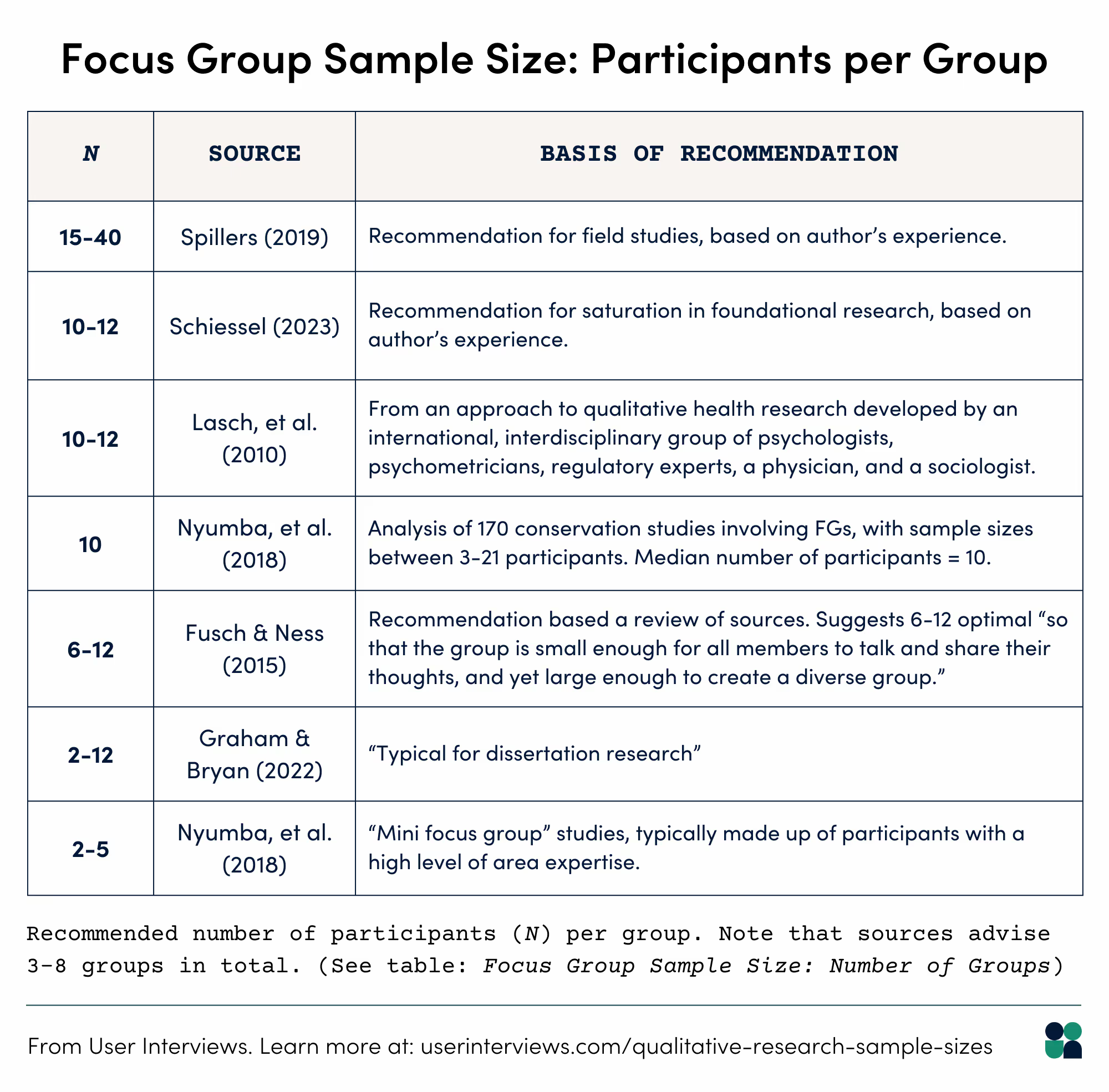
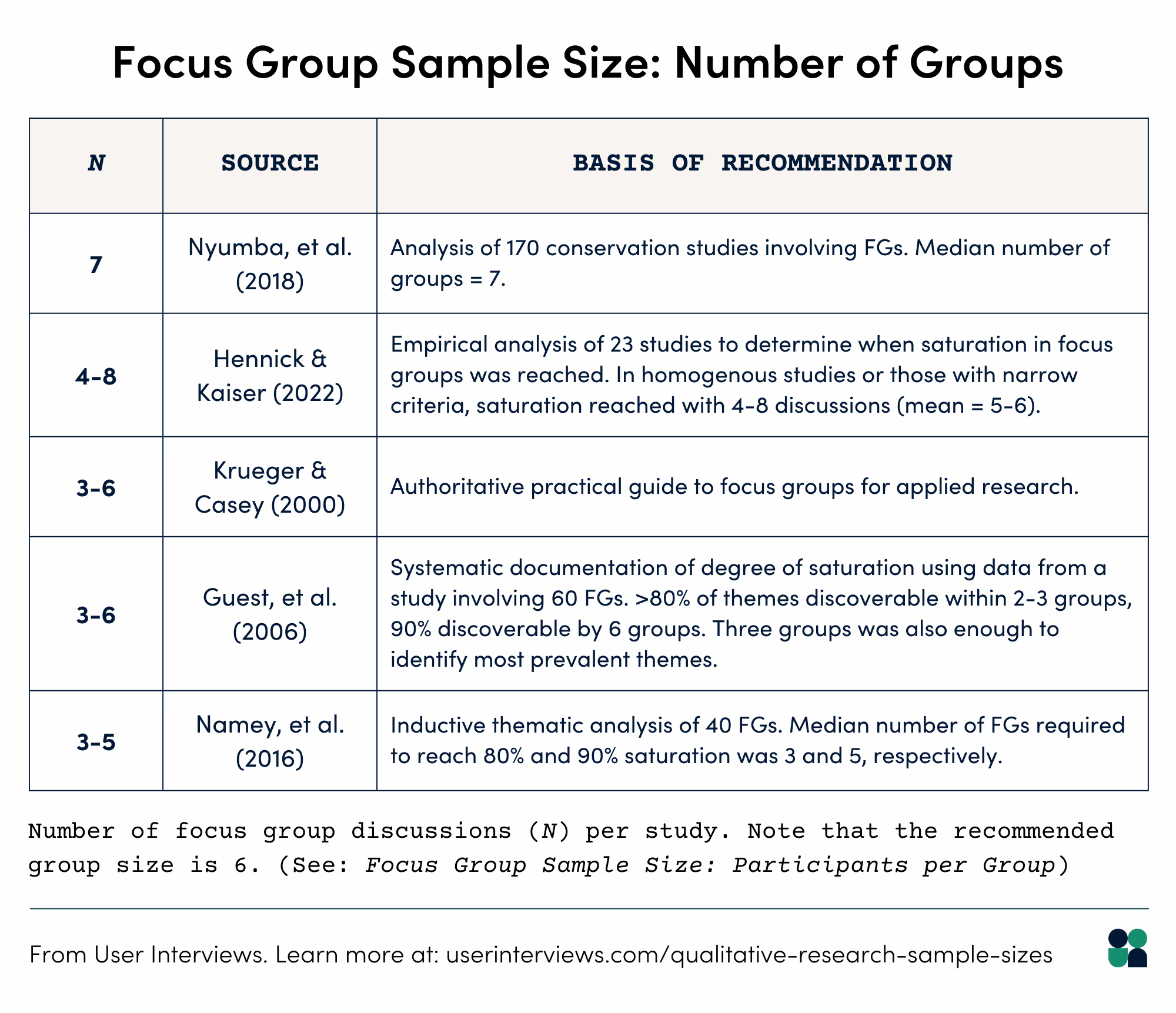
In our experience, the best focus groups studies recruit 3 to 6 groups of participants. So, if you’re conducting a study with 5 groups of 6 participants, you need to set a budget for 30 total participants.
We have developed a qualitative sample size calculator to help you determine the ideal sample size for your specific qualitative research needs.
Recruit participants from a large, diverse pool of individuals
Once your plan is in place, the next step is finding the right people for your research. For focus groups in particular, you need a cohort that reflects your target audience while also including a range of backgrounds, behaviors, and opinions to generate rich, dynamic conversations.
If your recruitment pool is too small or too narrow, you risk hearing the same perspectives repeated. Or worse, you could end up assembling a group that doesn’t represent your actual customers.
A large, well-vetted participant panel gives you the flexibility to apply specific filters (like job title, location, or behaviors) while still ensuring a diverse mix of voices in the room.
With the right research tools and a broad, diverse participant pool, you're far more likely to build a focus group that generates positive research outcomes. User Interviews does exactly that, which is what we'll show you in more detail in the following sections.
Ready to streamline your focus group recruiting? User Interviews’ Recruit helps you find the perfect match for your study with a database of 6 million participants. Schedule a demo today to get started.
5 steps to recruit focus group participants
After implementing our best practices for focus group recruiting, you’ll have a better understanding of what needs to be done and how the process should work.
Below, we’ll outline five steps to help you recruit the right participants for your focus groups and put yourself in the position to gather the most in-depth research insights.
1. Choose a recruitment platform with a database of qualified participants
Because focus groups tend to be more expensive and time-consuming than other research methods, researchers must be as rigorous as possible when recruiting new participants.
That's why you need to rely on dedicated focus group recruitment channels to minimize manual effort, avoid low-quality respondents, and ensure every seat is filled with someone who meets your criteria and contributes to a productive group dynamic.
Taking the manual approach to focus group recruiting typically involves using DIY channels, such as organic social media (e.g., LinkedIn or Reddit), cold email outreach, or customer service surveys to find participants, schedule their focus group sessions, and gather insights.
The problem is that this labor-intensive process is slow and provides unreliable results because there's no way for researchers to filter out specific candidates that match their research goals. Instead, you're more likely to recruit people who are either too similar, fraudulent, or unengaged throughout the study.
Research recruiting agencies can usually solve the targeting issue and provide more specific participants, but they're slow and costly. The average time it takes for recruiting companies like a research agency to deliver your first research participants is at least two weeks.
User Interviews addresses all of these problems by providing researchers access to a proprietary panel of over 6 million high-quality participants—with the majority of users having their number of requested study participants approved within 24-48 hours.
We do not use any third-party sourcing when building our panel, relying solely on direct recruitment to maintain fraud rates below 0.6%. Additionally, our advanced matching algorithm is trained on over 20 million unique data points to ensure you receive the most qualified individuals for your studies.
You can filter by demographics, behaviors, and communication preferences to build a group that reflects your target audience.
Our system automatically prioritizes participants with strong feedback from past studies and deprioritizes those with less favorable reviews, ensuring you connect with reliable contributors. You can also access ratings and notes from your team members about participants they’ve previously recruited.
The platform also detects potential AI-generated screener responses, helping you flag these candidates early in the recruiting process.
All of this information is available in the participant’s profile, along with recent project activity, social media profiles (such as Facebook and LinkedIn), application time, completed sessions, and previous ratings from other researchers.
Fraud detection, duplicate account prevention, and predictive modeling ensure you’re getting high-quality respondents who show up, participate, and stay engaged throughout.
2. Target your ideal focus group participant with precise recruitment criteria
The value of a focus group depends on who’s in the room. Even one off-target or overly dominant participant can skew the conversation, stifle the opinions of other participants, and derail your research goals. That's why setting precise targeting that matches your ideal focus group participant is essential.
User Interviews offers advanced targeting capabilities that allow you to recruit using dozens of filters across demographic, behavioral, geographic, and psychographic criteria.
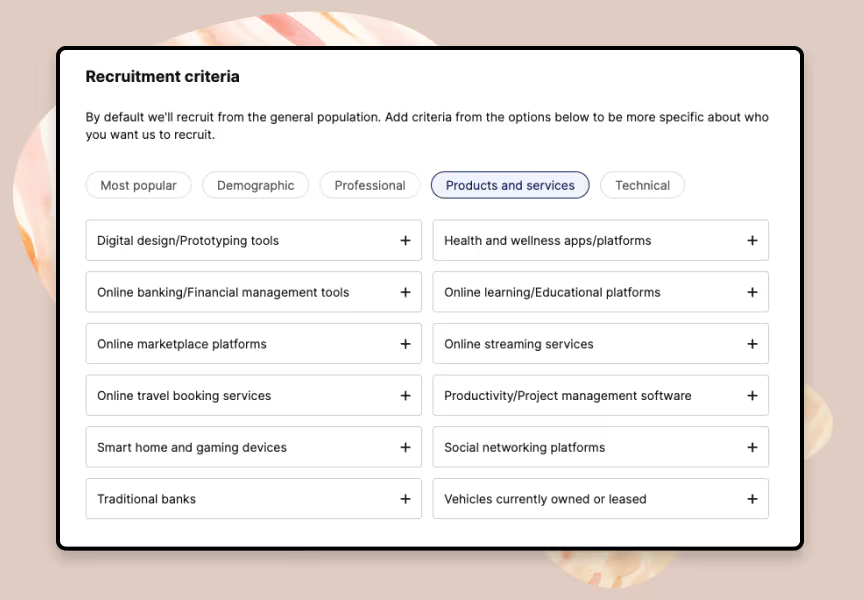
Some of the most valuable criteria for focus group recruitment include:
- Behaviors: Ensure participants reflect real-life actions, like subscribing to streaming services, working remotely, or managing a team.
- Psychographics: Target values, beliefs, and attitudes (e.g., environmentally conscious consumers or early adopters of new tech) to enrich group discussions.
- Demographics: Set essential filters like age, income, education level, or parental status to align with your customer segments.
- Geographics: Focus on specific regions or time zones if you're running in-person groups or need geographic relevance for your product or service.
Using participant profile data, our matching algorithm identifies and connects you with respondents who precisely match your targeting filters. Beyond just sourcing candidates, User Interviews streamlines scheduling by coordinating participant availability, so you can concentrate on critical focus group tasks like creating moderator questions and facilitating insightful discussions.
Many recruitment tools stop at basic demographic data, offering limited control over who joins their focus group. With User Interviews, you get deep user data and flexible screeners, so you can confidently select people who not only meet your criteria but also elevate the quality of conversation.
Zendesk saved 2.5 hours per project just in recruitment with User Interviews. Learn how they do it and what they love most about our software.
3. Filter out unqualified candidates with well-crafted screener surveys
Screener surveys are your first line of defense against mismatched, low-effort, or unqualified participants—especially in focus groups, where the quality of conversation depends on everyone being informed, articulate, and on-topic.
After reviewing data from over 42,000 screener questionnaires, we identified a set of best practices that consistently improve response quality and completion rates.
- Keep your objectives hidden: Avoid tipping off participants about what you're looking for. Instead of asking, “How often do you use our product?” use a neutral question like, “Which of the following products have you used in the last 3 months?” This prevents people from gaming the system to qualify.
- Ask for specifics: Rather than a simple yes/no, use multiple-choice or short-answer formats that require clarity and detail. For example, ask “What best describes your current job role?” or “Which tools do you use daily at work?” to get more accurate, verifiable responses.
- Test for participant engagement: Open-ended questions like “What’s one product you love and why?” help you gauge expressiveness, tone, and attention to detail. People who provide clear, opinionated answers tend to perform better in group settings.
- Use skip logic to save time: Smart branching helps you move qualified candidates forward while filtering out those who don’t fit. For instance, if someone selects “Android” on a phone-use question, you can immediately skip iOS-specific follow-ups.
User Interviews makes creating these screeners from scratch easy with a flexible drag-and-drop builder, bulk uploads for answer choices, and reusable templates. You can select from a wide range of question types—pick-one, multi-select, short-answer, long-form, or even video responses—to match the depth of insight you need.
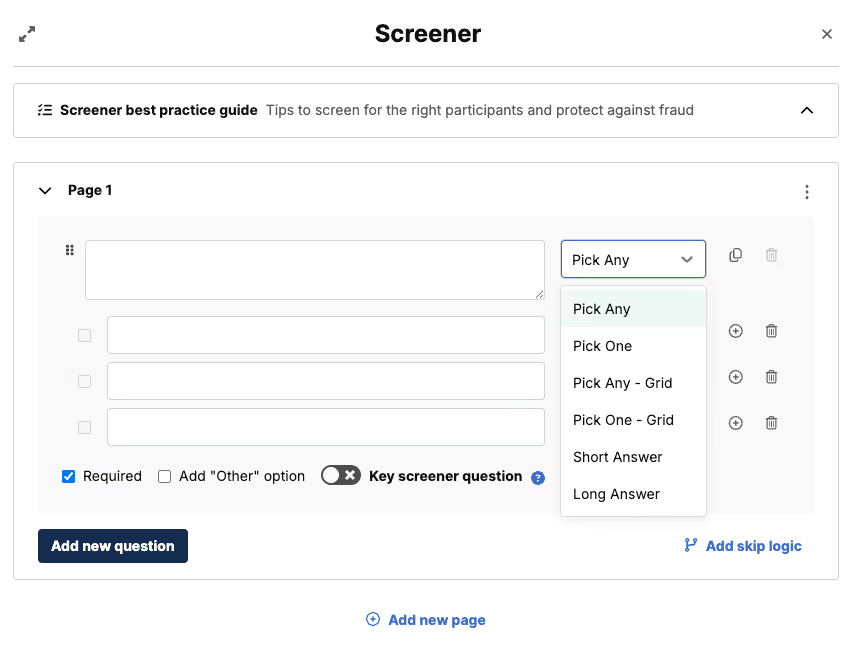
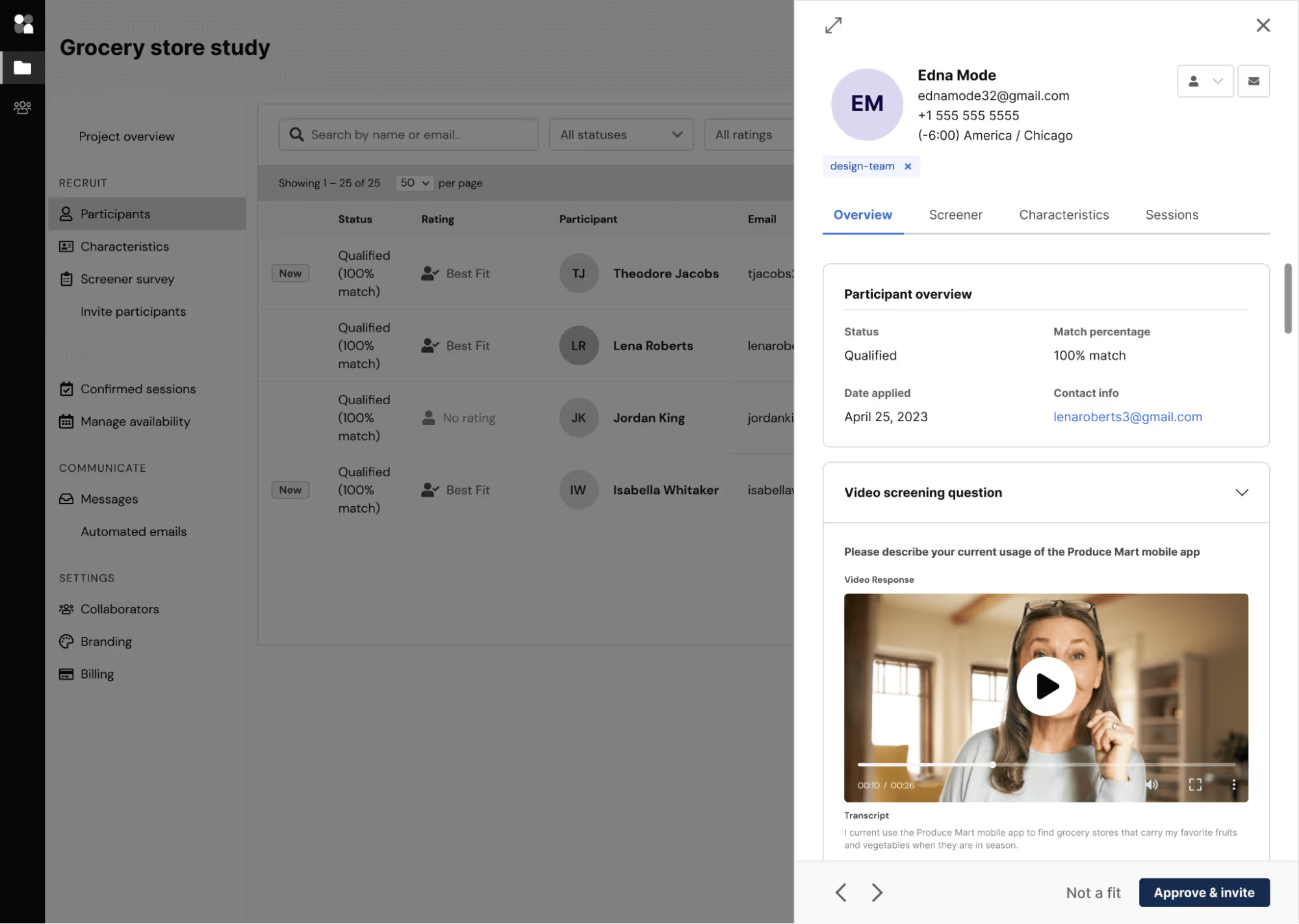
Researchers can also add an extra layer of validation by double-screening potential participants before confirming their spot in the group. With Premium Screening, you can contact screener-qualified candidates by email or phone, request a video response to a custom question, or manually verify their details against an existing user database.
This is particularly useful for focus group participants because it allows you to identify introverted and extroverted individuals, as well as those with more dominant personalities that may influence group dynamics. You can see how they talk on video to assess their communication style and determine whether they'd be a good fit.
4. Set incentives that actually draw in high-quality participants
Focus groups require more time and energy than a simple survey or unmoderated task, and your incentives should reflect that.
If your compensation is too low, you risk attracting disengaged participants who aren’t genuinely interested in the topic or willing to contribute meaningfully to focus group discussions.
Not sure what your focus group incentive should be? Try our User Research Incentive Calculator, which provides recommendations based on data from 20,000+ completed research projects.
Because focus groups often take 60–90 minutes (or longer), the most qualified participants will weigh the time commitment against the reward. Offering competitive, well-timed incentives shows you respect their time and are serious about the quality of the session, which in turn helps you recruit more thoughtful, reliable contributors.
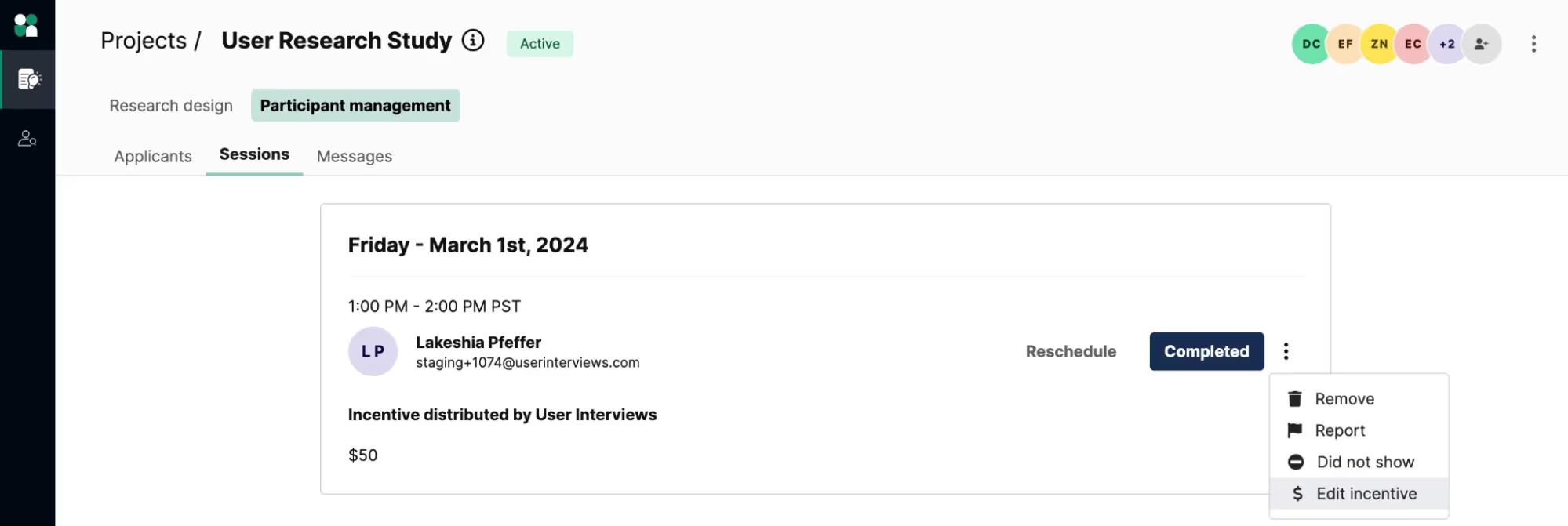
User Interviews makes incentive management simple and effective. You can offer over 1,000 incentive types (such as Amazon gift cards, cash payments, and charitable donations) across 200+ countries.
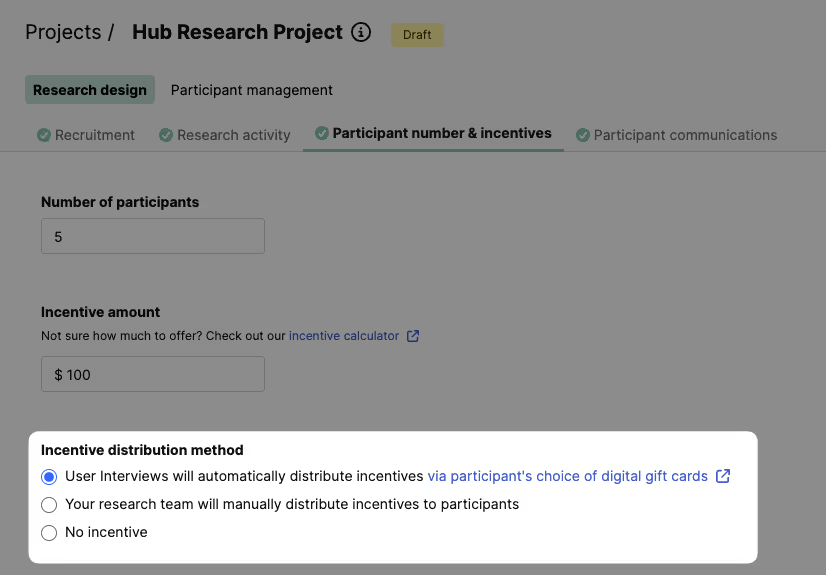
Our platform supports multiple currencies, including USD, GBP, EUR, AUD, and more. Plus, you can set up incentives to be automatically sent once a focus group session is complete.
We also allow manual incentive payments, but your payment options are more limited, and it tends to take longer to compensate participants.
If you're struggling to attract participants, it could be because the incentive is too low. Even after launching your project, you can still increase your incentive amounts through our platform. This is a common strategy that researchers use to test the market and see what works.
5. Automate participant scheduling to reduce the number of no-shows
Even if you’ve carefully recruited the perfect mix of participants, your efforts will be wasted if people don’t show up for sessions. No-shows are particularly disruptive in focus groups because you rely on every individual to be present to have a meaningful conversation.
For instance, if you recruit a focus group of five people and two don't show up, your conversation will already be less insightful before it even gets started.
With online focus groups, coordinating the schedules of multiple participants for a single session is even more difficult. Trying to do this manually (through email, spreadsheets, or calendar juggling) opens the door to miscommunication, double bookings, and missed reminders, all of which increase your risk of empty seats on session day.
User Interviews helps prevent that with automated scheduling tools built for focus group research. When you select “Focus Group” as your study type, the platform tailors the scheduling workflow for group sessions, letting you set session length, number of people per session, and availability all in one place.
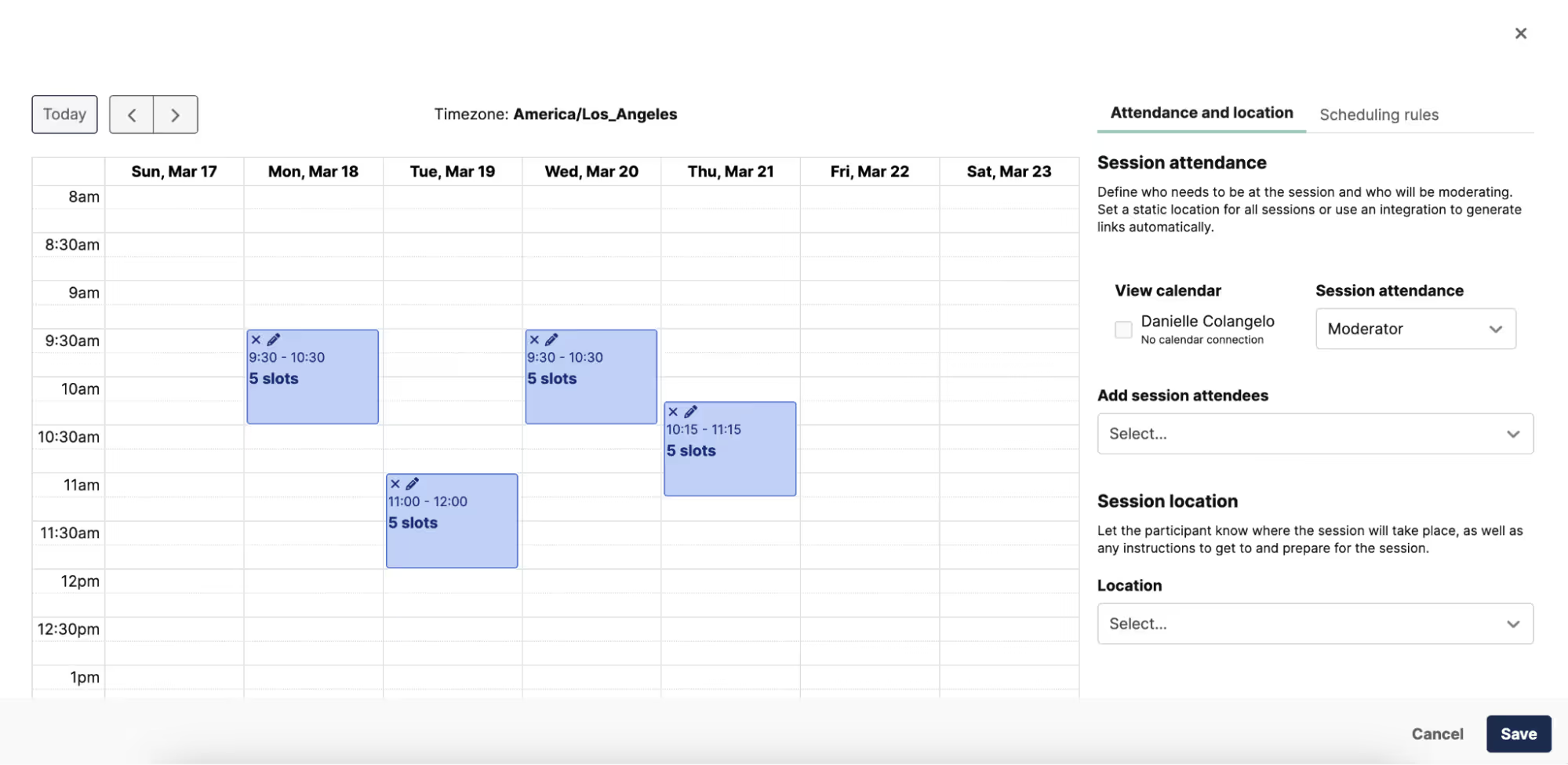
You can also define buffer times, session caps per day, and required team members (like moderators or notetakers), and the system handles the coordination behind the scenes.
Once you publish session times, participants choose from available slots that fit your rules. From there, the platform sends automated confirmations and reminders via email, with options to reschedule if needed. You can even include key details, such as a Zoom link or a researcher's contact number for last-minute questions.
To further reduce no-shows, we recommend a consistent outreach cadence:
- A confirmation email at sign-up
- A reminder, one week out
- Another, the day before
- And a final nudge a few hours before the session
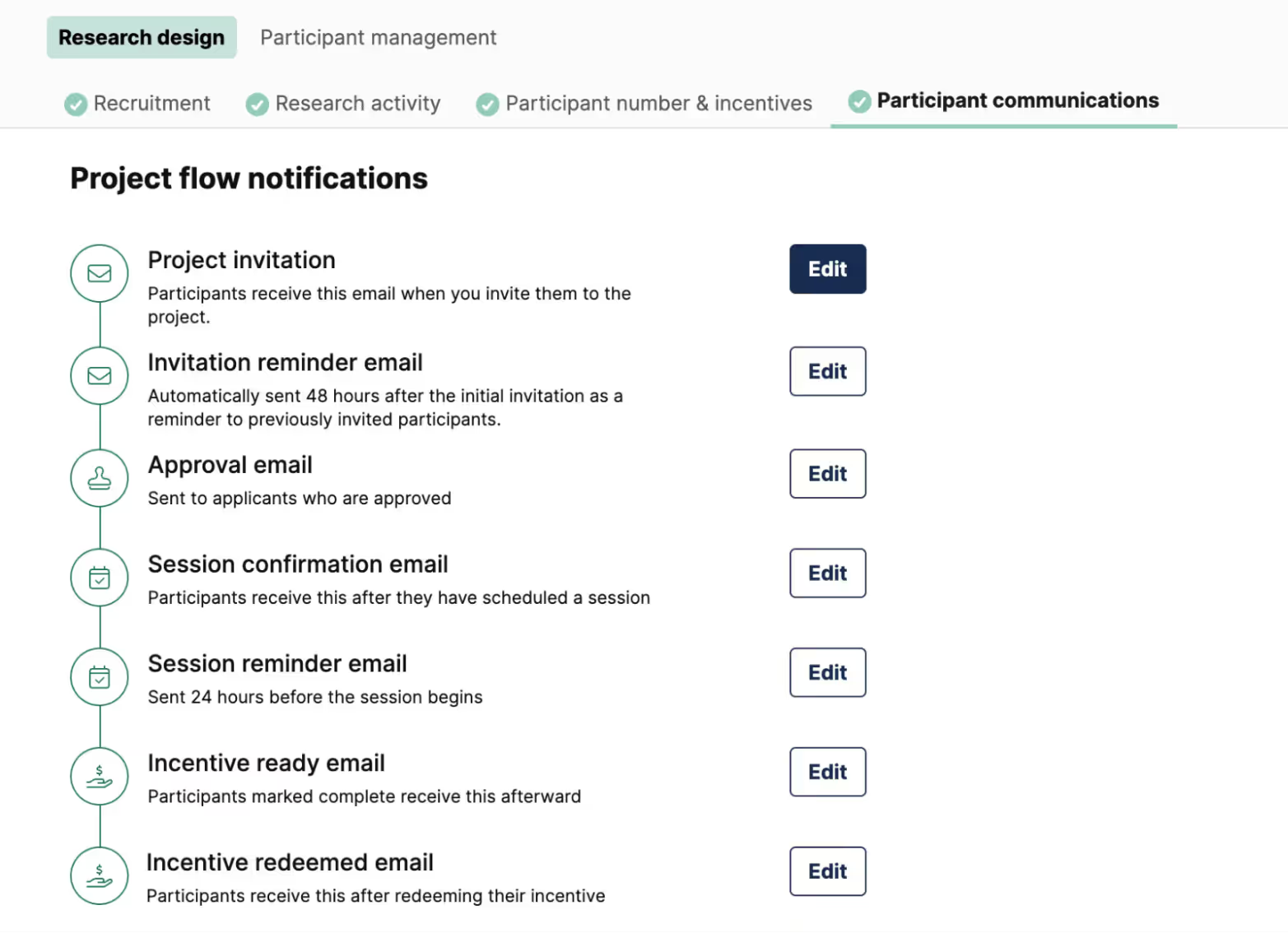
User Interviews supports this cadence with customizable, automated messages, so participants stay engaged, informed, and much more likely to show up on time.
🔭 Take a self-guided tour of our platform and see how easy it is to recruit participants, manage panels, and run better research—all in one place. Explore the Demo Center —>
Finding the most qualified participants for your focus groups
The success of your focus group depends on the quality, diversity, and engagement of your participants. That’s why a thoughtful, strategic approach to recruitment is critical from the start. The five steps and best practices outlined in this article will help you attract group-ready respondents who contribute meaningfully to discussions and deliver valuable insights.
User Interviews solves most of the typical problems you'll face during the focus group recruiting process. From offering a panel of 6 million high-quality individuals to providing advanced tools for targeting, screening, and scheduling, you can confidently handle all tasks within our platform.
Want to find out how you can get actionable market research insights from focus groups? Book a demo with User Interviews today to learn more.