



Going global with UXR isn't just "research in another country"—it's a maze of cultural nuances, currency issues, and scheduling puzzles. Get it wrong, and you'll get bad data from the wrong participants. The fix is in the details: Localize your screeners (filter by behavior, not just labels, and avoid literal translations). Automate multi-currency incentives (so you don't frustrate participants). And automate scheduling (to end time zone confusion).
Going global with your UX research? It’s a huge, exciting step. But it also means you’re not just crossing borders—you’re crossing cultures, languages, and entirely new sets of user expectations.
And while there's overlap with domestic research, international UX research has its own set of unique challenges. (We know. We’ve seen it all while supporting global research through our panel of over six million qualified participants.)
Get the approach wrong, and you risk a ton of problems:
- Recruiting participants who don’t actually represent your target market in a given region.
- Relying on literal translations that miss cultural nuance and skew responses.
- Mishandling incentives across various currencies, leading to frustrated participants and compliance issues.
- Struggling to coordinate sessions across multiple time zones, which can cause confusion, drop-offs, and no-shows.
We’ll walk you through six steps we use to get conducting high-quality international UX research right. You’ll learn how to avoid common pitfalls, set up reliable processes, and use proven strategies for recruitment and management, with real-world examples from the User Interviews platform.
User Interviews is now recruiting worldwide—in 34 countries! Learn more about our expanded coverage across North America, LATAM, Europe, and Asia-Pacific.
What is international UX research and why is it different from domestic research?
At its core, international UX research is the practice of studying how people in different countries and cultures interact with your product or service.
The research aims to explore how cultural norms, language, technology ecosystems, and expectations influence user experiences and behaviors. This includes both qualitative research (like user interviews and usability testing) and quantitative research (like surveys and behavioral data).
UX teams typically do international research for a few reasons, including:
- Launching into new markets and wanting to validate assumptions before rollout.
- Testing to see if what “works” in one country will fail in another due to social, linguistic, or behavioral differences.
- Looking to localize features, pricing, or flows to maximize adoption.
- Testing in advance prevents embarrassing (and costly) missteps in new regions.
- Understanding user needs deeper than competitors enables better positioning and retention globally.
Expanding research across borders introduces new layers of complexity. Recruiting participants abroad, managing incentives in different currencies, and accounting for cultural nuance all add challenges that teams only researching domestically don’t face.
Let’s walk through the six steps to conducting high-quality international UX research so you can gather in-depth insights from global participants.
🔭 Take a self-guided tour of our platform and see how easy it is to recruit participants, manage panels, and run better research—all in one place. Explore the Demo Center —>
6 steps to conducting international UX research
Running research across borders requires more than just repeating your domestic process in a new location.
You need to account for cultural subtleties, language, recruitment quality, incentives, and scheduling—all while keeping stakeholders aligned and participants engaged. Here are six steps to help you plan and execute international UX research that delivers reliable, actionable insights from the right participants.
1. Define your research goals
Before you can run any successful international research project, you need a clear plan. Too often, UX research teams rush into cross-border research without first defining which markets are most important and what they aim to learn. This typically results in generic insights that don’t translate into better business decisions.
A good international research plan gives your team alignment from the start. It sets expectations with stakeholders, ensures your recruitment targets the right participants, and establishes a clear direction for analyzing results later.
When defining your market and goals, consider the following:
- Which markets to prioritize: Are you preparing to launch in a new country, or validating adoption in an existing one? Focus on regions that align with your growth strategy.
- What you want to learn: Is the research exploratory (understanding cultural behaviors) or evaluative (testing a feature before rollout)? Be specific enough to know when the research is “done.” Clearly state which research methods you’ll use, whether surveys, interviews, or usability testing.
- How this ties back to business goals: Connect your research outcomes to revenue growth, adoption, retention, or expansion. This helps you earn stakeholder buy-in.
- Who your target participants are: Define the demographics, behaviors, or professional roles you’ll need to recruit, and start mapping those groups into personas for each market.
- What decisions this research will inform: Whether it’s pricing, localization, or UX design validation, clarify the decisions stakeholders expect to make with the research findings.
For example, instead of a vague goal like “understand how users in Europe feel about our product,” a stronger research goal would be:
- “Identify barriers to adoption among first-time users in Germany and France to inform our onboarding redesign.”
Starting with clear goals also makes recruitment far easier. Mapping out your markets up front helps you set precise filters when sourcing participants. The same is true for nearly every phase of the process: screening, scheduling, and incentives.
With User Interviews, you can map your goals directly to participant filters, study setup, and incentive rules inside the platform. That way, when it’s time to launch internationally, your team isn’t struggling with logistics.
Our platform centralizes all your user research operations, ensuring you're already aligned on who you’re targeting, why you’re studying them, and how results will connect back to your business goals.
Want a head start on planning your next user experience research study? Use our free UX Research Plan Template to define your goals, align stakeholders, and set your international projects up for success.
2. Recruit the right participants
Recruiting participants is often the hardest part of any study. And this becomes even more challenging when recruiting people across borders.
Most standard DIY methods, such as social media outreach, spreadsheets, or ad hoc email lists, will be even less effective, causing you to waste time searching for those who don’t qualify, misrepresent their background, or never respond.
International UX research depends on finding participants who accurately reflect your target market, can reliably articulate their thoughts, and show up when scheduled.
User Interviews helps you recruit the right participants quickly and confidently by providing access to a proprietary panel of over six million vetted participants across 34 countries.
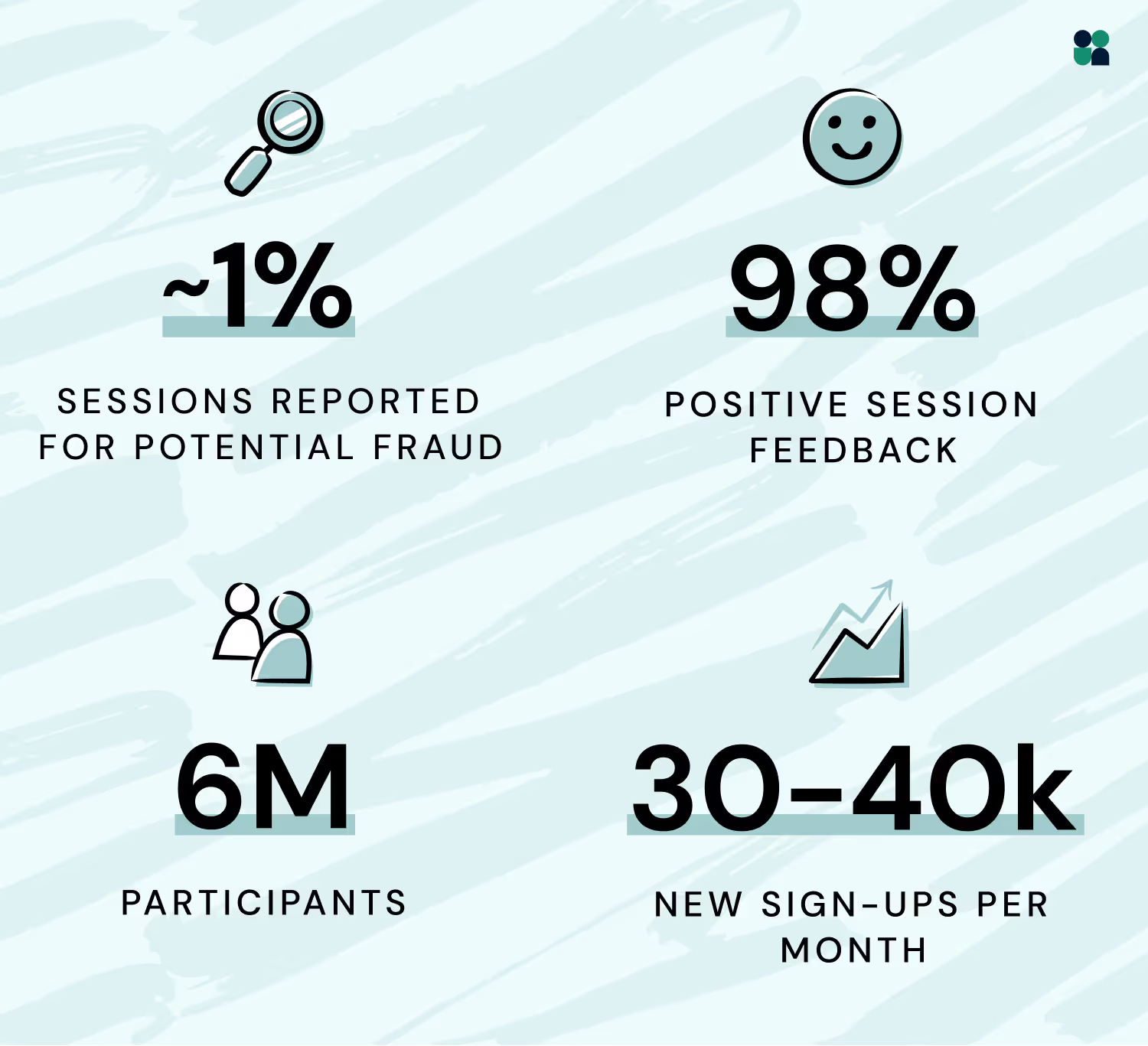
Our Recruit system handles recruitment directly, maintaining fraud rates below 1.0% through a matching model trained on over 20 million unique data points.
Key participant safeguards include:
- Rich profile data: Participants provide detailed demographic, professional, and behavioral information, along with social media verification (e.g., LinkedIn, Facebook).
- Duplicate protection: Systems block duplicate emails or accounts, preventing people from gaming the system and joining the same study multiple times.
- Quality monitoring: Participants who fail to show up, misrepresent themselves, or behave unprofessionally are flagged and excluded from future studies.
- Researcher feedback loop: After every session, researchers can rate participants. Poor performers are automatically reviewed and filtered out of the panel.
- Fraud detection models: The system flags copy-pasted screener answers or AI-like responses, while predictive data models proactively remove suspicious participants.
User Interviews also makes it easy to precisely target participants so your sample truly reflects the market you’re studying. Advanced filters allow you to define:
- Demographics: Age, gender, education, income, and marital status.
- Behaviors: Specific habits like “shops online weekly” or “uses mobile banking daily.”
- Psychographics: Interests, hobbies, and lifestyle choices
- Professional characteristics (B2B): Job titles, industries, or years of experience.
- Geography: Countries, cities, or regions (e.g., users in London vs. Manchester).
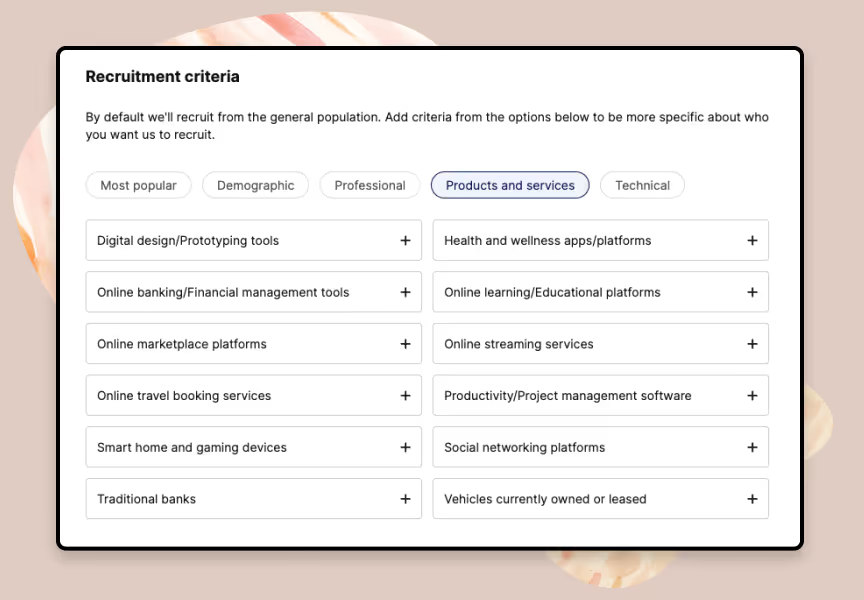
For global studies, you can use geography filters with behavioral and professional targeting. For example, instead of recruiting “general consumers in Italy,” you might recruit “professionals in Milan who order groceries online weekly.”
3. Localize your screeners and research materials
Every research study needs a screener survey, but it’s especially important in international user research because you’re working across different cultures and languages.
These short questionnaires help ensure the people you recruit actually reflect the realities of their local market and meet your study’s qualifications. Without localized screeners, you risk accepting participants who cannot provide meaningful feedback.
Through an analysis of more than 42,000 screeners on our platform, we’ve identified a set of best practices that make surveys more reliable and effective across all markets:
- Filter by behaviors, not just demographics. A “small business owner” looks very different in the U.S. than in India, so specific behaviors will tell you more than labels.
- Ask disqualifying questions early. Save time by screening out mismatched participants at the start. For example, if your study is testing a new ridesharing feature in England, your first screener question might be: “How often do you use Uber, Bolt, or another ridesharing app in your city?” Anyone who answers “Never” or “I don’t use these apps” can be immediately disqualified, rather than answering more questions only to be screened out later.
- Avoid leading questions. Neutral phrasing prevents participants from gaming the system to qualify. So instead of asking, “Do you use Spotify to listen to music?” (which tips participants off to the “right” answer), ask, “Which of the following music streaming services do you use regularly?” and provide a list that reflects the local market.
- Include at least one open-ended question. This tests for articulation and reduces low-effort responses. Ask, “What’s your favorite food delivery app and why?” A thoughtful participant might say, “I prefer Deliveroo because it offers more local restaurant options in my neighborhood.” On the other hand, a low-quality respondent may give a one-word answer like “Uber Eats.”
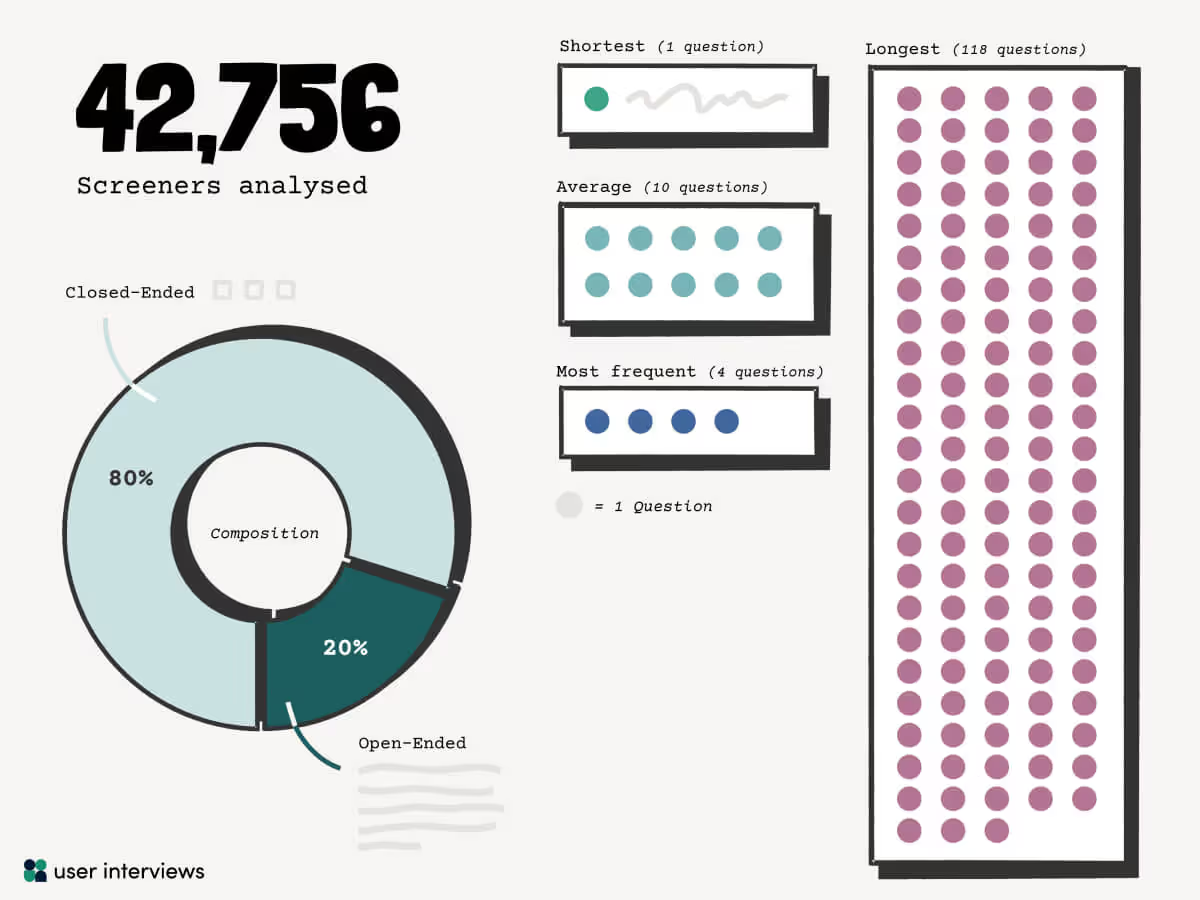
With User Interviews, you can build custom screeners tailored for international studies using a drag-and-drop interface. The platform supports multiple question types, including pick-one, multi-select, short-answer, long-answer, and video-response.
For longer questions (e.g., listing all possible streaming services, payment apps, or job roles in a region), you can bulk paste answers instead of typing them one by one. This makes it easier to account for local variations without spending hours manually building each screener.
Any screener can be saved as a template, so once you’ve localized a version for a market (such as Spain or Brazil), you can reuse it in future studies without having to start from scratch. This saves time and helps keep global research more standardized.
Additionally, User Interviews offers more advanced screening features that provide additional protection against low-quality or fraudulent respondents:
- Premium Screening: Contact participants directly via email, phone, or video response to confirm their identity and double-check their expertise before accepting them to a study.
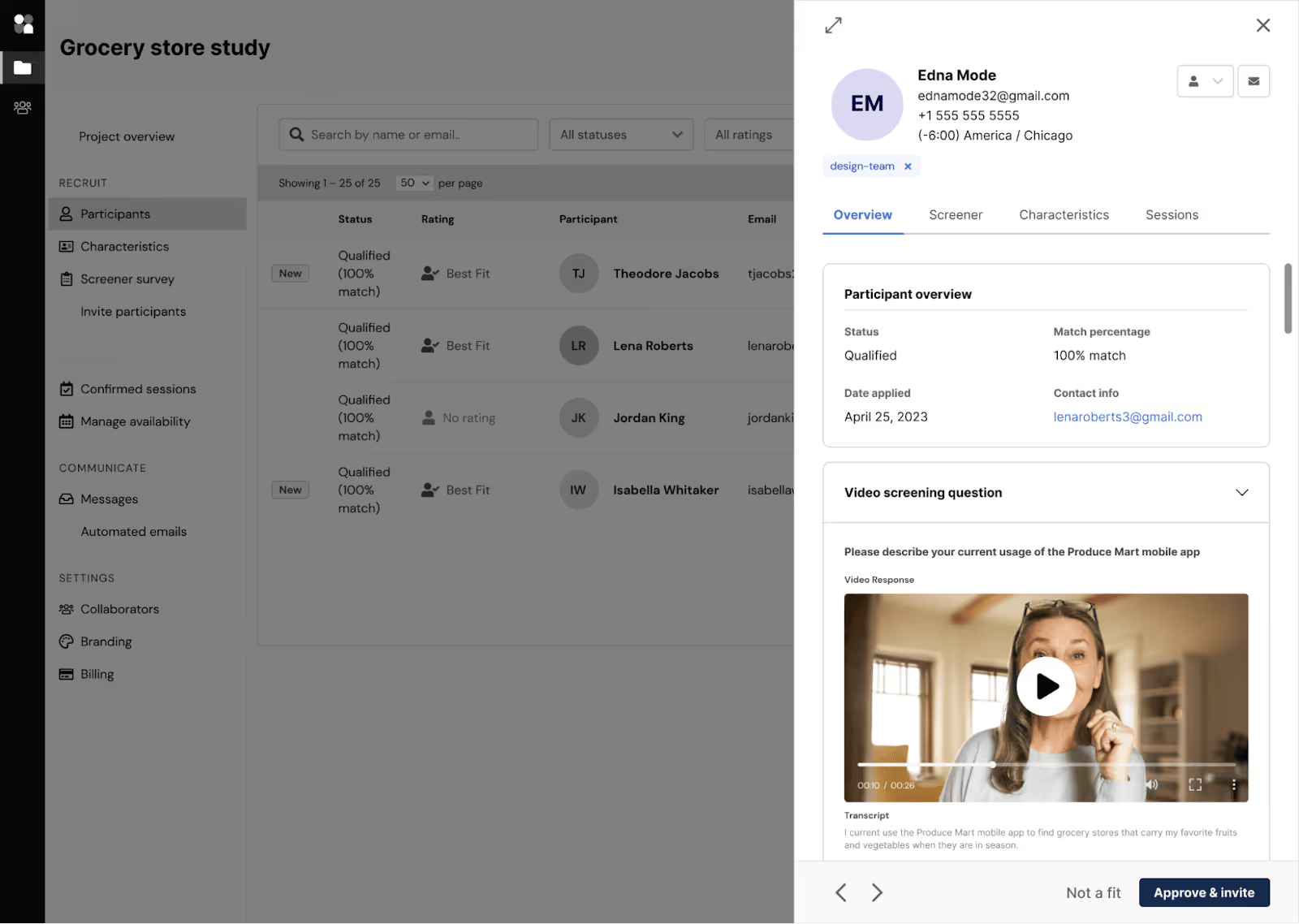
- Video screening: Ask participants to record a quick 90-second video answering a custom question, such as “Tell us about the last time you purchased groceries online.” In international research, this instantly reveals both their qualifications and their ability to articulate clearly.
4. Manage incentives across borders
Keeping international participants engaged and motivated is key to gathering useful insights. The best way to do this? Offer fair research incentives that accurately reflect the time and effort required.
Incentives that are too low, too slow, or culturally irrelevant risk attracting “professional survey takers” or discouraging qualified participants from joining your study at all.
With User Interviews, incentive management is seamless and built for global studies. You can:
- Choose from 1,000+ incentive types in AUD, CAD, GBP, EUR, USD, and more, available across 200+ countries.
- Distribute instantly once a session is complete, so participants aren’t waiting weeks for compensation.
- Send incentives automatically or manually. Let the system handle incentives automatically, or process your own while still benefiting from tracking and reporting features.
- Adjust after launch. Increase incentive amounts mid-project to attract more participants or expand your reach into harder-to-recruit markets.
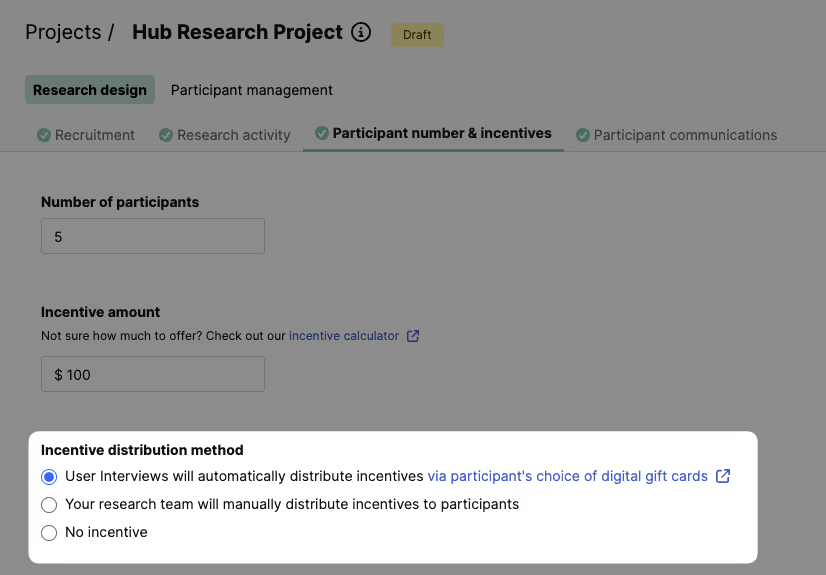
Automating incentive fulfillment across currencies and countries with User Interviews removes one of the most frustrating barriers to international UX research. Instead of worrying about payment logistics, you can focus on analyzing the insights.
5. Automate your session scheduling across different time zones
With User Interviews, you can set your availability, session length, and buffer times once, and the platform automatically handles the rest. Participants see sessions in their own local time zones, sign up for the slots that work best for them, and receive a series of automated reminders to reduce no-shows.
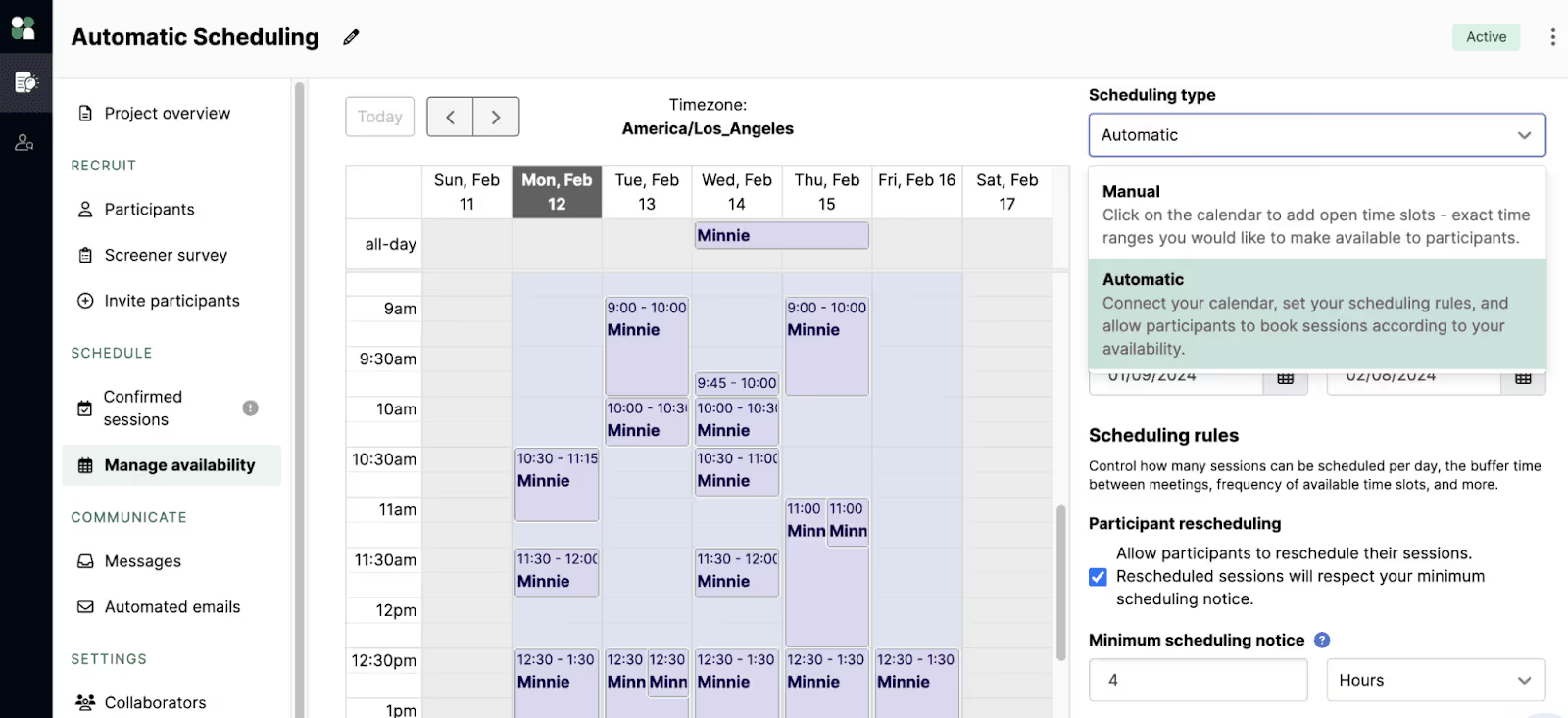
Reminders can be fully customized with your branding and important details, such as a Zoom link, moderator name, or setup instructions, so participants arrive prepared. Most teams use a three-touch cadence (day before, morning of, one hour before) to maximize attendance.
If someone can’t make it, they can reschedule themselves into another open slot without exchanging emails back and forth. You can also assign moderators, manually adjust schedules when needed, and track attendance all within the platform.
Automated scheduling ensures international research runs smoothly, particularly when multiple studies are underway and interviews must be conducted with individuals across different time zones. Instead of spending hours coordinating across time zones, you’ll know every participant is confirmed, reminded, and ready to join on time.
6. Grow and nurture your own international panel
Not every participant has to come from a recruitment panel. Many teams already have customers, beta testers, or community members in different countries who are eager to participate in research. The challenge is maintaining that group's organization, compliance, and engagement over time.
With User Interviews’ Research Hub, you can centralize your own international panel in one customizable database. Import existing contacts via CSV, enrich profiles with custom fields (like job title, region, or user behaviors), and track participation history — all in a single system.
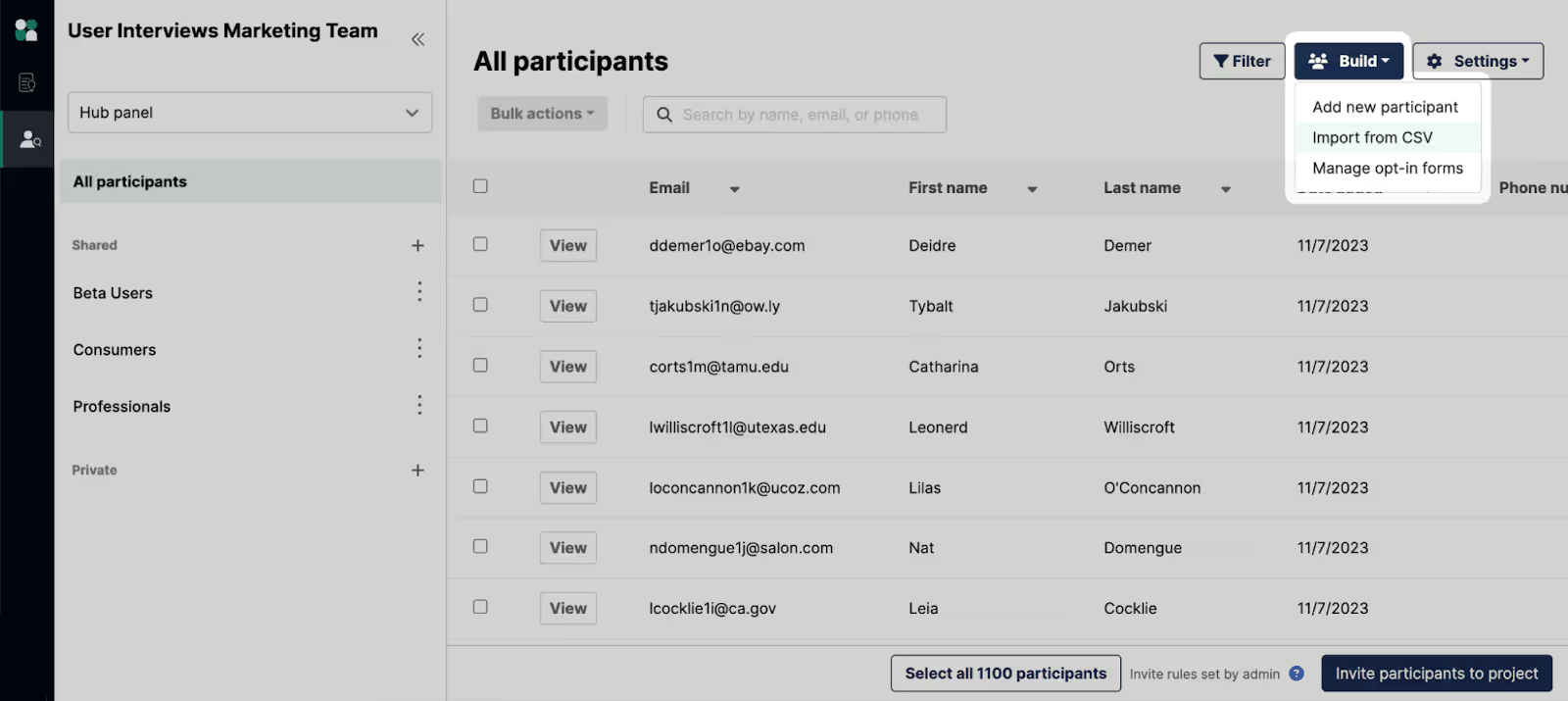
This makes it easy to filter, segment, and invite the right participants for each study, whether you’re running interviews in London, surveys in São Paulo, or usability tests in Tokyo.
Research Hub helps you:
- Grow your panel: Use branded opt-in forms that can be shared via email, websites, or in-app prompts. Participants self-recruit by submitting their details and answering custom questions, which are then directly imported into your database.
- Maintain quality: Set invite rules to prevent over-contacting participants or exceeding incentive thresholds. For example, you can limit invites to participants who haven’t completed a study in the last 90 days to keep your feedback fresh.
- Stay compliant: Collect built-in consent and manage participant data in accordance with GDPR and other relevant privacy regulations across multiple markets.
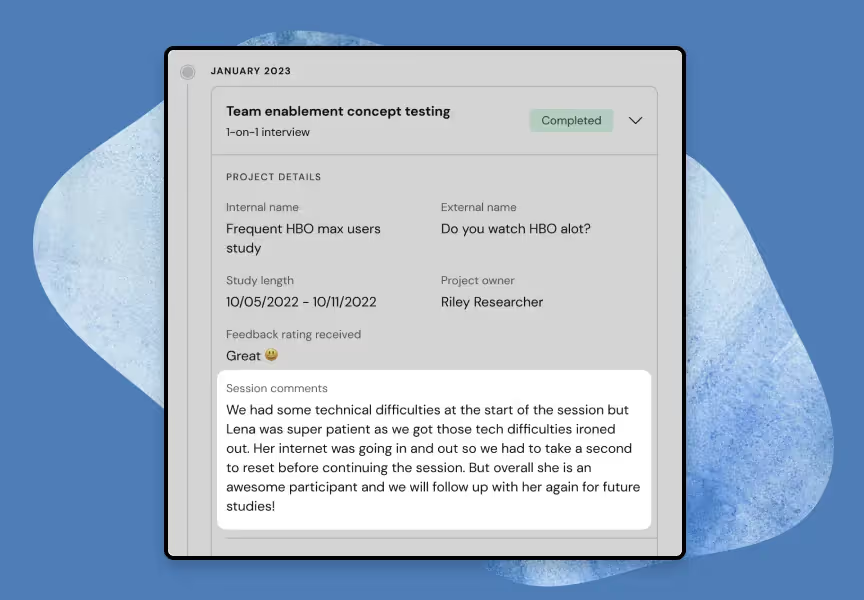
- Track engagement: Detailed profiles show who has participated in which studies, their screener answers, incentive history, and any team feedback. This history helps you decide who’s a strong fit for future research.
Simplify international UX research with User Interviews
Expanding your research across borders adds a level of complexity at various steps. Recruiting participants in new markets, localizing screeners, scheduling across time zones, and handling incentives in multiple currencies can overwhelm even the most experienced research teams.
Without a reliable system, it's easy to struggle with these tasks and gather research insights that meet your goals. User Interviews is built to take the friction out of international research. Our platform connects you with a vetted global panel of over six million participants across dozens of countries, while also giving you the tools to manage your own panel through Research Hub.
Automated time-zone scheduling, localized incentive fulfillment, and built-in compliance features help ensure your studies run smoothly no matter where your participants are.
Ready to run research across borders with confidence? Book a demo with User Interviews and start reaching the right participants worldwide.