


Picking a customer feedback tool is easy. Picking the tools that actually give you the insights you need to turn what people think, feel, and need into better products, stronger sales, and smoother operations is harder.
Interviews, surveys, and analytics each surface different signals, and the right mix depends on what you’re trying to learn. With that in mind, we’ve reviewed the 12 top platforms across three main customer feedback collection categories:
- Customer interview tools for qualitative understanding.
- Survey tools for direct customer feedback.
- Analytics and social listening tools for behavioral data.
But before we dive in, here are the three ways to collect customer feedback — and how each one can help teams uncover different types of insights.
The 3 ways to gather customer feedback
Gathering customer feedback is an ongoing process as teams look to learn how customers feel about their experience with the brand, new product launches, customer support efficiency, etc.
Instead of treating feedback as a box to check after a launch, the most effective organizations approach it as a continuous discovery loop. They're always asking new questions, measuring responses, and learning how to improve.
This helps them spot problems early, validate ideas before scaling, and keep products aligned with customer needs.
According to our State of User Research 2025 data, 43% of teams do continuous research to gather regular customer feedback. This includes methods like user analytics, surveys, integrating sales, support, and product data, and ongoing customer interviews.
Below, we'll cover the three main ways teams use continuous research to collect customer feedback.
Customer interviews
When it comes to gathering customer feedback, nothing is more valuable than hearing directly from your customers.
Unlike surveys that tell you what customers think, ongoing customer interviews (whether informal or formal, 1:1 or with a team, or advisory sessions) uncover why they feel that way. For example, weekly or monthly check-ins with customers can reveal brand expectations, emerging pain points, or opportunities for improvement long before they show up in metrics.
Making these conversations a habit offers three primary advantages:
- You’ll spot issues early, allowing you to fix problems before they escalate.
- You can prioritize roadmap decisions with real customer needs, guiding what gets built next.
- You can build a feedback-first culture where teams stay grounded in the customer’s voice, rather than relying on assumptions.
The challenge, of course, is that interviews take time and can be difficult to scale. But with your own research participant panel and the right feedback tools, continuous customer conversations become a sustainable way to keep your product aligned with real user needs.
Ready to implement customer interviews into your workflow? Check out the Continuous User Interview Launch Kit, which includes practical resources, screener survey templates, and a crash course on gathering high-quality feedback through ongoing 1:1 conversations.
Surveys and direct customer responses
If you’re looking to gather customer feedback at scale, continuous feedback surveys are one of the most effective methods. They provide structured, measurable customer data that helps teams benchmark satisfaction, track changes over time, and gauge sentiment in real-time.
Methods like Net Promoter Score (NPS), Customer Satisfaction Score (CSAT), and Customer Effort Score (CES) are commonly used because they’re short, easy to answer, and offer a reliable signal of overall experience.

Teams can also use email or website intercept surveys to capture feedback at key moments in the customer journey (such as right after a purchase, within a specific feature, or during a support interaction) while the experience is still fresh.
However, running customer surveys doesn't come without risks. Long or poorly designed surveys cause drop-offs, and data without context can mislead key business decisions.
But when they're executed properly, customer surveys are one of the fastest ways to gather input from a large customer base and uncover patterns worth exploring further through interviews or behavioral analytics.
If you're looking for practical strategies to avoid these common survey pitfalls, check out our guide on how to increase survey response rates.
Behavioral and indirect feedback
It's possible to collect customer feedback without directly speaking with customers. In fact, some of the most valuable insights are hidden in how customers actually use your product on a day-to-day basis.
This is where behavioral user analytics comes in. Tracking user flows, drop-off points, activation rates, and feature usage can help teams collect visual feedback, see how customers actually engage with a product, and surface real-life pain points.
Behavioral data is powerful because it scales automatically. Heatmaps, session replays, and funnel analysis tools can capture the silent majority who never fill out a survey but still leave behind a clear trail of actions. For example, if a feature sees low adoption or a checkout flow has a high abandonment rate, those behaviors are strong signals of dissatisfaction that warrant further investigation.
The limitation, of course, is that analytics can’t tell you why customers behave a certain way. That’s why the best teams pair behavioral insights with surveys or interviews to provide a complete picture of the customer experience.
Top customer interview tools for deeper insights
If you’re looking to uncover how customers feel or why they do what they do, ongoing customer interviews will reveal things that surveys or analytics might miss. The tools below help you conduct customer interviews, providing richer context and a deeper understanding of your customers.
A good customer interview tool will include panel management features. Our State of User Research 2025 found that half of researchers use a tool for panel management, with over 40% of those using a non-specialized tool like Excel or Google Sheets or a CRM like Salesforce. This can become overwhelming, since you can’t keep track of who has participated, which customers are eligible, and when to reach out. A dedicated tool allows you to do all of these things from a single platform.
1. User Interviews
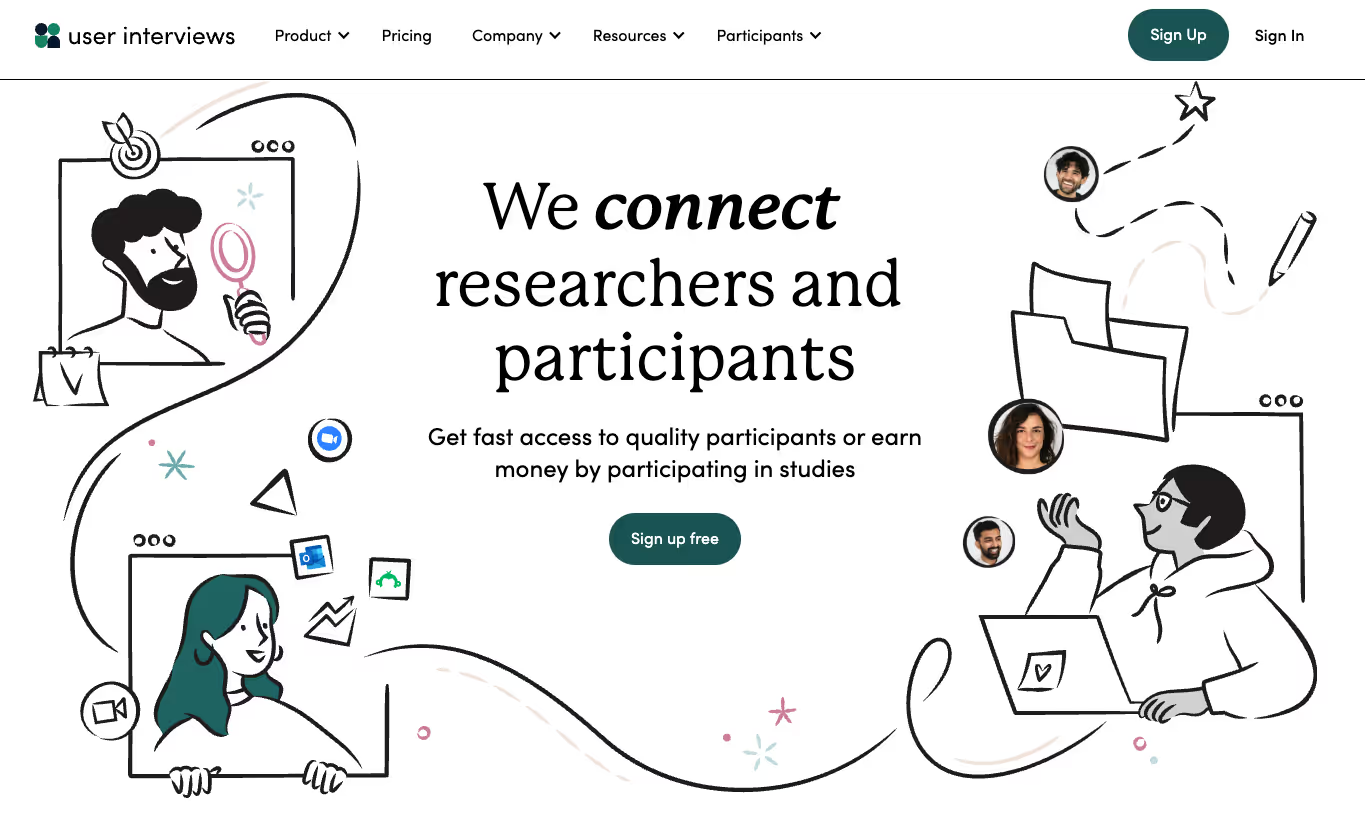
User Interviews is a participant management platform built to make customer research faster and more reliable.
It simplifies the most complicated parts of customer interviews, including finding qualified participants, screening for fit, scheduling sessions, managing incentives, and tracking participant history.
With User Interviews, you can:
- Build your own participant panel with CRM-style tools, opt-in forms, and full history tracking.
- Screen participants with customizable surveys so only the right people make it into your customer panel.
- Protect research quality with built-in fraud detection that weeds out bots and bad actors.
- Reduce no-shows by using automated scheduling and reminders to keep participants on track.
- Deliver instant incentives to participants so they stay engaged and motivated.
- Connect research with other systems via 20+ integrations with survey, feedback, and CRM platforms like SurveyMonkey, Typeform, Qualtrics, and Salesforce.
Build and manage your own panel of customers with Research Hub
.avif)
User Interviews' Research Hub is a specialized panel management tool that allows teams to create, manage, and scale private panels of their own customers. It works for many types of feedback programs, including surveys, moderated interviews, unmoderated tests, and long-term studies.
With Research Hub, you can:
- Segment participants by custom attributes (e.g., account type, product usage, or geography) to ensure the right customers are invited to the right feedback opportunities.
- Track participation history so you know who’s already taken part, how often they’ve been contacted, and how much they’ve earned in incentives.
- Automate invites and scheduling to streamline continuous research without overwhelming the same customers repeatedly.
- Use a research-specific CRM to build rich profiles, filter participants, and govern access to your panel.
Research Hub also makes growth easy. You can expand your panel through opt-in forms, CSV uploads, or integrations with your existing systems.
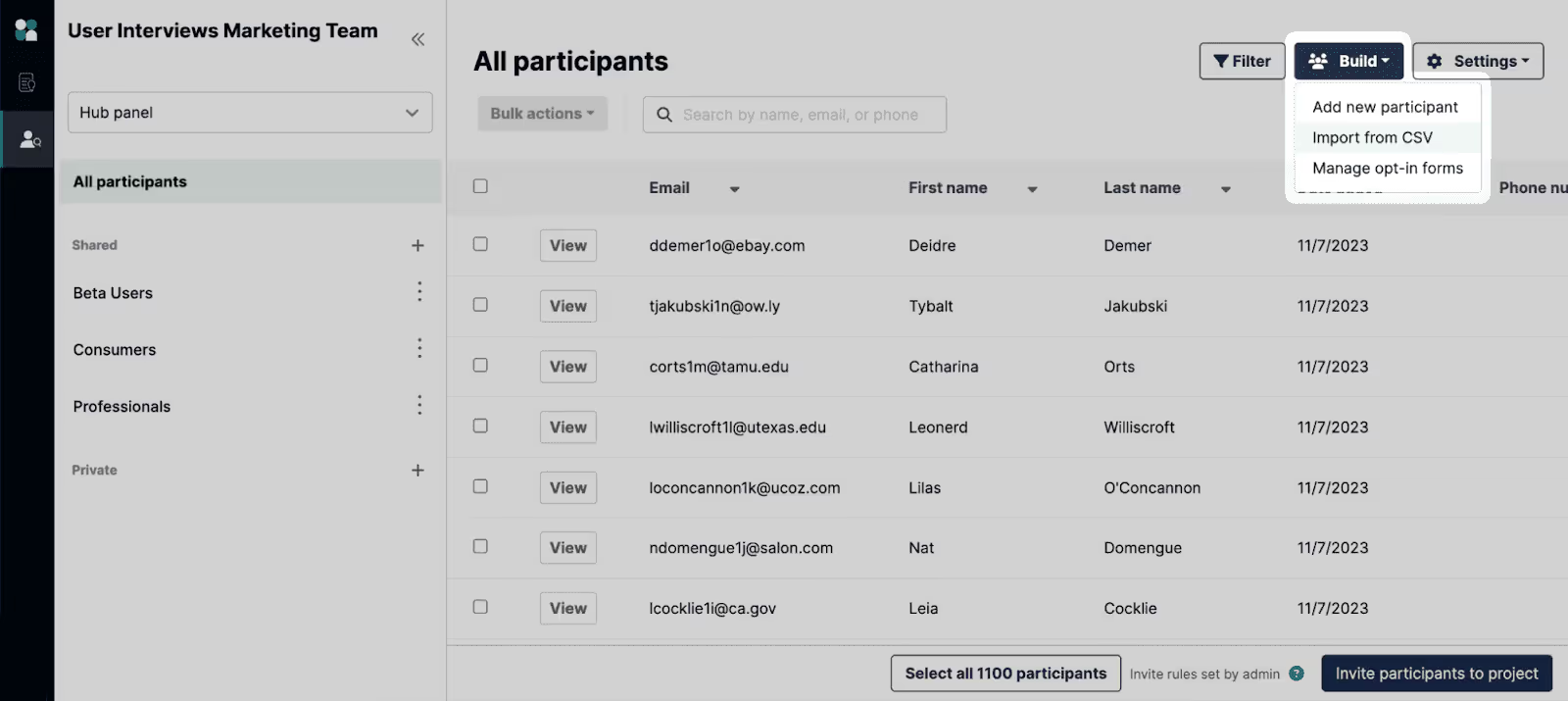
All of this helps ensure you’re both collecting valuable feedback data and building an always-available customer panel that fuels continuous discovery and ongoing product improvement.
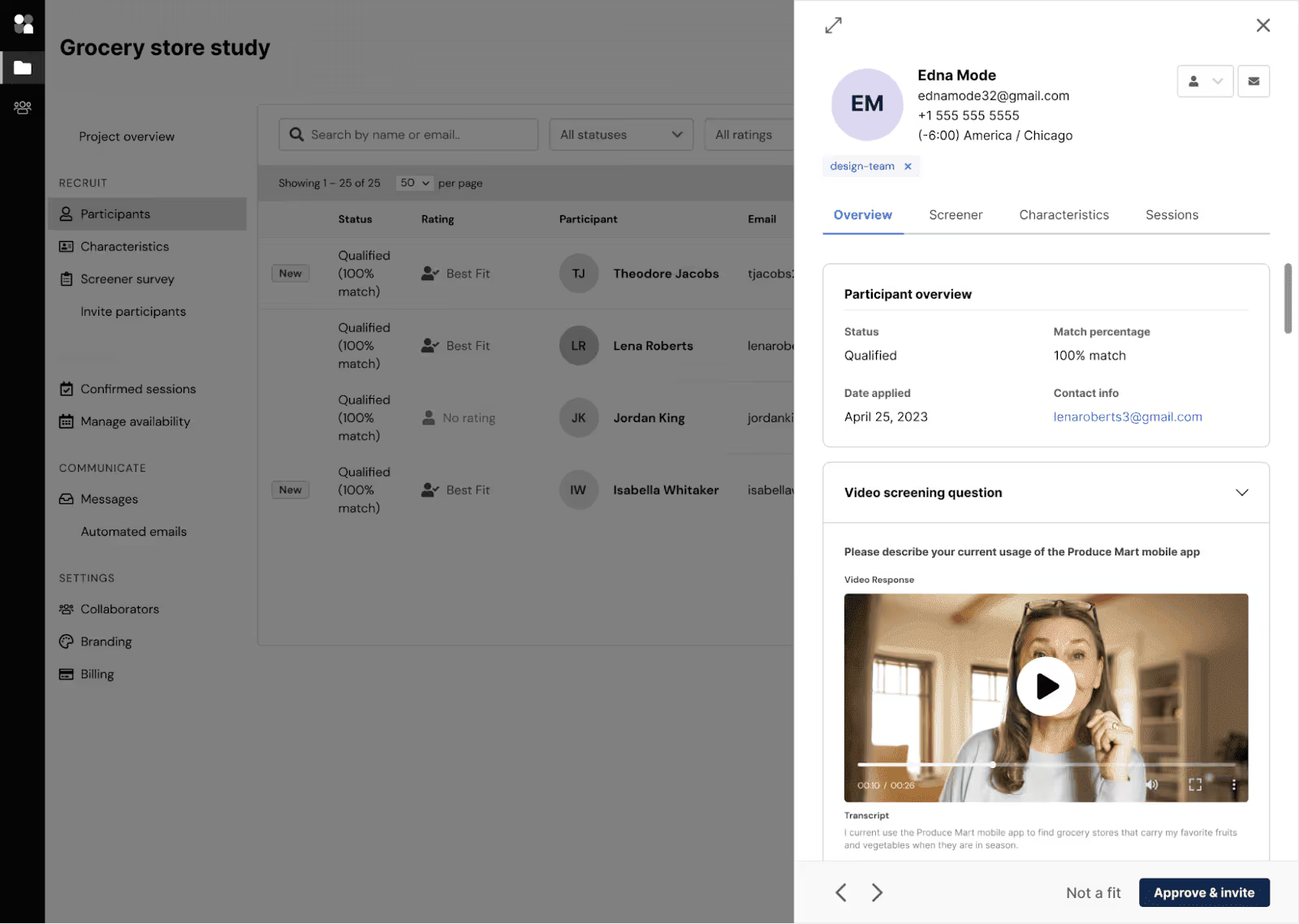
Create custom screener surveys to find the right participants
Even with a pool of your own customers, not everyone will be the right fit for every feedback opportunity. Without proper filtering, you risk inviting participants who can’t provide meaningful input, leading to wasted sessions and unreliable insights.
User Interviews offers customizable screener surveys that refine your participant pool before a study begins. The drag-and-drop survey builder supports multiple question types, including multiple-choice, short-answer, and even video responses.
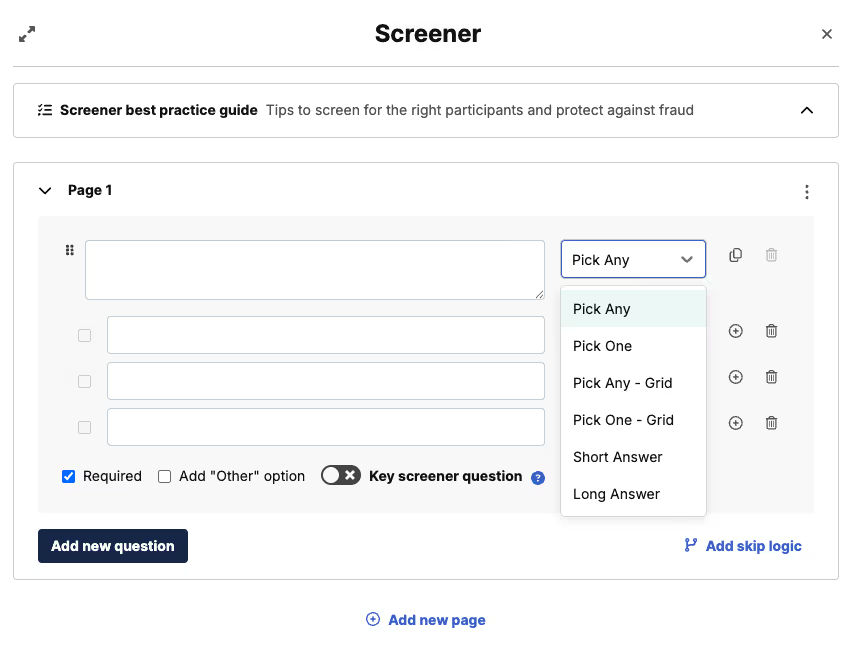
The platform also offers advanced features for screening like skip logic, which lets you tailor survey questions based on previous answers. For example, IOS users will be shown different questions than Android users.
Additionally, you can use double screening to verify user identities through email, phone, or video to see if they fit your criteria.
Every answer is stored in participant profiles, giving you new ways to filter, segment, and target users for future projects. You can even save screeners as templates, so once you’ve built the right flow, it’s reusable across studies.
Motivate customers to participate with built-in incentive management
Getting customers to share thoughtful feedback isn’t always easy. It is particularly challenging in longer interviews or more in-depth studies.
Without an incentive, many customers either decline to participate or rush through sessions without offering meaningful insights. Manually managing these incentives is also tedious, requiring separate tools and adding delays that frustrate participants.
User Interviews solves this issue with automated incentive management built directly into the platform. After a feedback session, rewards can be distributed instantly, with access to over 1,000 options ranging from gift cards to cash payments.
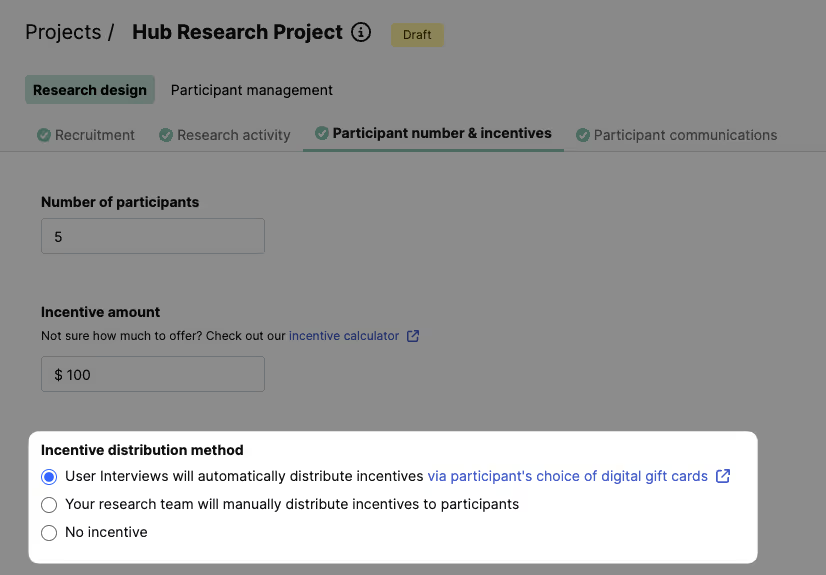
The system supports multiple currencies and automatically converts payouts into the participant’s local currency, ensuring a seamless experience regardless of their location.
For teams that need more control, incentives can also be managed manually within the platform. You can adjust amounts at any point, which can be useful when you need to boost participation rates for harder-to-reach audiences or expand the scope of your feedback program.
This not only saves your team time but also makes customers more willing to engage in meaningful conversations.
Automate session scheduling and reduce no-shows
Coordinating customer feedback sessions manually can be difficult, especially for larger companies looking to gather feedback at scale. The manual approach typically involves back-and-forth communication via email, calendar conflicts, and last-minute cancellations.
This results in less feedback collected, longer timelines, and a frustrating experience for customers who actually want to share their input.
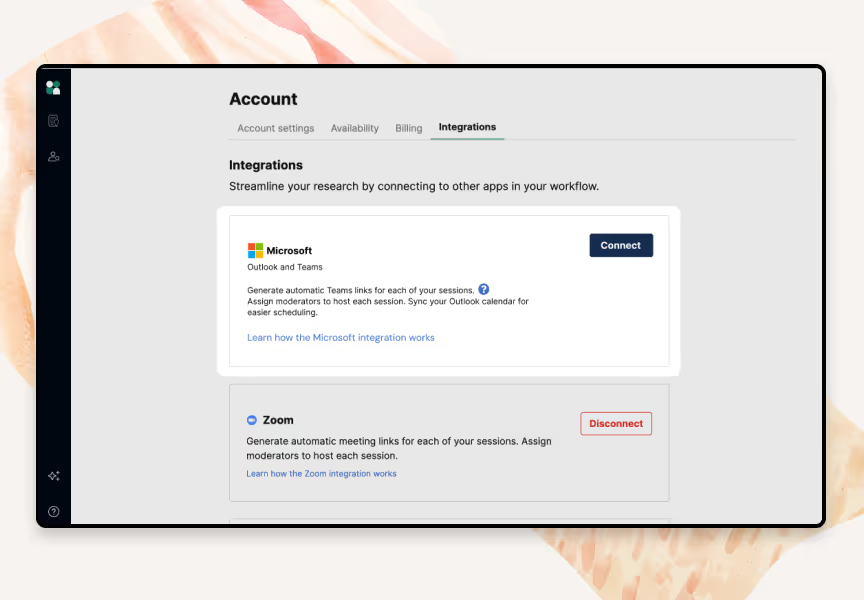
User Interviews streamlines this process with automated scheduling that connects directly to tools like Google Calendar, Outlook, Zoom, or Google Meet. Participants can pick from your pre-set availability and confirm a time instantly.
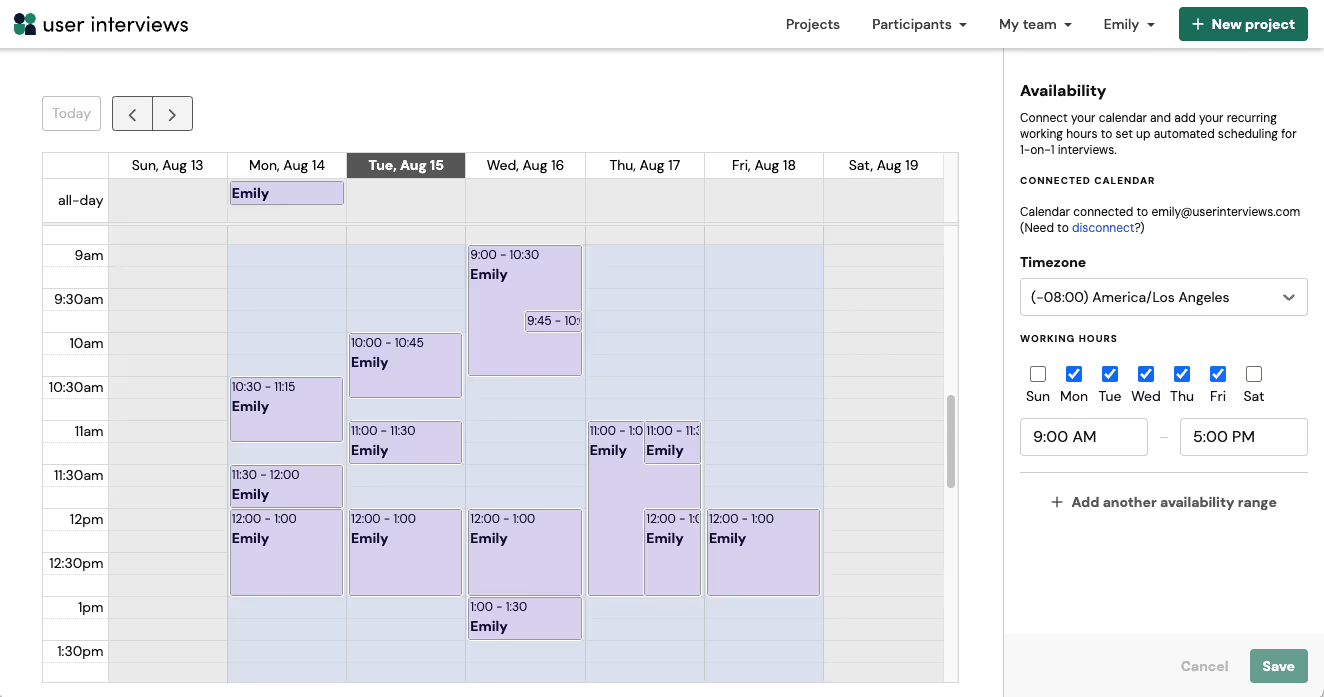
You can set the rules beforehand (such as session limits, buffer times, and notice periods), allowing participants to easily reschedule without disrupting the entire project. Automated reminders further reduce drop-offs and the need to follow-up, ensuring sessions remain consistent and on track.
The platform also offers built-in collaboration features, including automated notifications for schedule changes and upcoming sessions. You can assign moderators, required attendees, or optional observers so the right stakeholders are present in every session.
With scheduling handled in the background, your team spends less time on logistics and more time capturing customer insights.
🔭 Take a self-guided tour of our platform and see how easy it is to recruit participants, manage panels, and run better research—all in one place. Explore the Demo Center —>
2. Dovetail
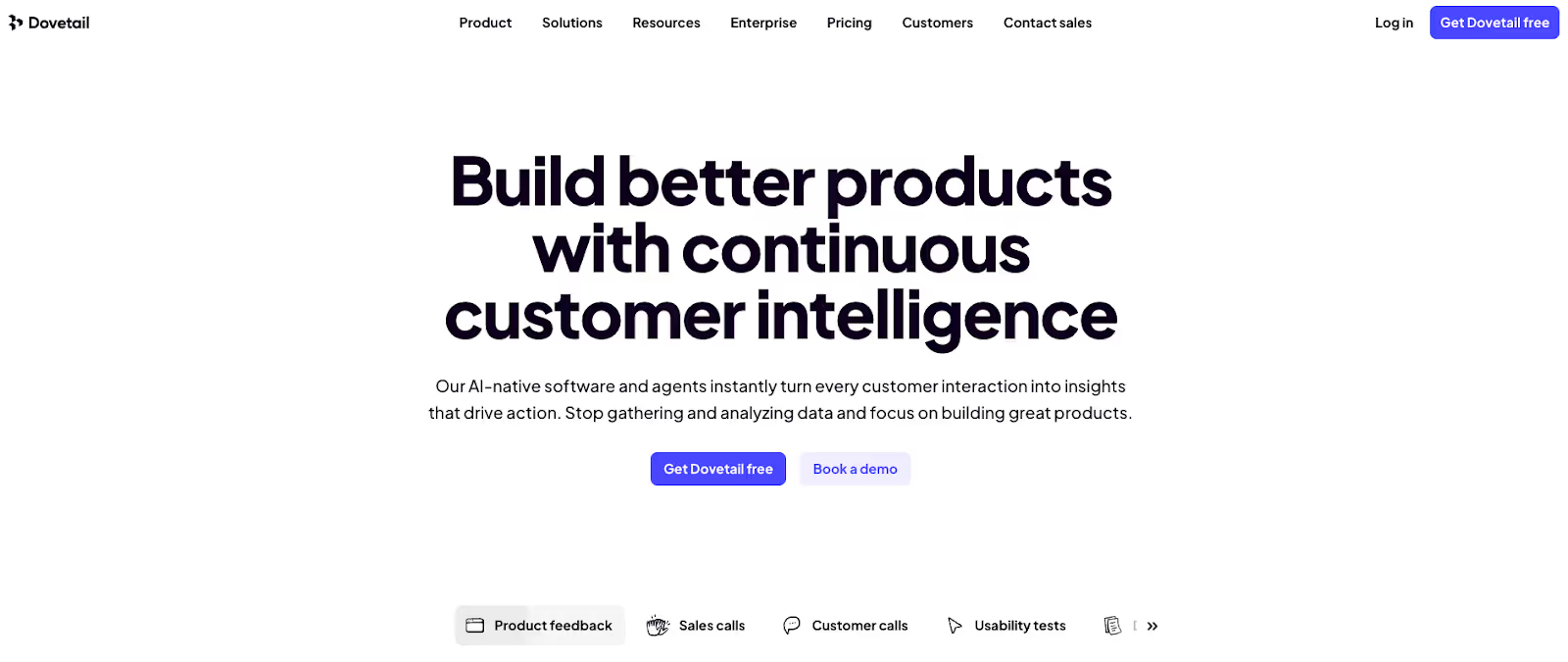
Dovetail is a qualitative research repository that helps teams store, tag, and analyze interview transcripts, recordings, notes, and feedback in one central place. Users can turn unstructured research data into searchable insights, with features like highlight reels, theme tagging, and visualization tools.
Dovetail offers a free trial for basic features and premium monthly tiered plans based on the number of users and available storage.
3. Condens
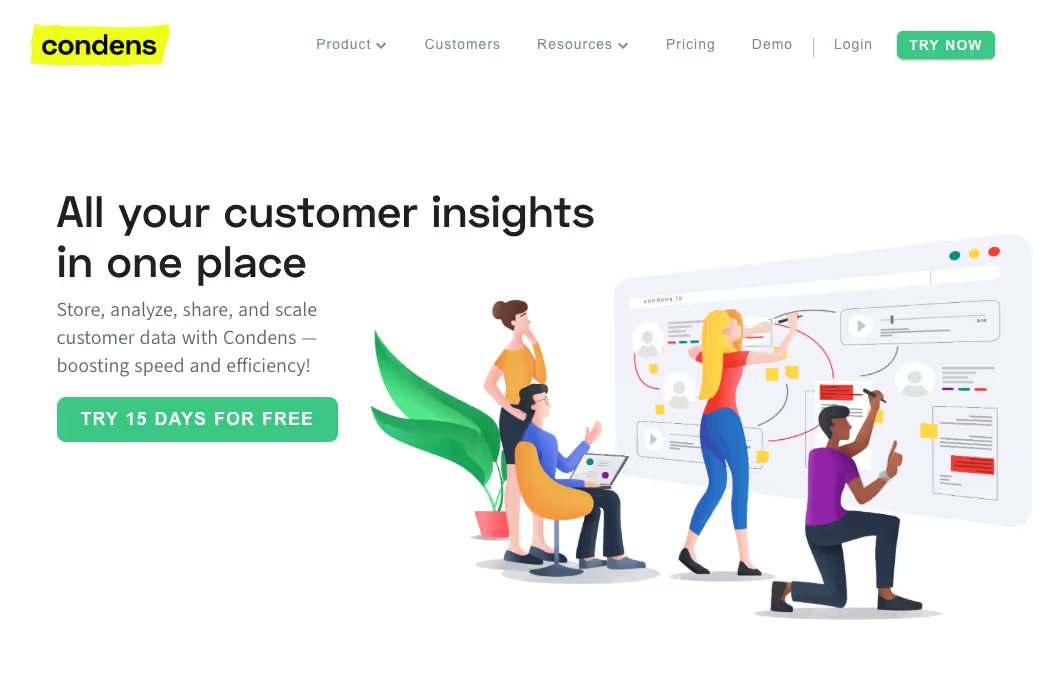
Condens is a qualitative research platform that allows researchers to tag, organize, and synthesize user feedback and interviews. Key features include split-screen coding and drag-and-drop theme building.
Pricing is tiered for individuals (single projects), businesses, and enterprise (custom) teams.
4. Lyssna
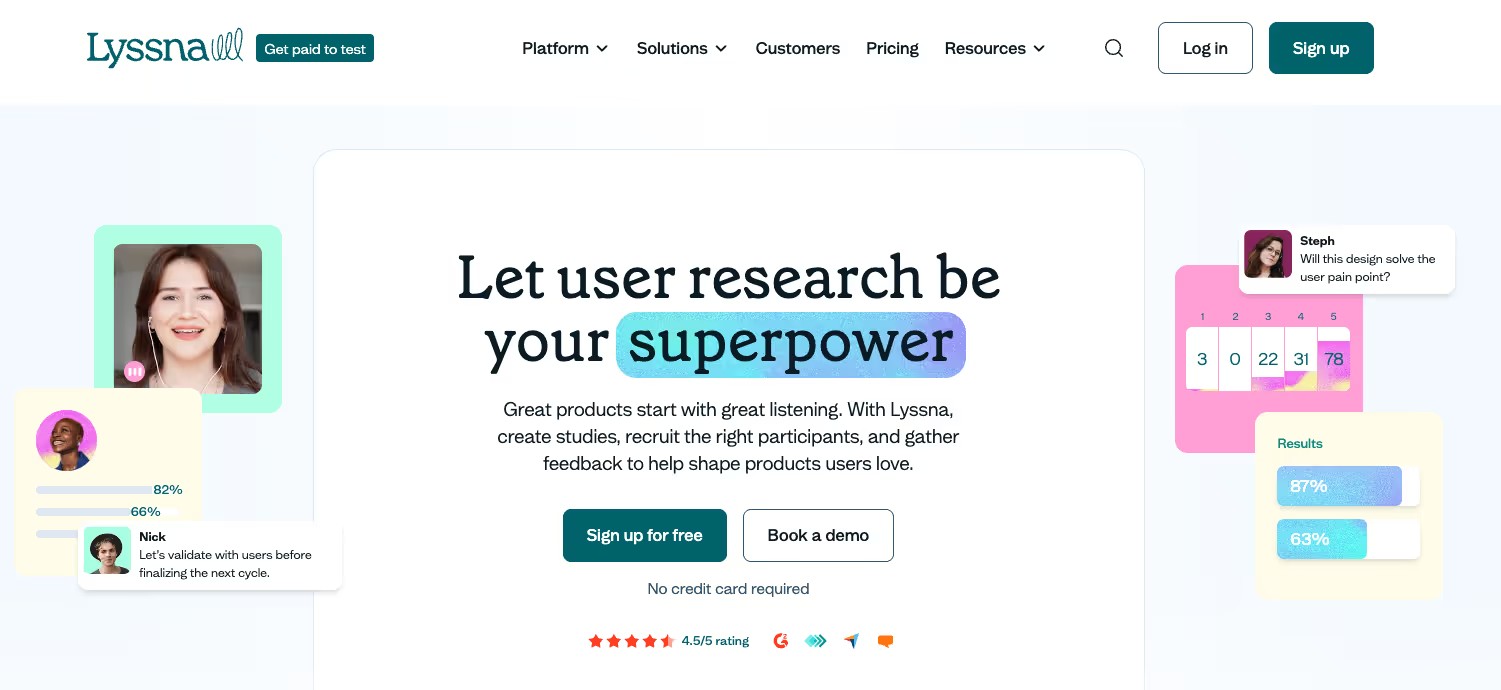
Lyssna is a remote user research platform that provides quick insights through usability tests, prototype validation, preference tests, and surveys. The platform focuses on helping design and product teams make faster decisions by capturing real user reactions to concepts and flows.
Pricing is tiered, with a free plan and paid subscriptions that scale based on features, number of participants, and testing capacity.
Top survey tools for customer feedback
If your goal is to gather structured feedback at scale, surveys are the most reliable way to capture measurable insights. The tools below make it simple to run NPS, CSAT, CES, or custom surveys to spot trends and opportunities hidden in customer behavior.
1. SurveyMonkey

SurveyMonkey is a SaaS survey and feedback management platform that enables teams to design, distribute, and analyze surveys with ease.
It offers features like question logic, survey customization options, user-friendly templates for survey creation, and AI-powered assistance to help build surveys that capture meaningful responses. It also comes with integrations for tools like Zoom, Microsoft Teams, Zendesk, HubSpot, and many others.
SurveyMonkey offers subscription-based plans billed by the number of users, features, and response volume.
2. Alchemer
Alchemer is a survey and feedback management platform built for enterprise use cases. It integrates with CRMs, marketing platforms, and business workflows, allowing teams to build survey forms or feedback widgets that trigger actions across the organization.
Alchemer offers subscription-based pricing plans that vary by user roles and integrations.
3. Sprig
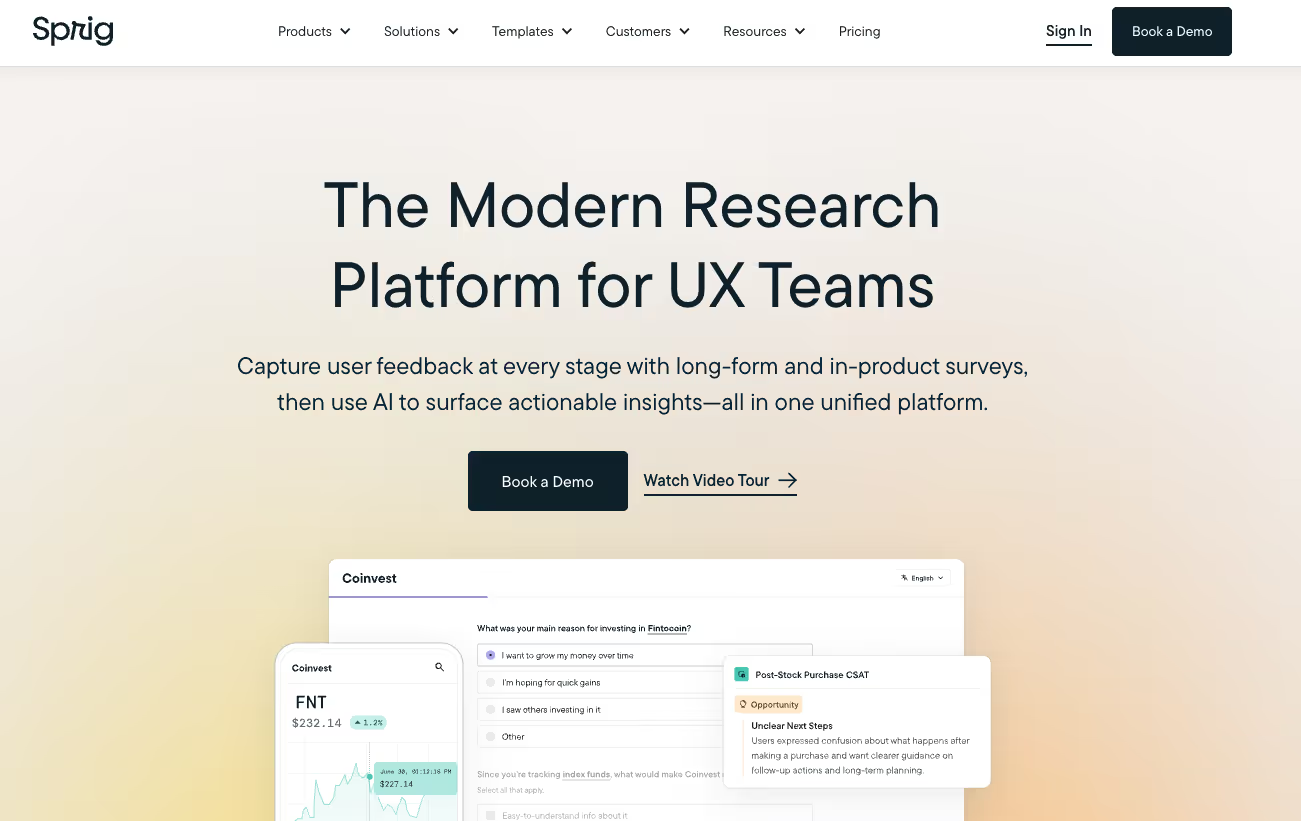
Sprig is a product-focused survey tool that offers in-app surveys and real-time feedback data collection. Teams can target specific user segments during their product experience, capturing multi-channel insights at the moment of interaction.
Sprig offers multiple subscription plan options with varied pricing depending on the type of surveys you'll run.
4. Survicate
Survicate is a customer feedback platform that helps product and research teams collect, analyze, and act on customer insights across website, in-product, mobile app, and email. All responses are centralized in Research Hub, where users can pinpoint answers and generate stakeholder-ready reports linked to real customer quotes. Teams use it for NPS and CSAT tracking, churn research, product validation, roadmap prioritization, and post-launch retrospectives.
Survicate offers a free plan, with paid plans scaling based on response limits, channels, and analytics features.
Top analytics & social listening tools for customer behavior
To go beyond what customers actually do or say in survey responses or interviews, you can rely on analytics and social listening tools to fill those gaps. The software solutions below offer various data analysis features for tracking user behavior and online customer sentiment.
1. Hotjar
Hotjar is a product experience platform that helps teams understand user behavior through heatmaps, session recordings, and on-site surveys. The platform can show, in real time, how visitors click, scroll, and navigate to help marketers, product managers, designers, and research teams gather behavioral data.
Pricing is subscription-based and scales with session volume and features, making it a good choice for both small businesses and larger teams.
2. Brandwatch
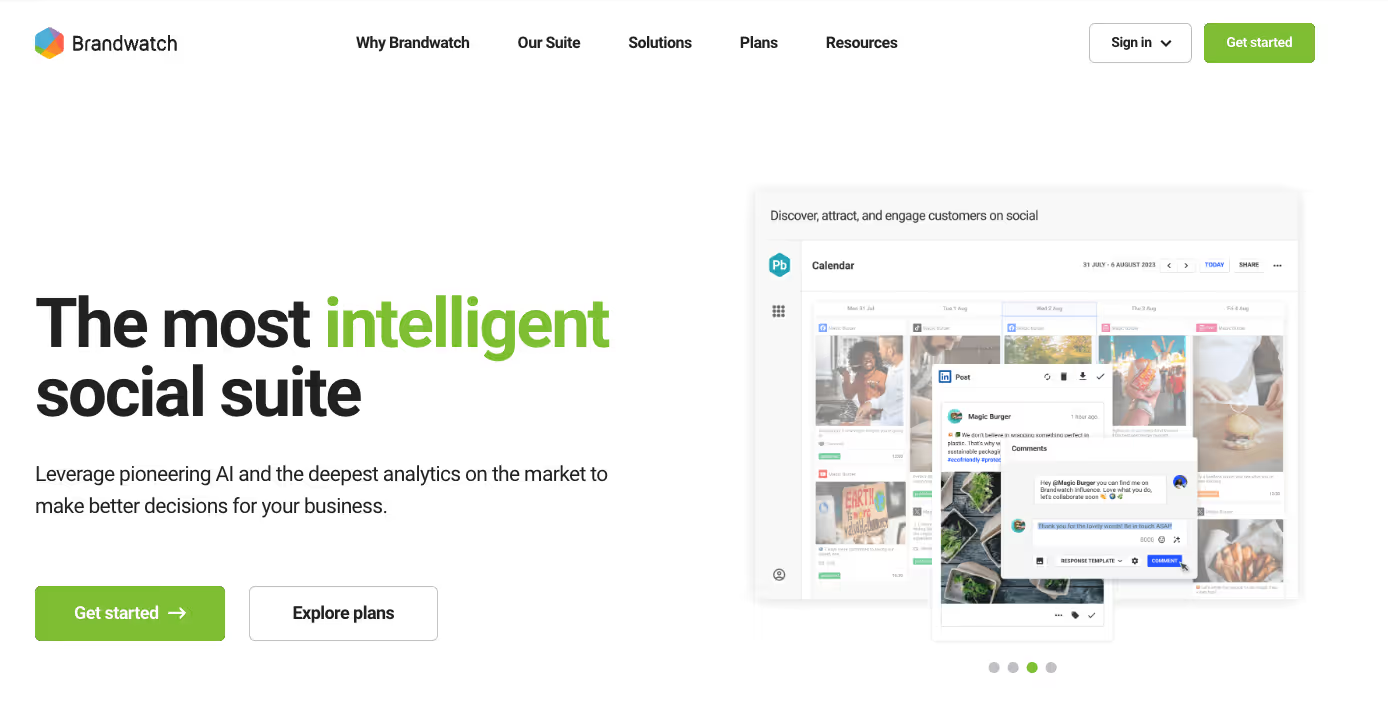
Brandwatch is a social listening and consumer intelligence tool that monitors conversations across touchpoints like social media, forums, blogs, and customer review sites.
The tool offers comprehensive coverage across all major channels, featuring AI-driven sentiment analysis functionalities that help uncover trends and identify brand reputation risks.
Brandwatch offers custom, enterprise-level pricing based on feature access, coverage, and team size.
3. Amplitude
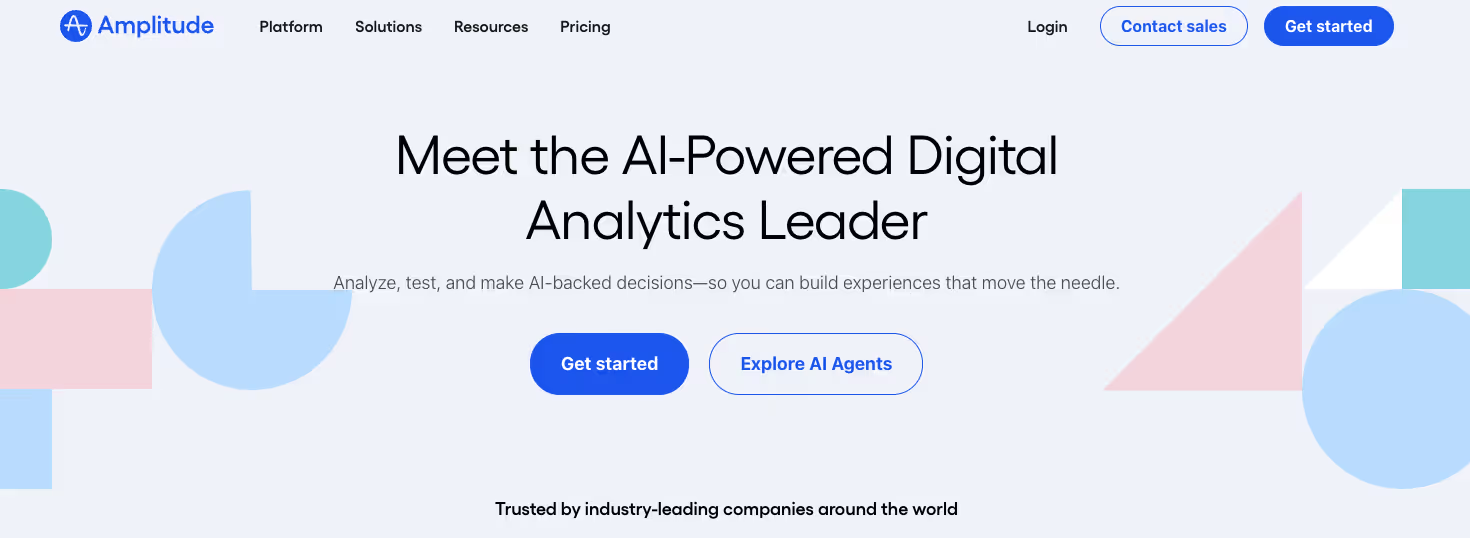
Amplitude is a product analytics platform built to track funnels, retention, and customer journeys. Teams use it to see which behaviors drive growth or churn, with features like predictive analytics, customizable dashboards, NPS surveys, and cohort analysis.
Amplitude also offers a broad range of integrations for communication tools (e.g., Slack), CRMs, (e.g., HubSpot), omnichannel marketing software (e.g., Braze), chatbots (e.g., Intercom), and more.
Amplitude has a free pricing tier for basic features. Team-based plans are subscription-based and scale based on usage volume.
4. UserVoice
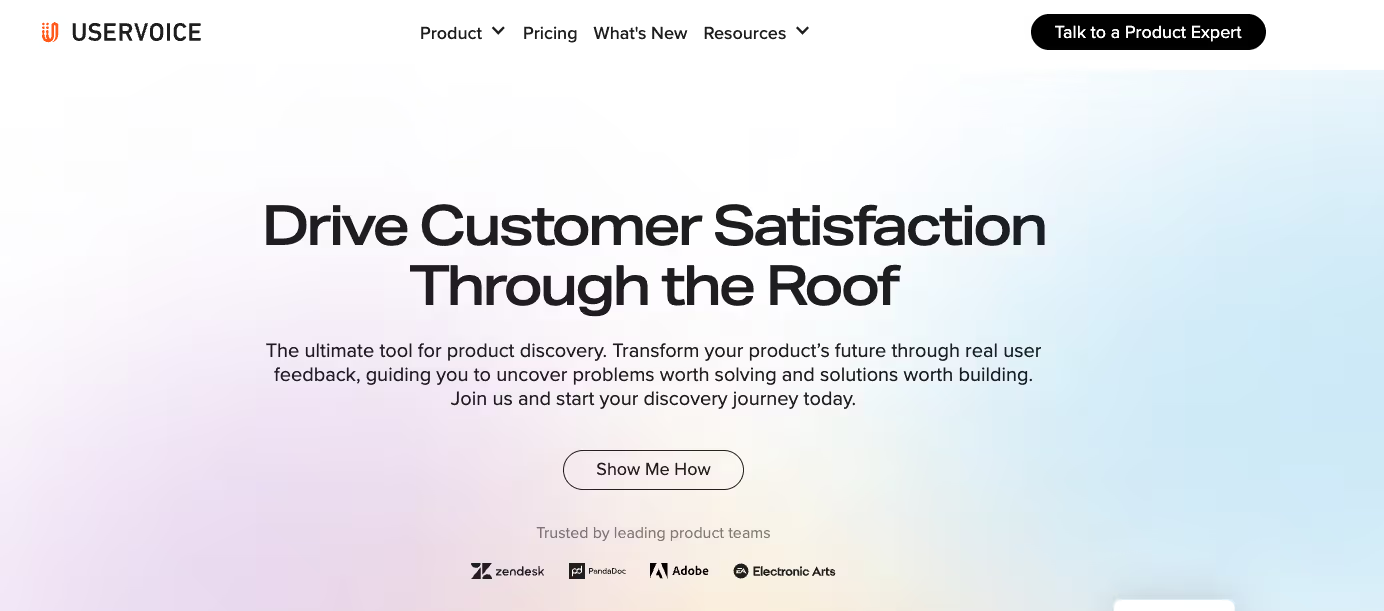
UserVoice is a product feedback management platform that collects customer suggestions, feature requests, and user sentiment in one system. The platform can tie feedback directly to product roadmaps, helping teams prioritize what to build next and communicate updates back to users.
Pricing is subscription-based and designed for mid-size to enterprise teams.
Collect better customer feedback with User Interviews
The type of customer feedback platform you need depends on how you plan to engage with customers. Some tools specialize in one-on-one interviews, while others are built for scalable surveys, analytics, and social listening capabilities.
Choosing the right tool comes down to matching the method with your goals.
User Interviews offers a faster, structured, scalable way to screen, manage and schedule participants for feedback projects, allowing you to capture actionable insights that can guide product decisions and improve the user experience.
Ready to streamline your customer feedback processes? Book a demo today with User Interviews to learn more.