

.avif)
Qualitative research uncovers the why behind user behavior, giving teams the context that quantitative research methods usually cannot. But running these studies isn’t a straightforward process, and often a single tool cannot manage all the tasks end-to-end.
Some researchers may already have qualitative data collected, only requiring the features necessary to analyze it. Others might be struggling to find and recruit reliable participants (either from new sources or their existing managed panel), schedule sessions, or pay out incentives.
The best approach for qualitative research often isn’t using an all-in-one tool. Instead most teams will find the most success is using a platform that specializes in the most critical areas, then integrating with other best-in-class tools in their research stack.
For those looking for the best platform to fit their needs, we’ve compiled the top 11 qualitative research tools across three primary categories.
But first, we’ll show you what to consider when evaluating qualitative research tools, and why it’s important to choose a tool that matches your needs.
What to look for in a qualitative research tool
Qualitative research projects often involve multiple moving parts, including prep work like scheduling, recruitment, panel management, and post-session work like transcription and analysis.
Below, we cover three key factors to prioritize when evaluating available software options for your research.
1. Offers direct access to participant panels for research recruitment
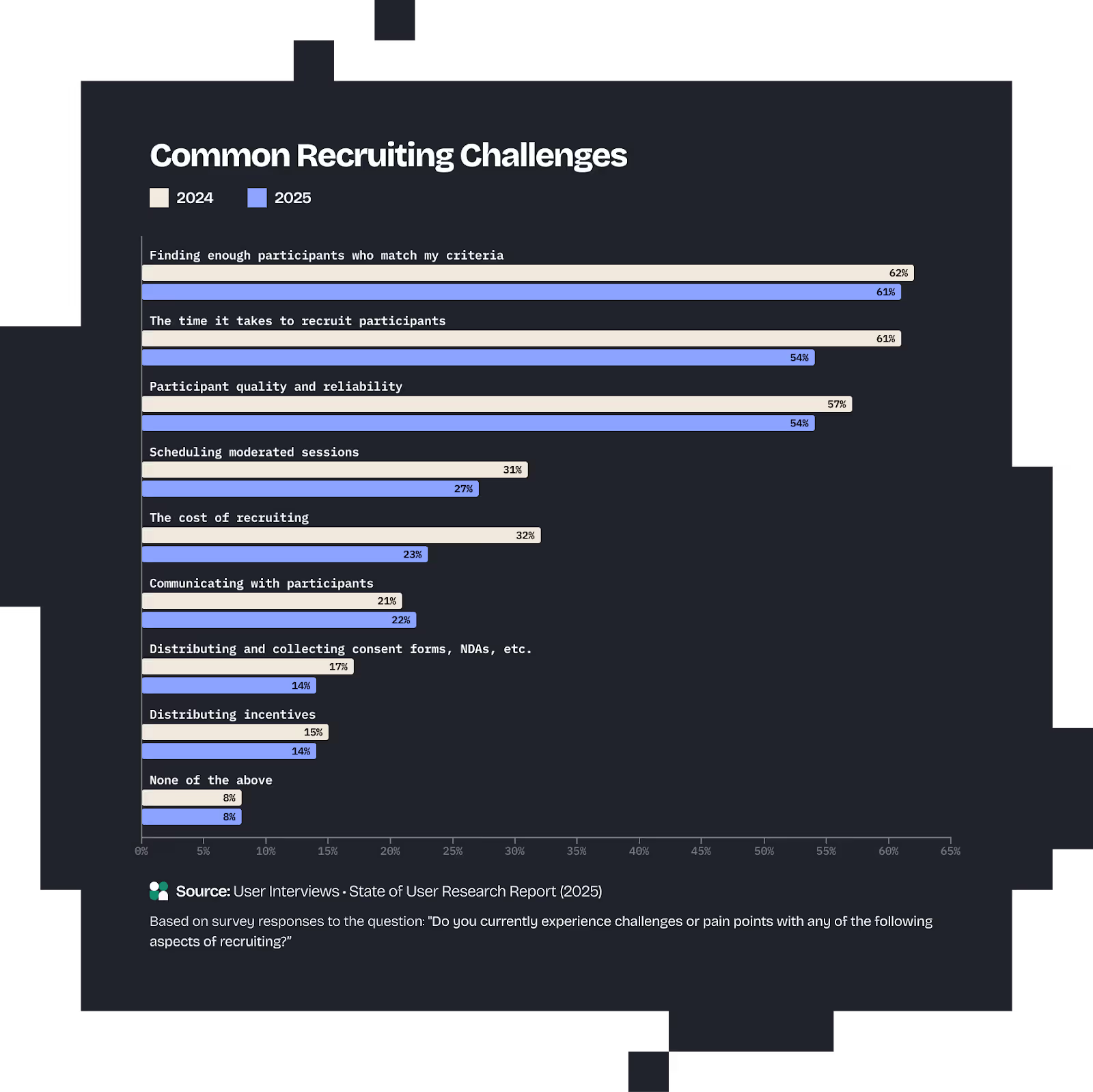
Finding the right participants is the most consistent issue that research teams deal with.
Our 2025 State of User Research report indicates that 61% of researchers struggle to find enough qualified participants, 54% find recruiting participants on their own too time-consuming, and 54% struggle to find reliable and high-quality participants.
For teams struggling with recruiting participants, a qualitative research panel platform can simplify the process. The most suitable options provide access to large, vetted participant panels along with built-in tools for screening, scheduling, and incentive payments.
This approach ensures you can quickly find quality participants who match your study criteria, while keeping every detail of the recruitment process centralized and efficient.
2. Streamlines research workflows through integrations and automation
Qualitative research often requires multiple tools working in tandem, such as calendars for scheduling, video conferencing tools like Zoom for interviews, recording and transcription tools for notetaking, email for reminders, and payment platforms for incentives.
Managing these solutions separately means you’re likely handling various tasks manually, such as copying data between apps, sending reminders via email, and tracking payments in spreadsheets.
Instead, opt for a research platform brings everything together by syncing directly with calendars, video conferencing platforms, and communication tools. Strong integrations prevent projects from getting delayed, keep participants engaged, and allow researchers to focus on gathering insights instead of managing logistics.
For example, User Interviews integrates with Zoom, Google Calendar, Outlook, Webex, and other core platforms, making it easier to centralize your research workflow and run studies without jumping between various tools.
Learn more about the 20+ integrations available with the User Interviews platform.
3. Centralizes participant data, study history, and incentive tracking in one place
When participant data is stored across spreadsheets, emails, and various platforms, managing your research panel becomes an inefficient process. You risk over-inviting, missing payments, and losing sight of participant context between studies. These issues can slow down projects and create a poor experience for participants.
The best qualitative research platforms provide a single, centralized hub for panel management. Participant profiles, consent records, study history, and incentives all live in one place, giving researchers a complete view of every individual’s journey.
Instead of constantly starting from scratch, you can build long-term relationships with your panel, reduce no-show rates, and make each new study easier to run. That creates a seamless, organized environment for reviewing insights and collaborating across your team.
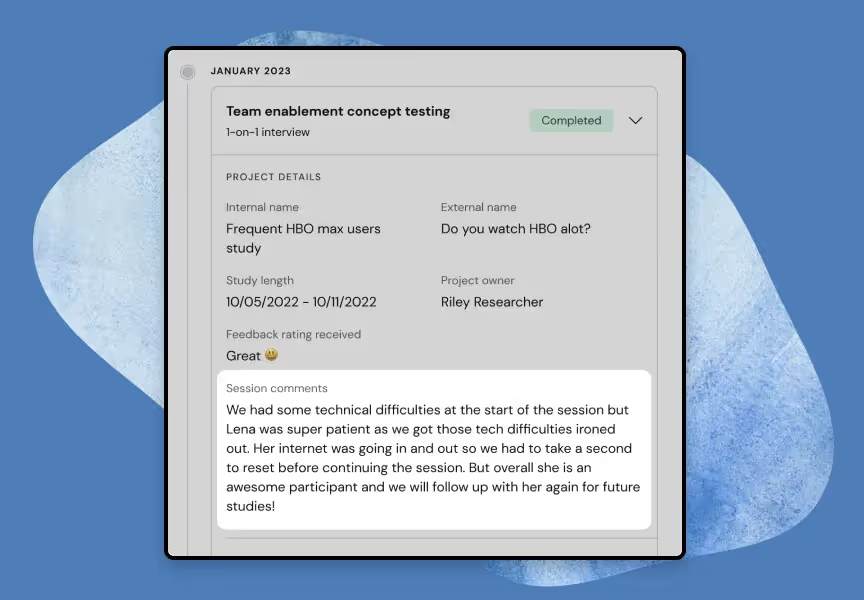
User Interviews’ Research Hub is built for exactly this. It allows you to manage both your recruited panel and internal participants within the same system, giving you full visibility into participation, the incentives paid, and engagement.
Even if you rely on a third-party recruitment service, these tools offer better participant data management for long-term research success.
Book a demo with User Interviews today and find out how easy recruiting and participant management for qualitative research can be.
Top qualitative participant recruitment and management tools
These tools help researchers find, screen, and manage qualitative research study participants. Teams struggling with recruitment or seeking to build long-term panels for ongoing research will benefit most from these platforms.
1. User Interviews
User Interviews is a qualitative research recruiting and panel management platform that offers various research recruitment tools that help teams find, schedule, and manage participants for studies like interviews, usability tests, and diary research.
The platform offers various tools and features to manage participant recruitment and management end-to-end, including:
- Access to a vetted database of over six million participants, ensuring a diverse pool of respondents across demographics, professions, and behaviors.
- Advanced targeting and screening tools to filter for precise participant matches, including hard-to-reach or niche audiences.
- Automated scheduling and reminders that sync with Google and Outlook calendars to reduce no-shows and save hours of coordination.
- Incentive management capabilities to pay participants quickly and securely, keeping them engaged and reliable for future studies.
- Collaboration features for research teams, allowing shared access to participant lists, notes, and study progress in one centralized hub.
Below, we'll show you how these features work to simplify participant management and set your qualitative research projects up for success.
Source high-quality research participants from a vetted database of millions
User Interviews gives researchers direct access to one of the largest vetted participant panels available for qualitative research, with more than six million individuals across consumer and professional segments. Take a self-guided tour of our platform and see how easy it is to recruit participants, manage panels, and run better research—all in one place. Explore the Demo Center —>
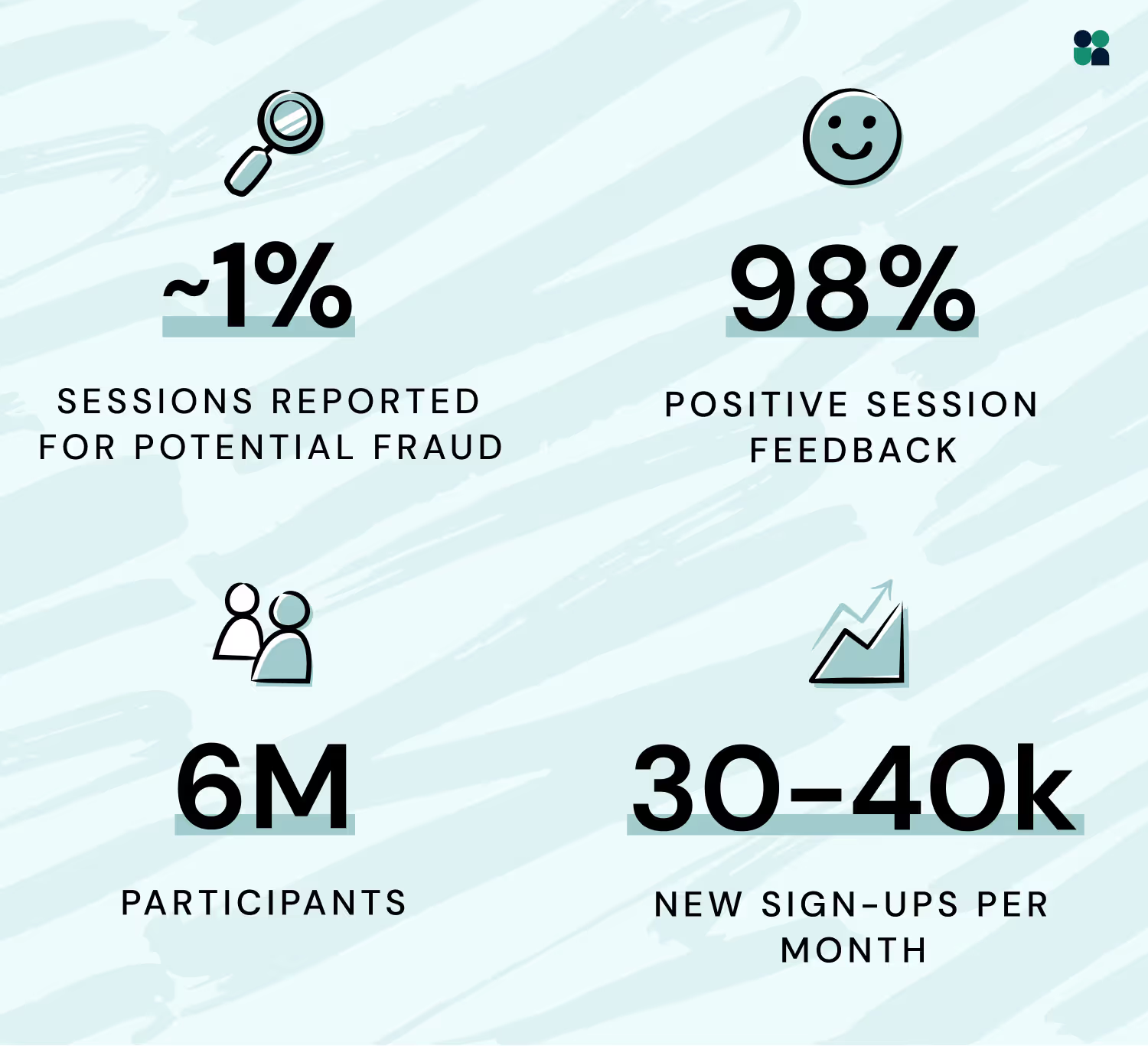
The panel has supported over a million sessions and distributed tens of millions in incentives, while maintaining industry-leading fraud detection rates. All panel recruitment is managed in-house, ensuring consistency and quality without outsourcing to unreliable third-party providers.
A proprietary fraud detection model analyzes 50+ unique identity and behavioral signals throughout the participant lifecycle, flagging suspicious activity before it can affect your study.
Profiles are also enriched with optional social media verification (LinkedIn, Facebook), giving researchers added confidence that they’re working with real, engaged participants.
Each participant profile contains detailed demographic and professional data, making it easy to evaluate fit before inviting someone to a study. Researchers can also leave feedback and ratings after each session, creating a continuous quality control loop that helps keep the panel reliable.
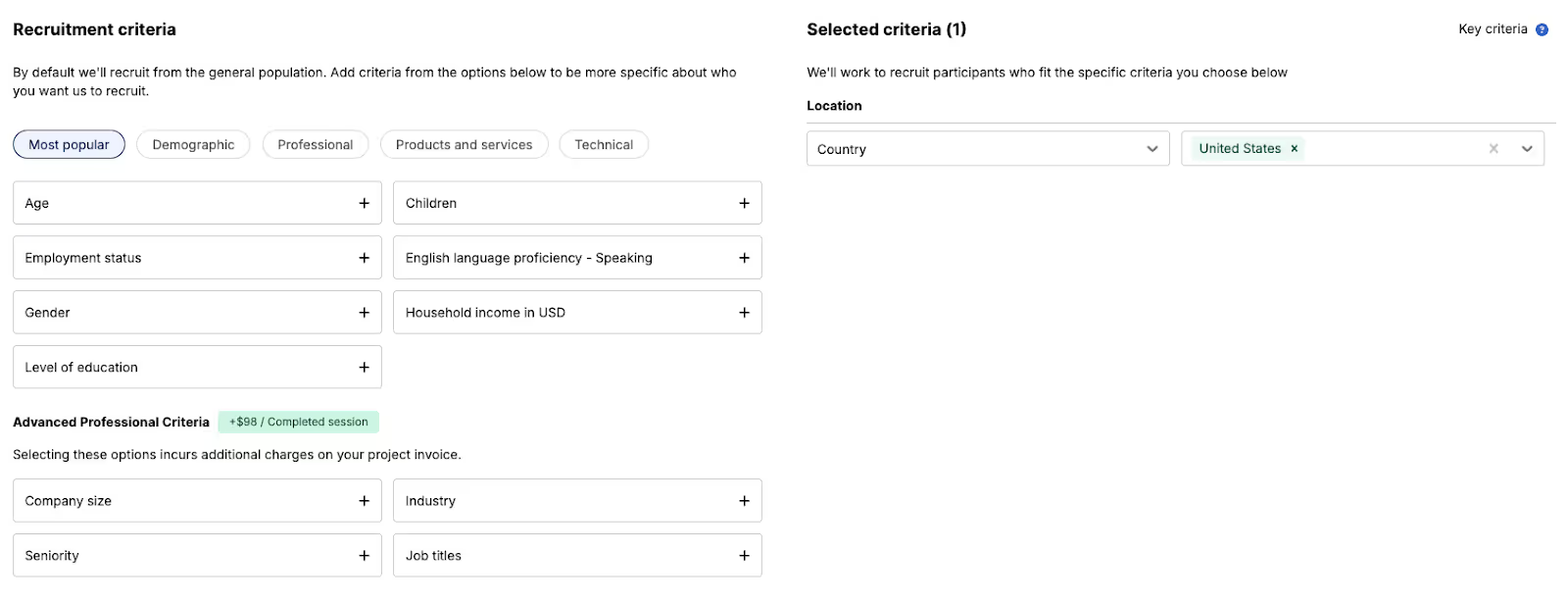
User Interviews’ Recruit offers 20+ advanced targeting filters, including:
- Demographics: age, gender, household income, education, marital status, language proficiency, and more
- Geography: country, state, city, and neighborhood type
- Professional: job title, company size, seniority level, skills, work setting, and small business ownership
- B2B-specific: industries, advanced occupations, and executive-level criteria
- Products & services usage: banking platforms, delivery services, streaming tools, productivity apps, and device ownership
- Technical: operating systems, browser type, smartphone and tablet use, webcams, and assistive technology settings
For highly niche projects, such as sourcing B2B executives or segmenting consumer audiences by purchase intent, User Interviews’ project coordinators can assist to fine-tune targeting and deliver tailored matches.
Verified participants are typically delivered in 24-48 hours with a 98% positive feedback rate across projects.
Use customizable screener surveys to filter out unqualified participants
A panel of quality participants and well-defined audience targeting typically reduces the chances of recruiting the wrong participants. But it’s not necessarily enough. Even within a tightly defined segment, you may still encounter respondents who don’t fit your study criteria, lack the right experience, or are disengaged.
That’s why you also need to screen every participant before scheduling them. A well-built screener survey acts as the final filter before individuals are approved for a study. This helps research teams confirm qualifications, test for subject-matter knowledge, and weed out anyone who might waste time or skew results.
User Interviews simplifies this process with customizable screener surveys that thoroughly qualify participants before scheduling.
The intuitive drag-and-drop builder supports multiple question types, including:
- Pick-one
- Pick-any
- Multi-select
- Short-answer
- Long-answer
- Grid (matrix)
- Video-response
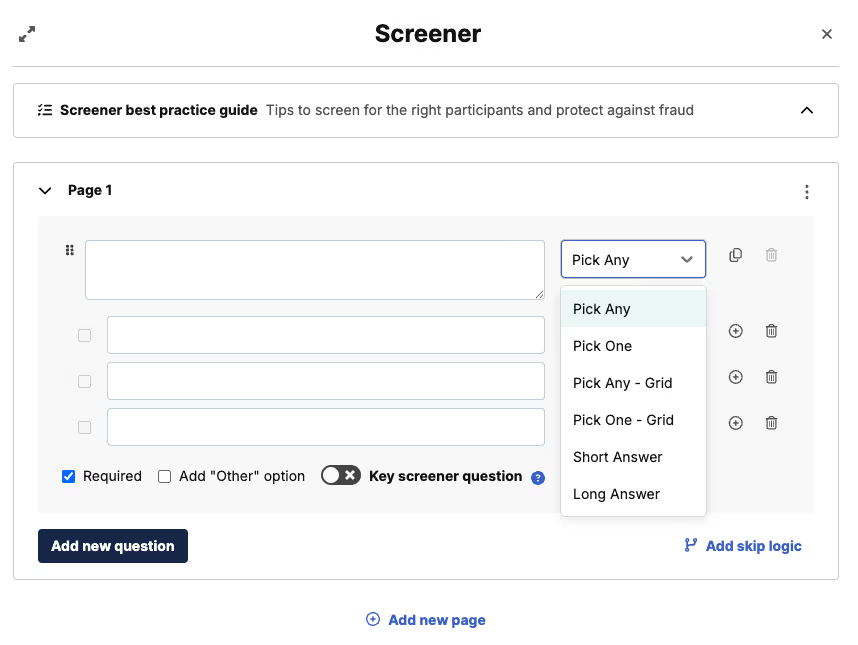
Screeners can be saved as templates, so recurring projects don’t require rebuilding from scratch. For long lists of answer choices, you can also bulk paste responses, saving setup time.
However, sometimes you need to add additional screening steps to filter out poor-fit participants. User Interviews includes advanced screening features designed for higher-quality recruiting:
- Premium Screening: Re-verify qualified participants by phone, email, or video to confirm details before they join a study.
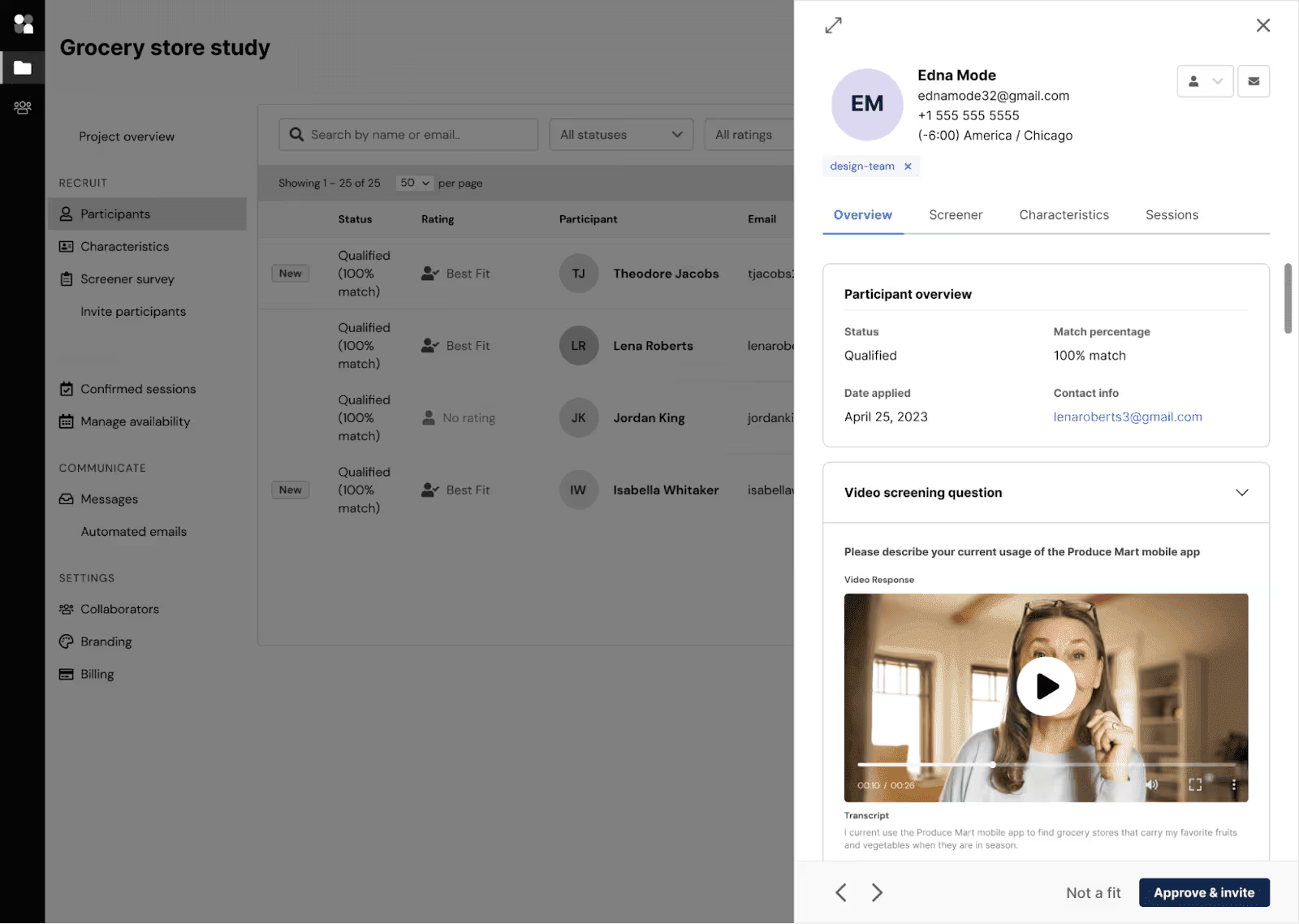
- Automatic participant qualification: Instantly approve candidates who meet 100% of your screener and targeting requirements, reducing wait time for straightforward projects.
- Video screening: Collect 90-second video responses to custom questions, giving you immediate insight into a participant’s expertise, enthusiasm, and communication style.
These tools help ensure that only the most qualified and relevant participants move forward into your research sessions.
Find out how to find the right participants and protect against fraud with our screener survey best practices guide.
Create and distribute research incentives and payments automatically
Offering the right user research incentives is one of the most effective ways to boost participation rates and ensure engaged, reliable respondents.
Without meaningful rewards, participants are more likely to skip sessions, disengage during interviews, or fail to complete longer studies.
User Interviews automates the entire incentive process, eliminating the need for researchers to handle payments manually.
You can use our incentive calculator to determine the appropriate reward amount based on study type, duration, and participant profile. Participants can request incentives through more than 1,000 payment types, including Amazon and Visa gift cards, PayPal cash, and charitable donations.
Incentives are supported in 200+ countries and multiple currencies such as USD, EUR, AUD, CAD, and GBP, making it easy to run global research projects without additional administrative complexity.
All payments can be distributed automatically as soon as a session is complete, ensuring participants are compensated quickly and reducing frustration.
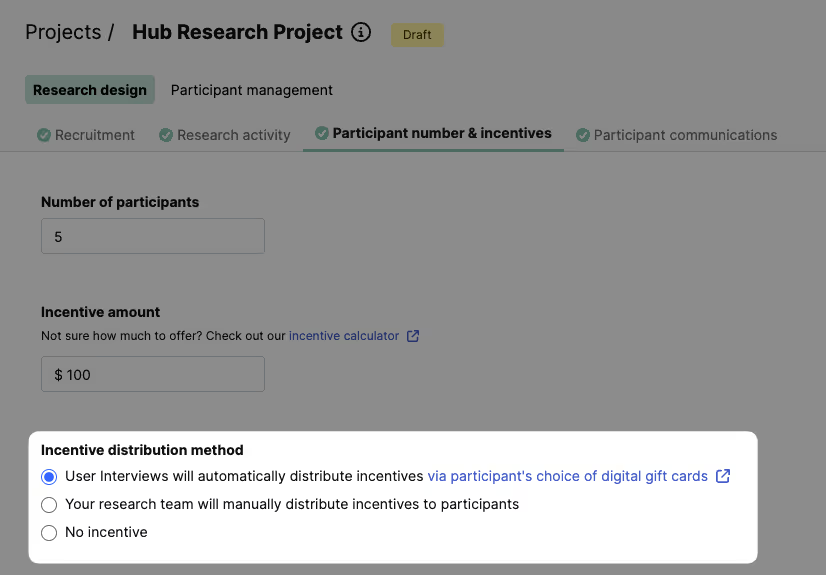
Researchers also have the option to customize branded thank-you emails that go out with each payment, helping to close the loop and keep participants engaged for future studies.
Automate session scheduling and participant engagement
If you’ve ever managed research sessions manually, you know how quickly the logistics can slow you down: dozens of back-and-forth emails just to schedule a session time, calendar invites buried in participants’ inboxes, last-minute reschedules, and moderators scrambling to fill empty slots.
User Interviews addresses these concerns with automated scheduling and engagement tools that streamline session planning. Researchers can set their availability, buffer times, and session length, then let the system handle invitations, sign-ups, and attendance tracking.
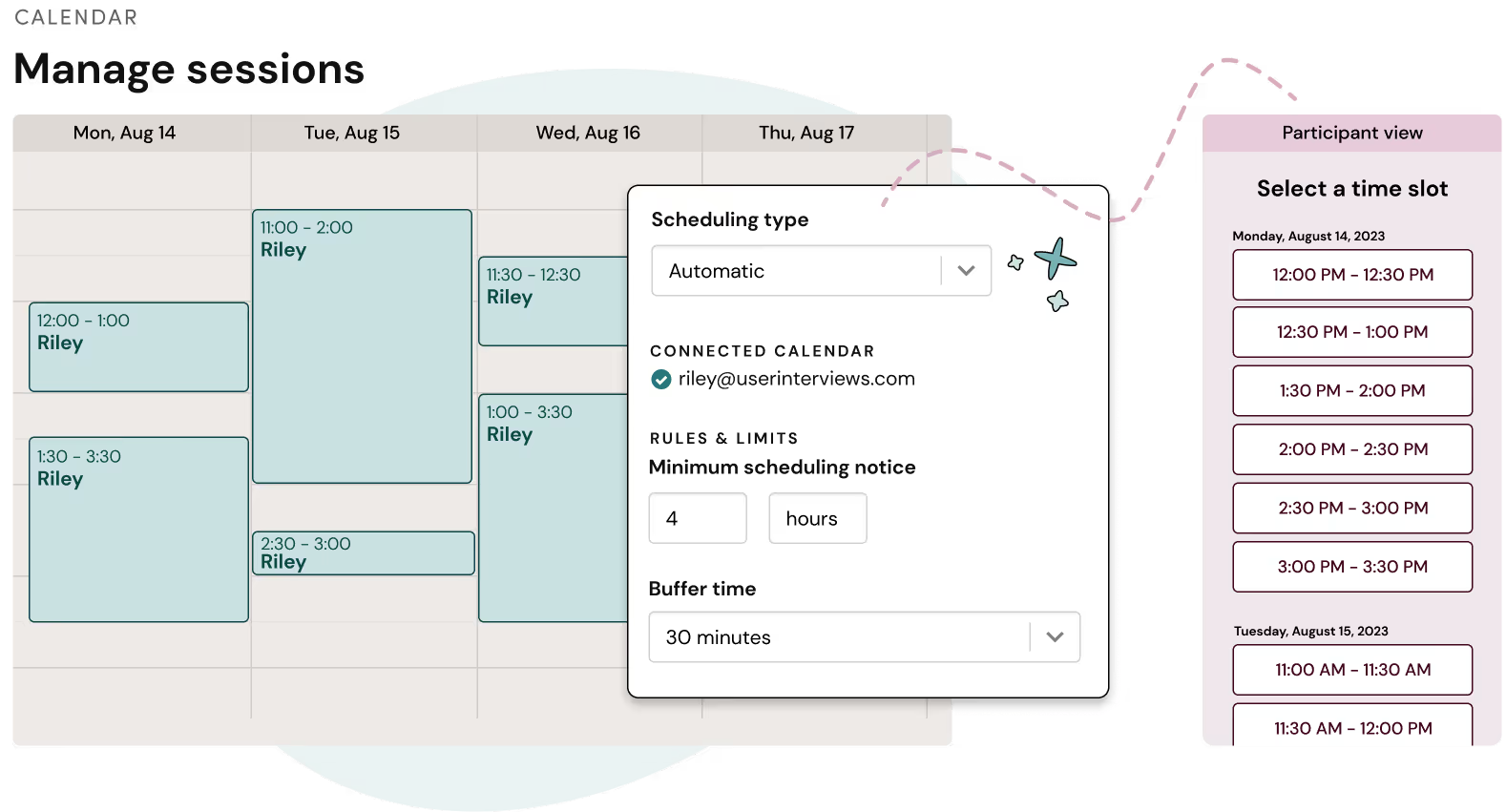
From there, participants receive a sequence of automated reminders that are fully customizable with your branding and instructions so they show up on time and prepared. Embed direct links to Zoom, moderator details, or prep notes into reminders to eliminate confusion and reduce no-shows.
Participants also have the option to reschedule themselves, freeing researchers from endless calendar coordination. And for larger teams, sessions can be automatically assigned across moderators to balance workloads.
This results in less time spent chasing confirmations and more time running smooth, successful sessions with participants who are ready to engage.
Ready to simplify participant management and keep studies on track? Book a demo with User Interviews today.
2. Respondent
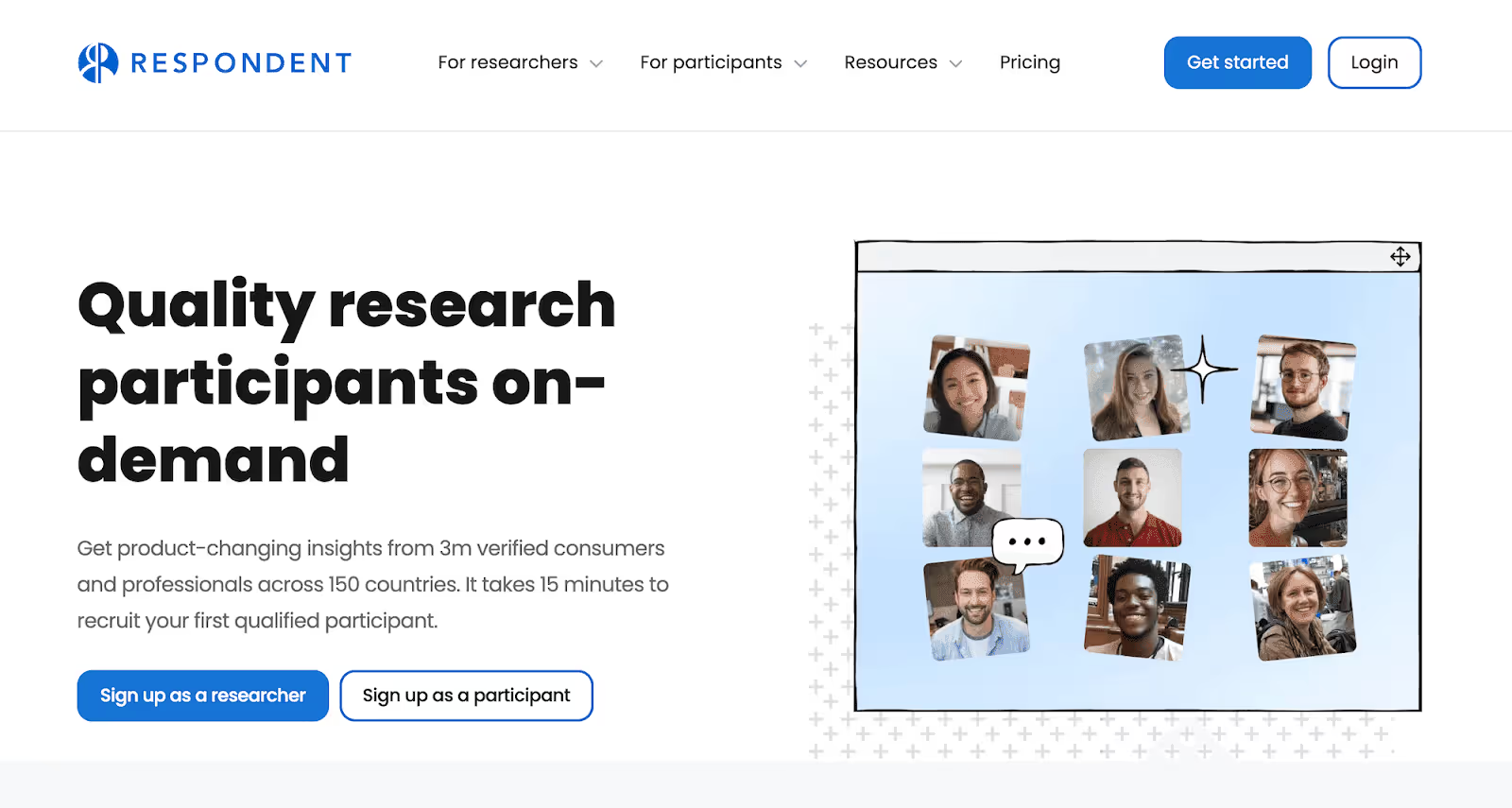
Respondent is a recruitment platform that sources B2B and professional participants. The platform allows researchers to create custom screeners, manage study logistics, and automatically pay incentives.
The platform is built around a defined recruitment panel, does not include a research CRM for participant data management, and has a limited set of integrations for connecting different parts of the research workflow. Respondent operates on a pay-per-participant model, with costs varying based on the target audience and study type.
3. Ethnio
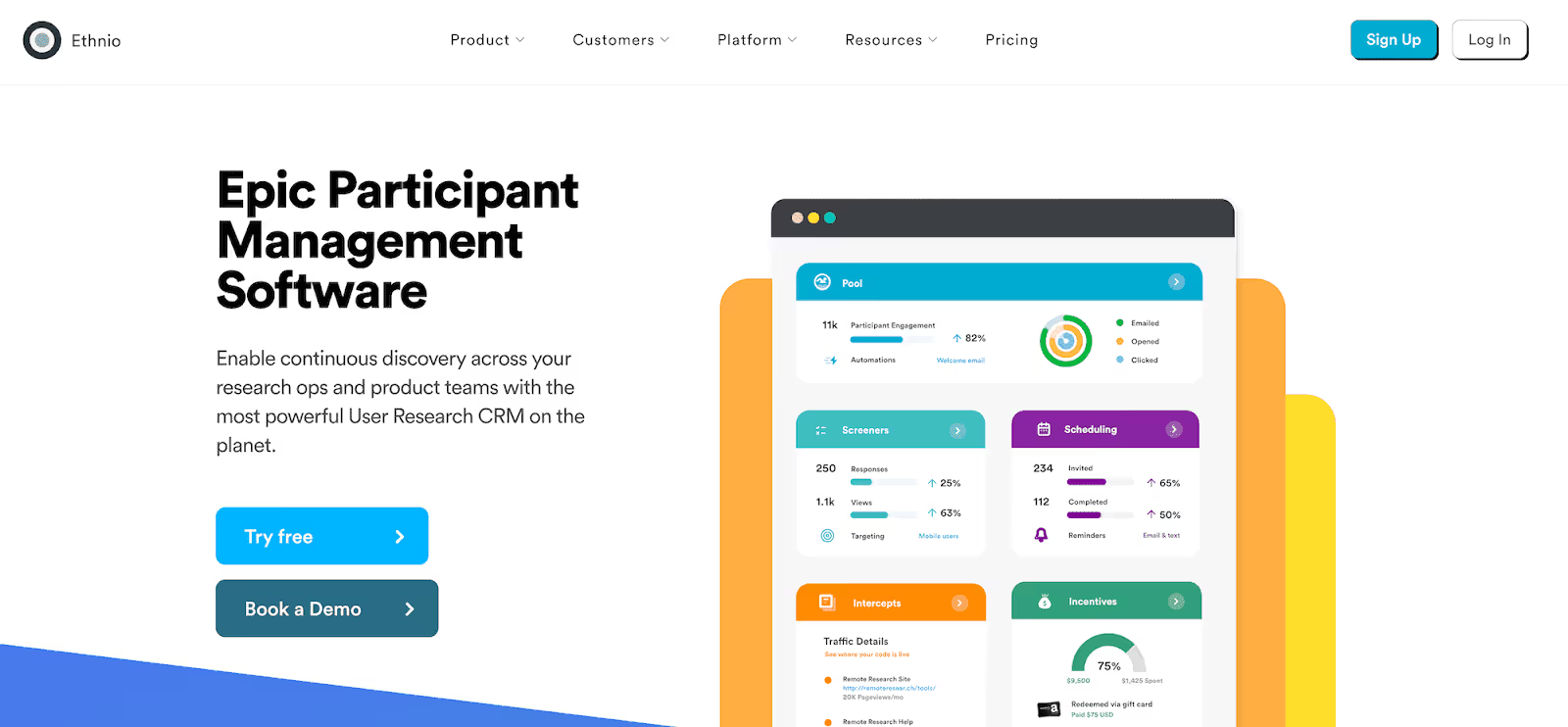
Ethnio is a participant management and recruitment tool designed for building and maintaining your own research panel. It offers intercept recruiting via website or app pop-ups, alongside a CRM-style dashboard to track participant profiles, study history, and consent records.
Subscription-based pricing is available with different plans depending on panel size, feature access, and the number of users.
4. TestingTime
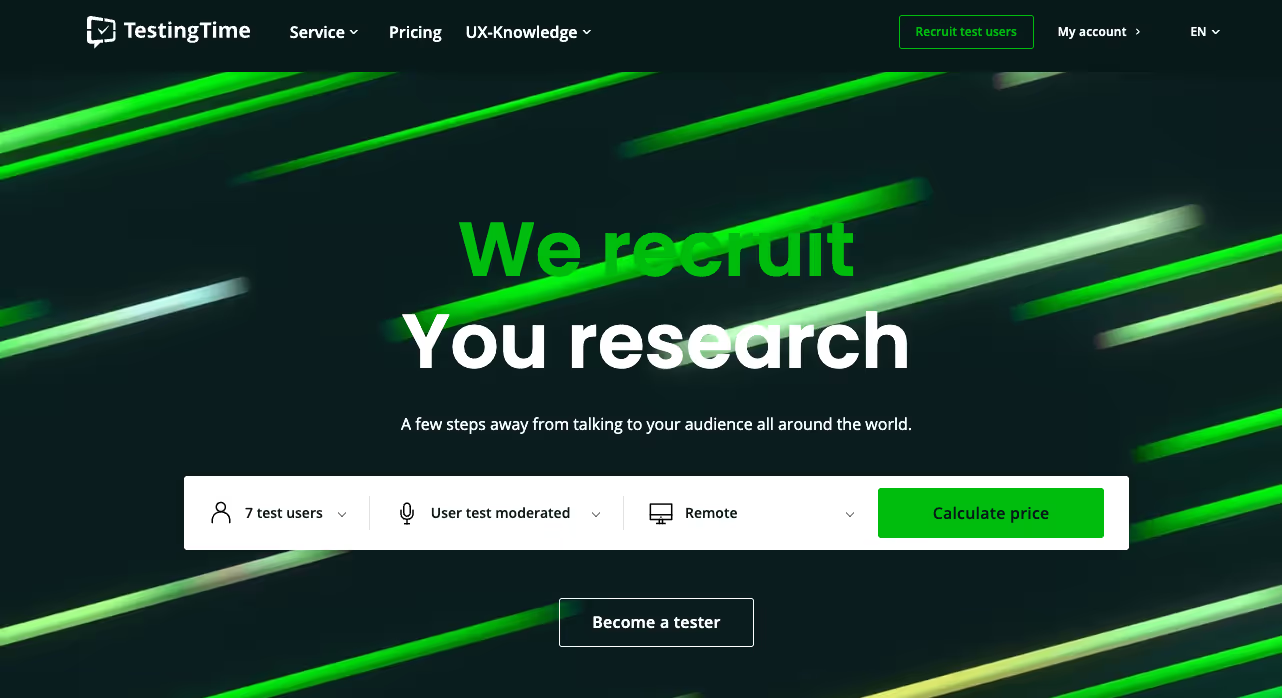
TestingTime is an on-demand recruitment service that provides access to a panel with participants across Europe and North America. Researchers can recruit for moderated interviews, unmoderated usability tests, or group studies, with automated scheduling and reminders included to minimize no-shows.
Pricing is structured per recruited participant, with rates dependent on the targeting criteria and session type.
Top qualitative research and session tools
Research platforms and session tools excel at helping teams run interviews, usability tests, focus groups, and diary studies. Typically, they provide live video capabilities, task-based testing, participant observation, and note-taking features so researchers can capture feedback in real time.
1. Maze
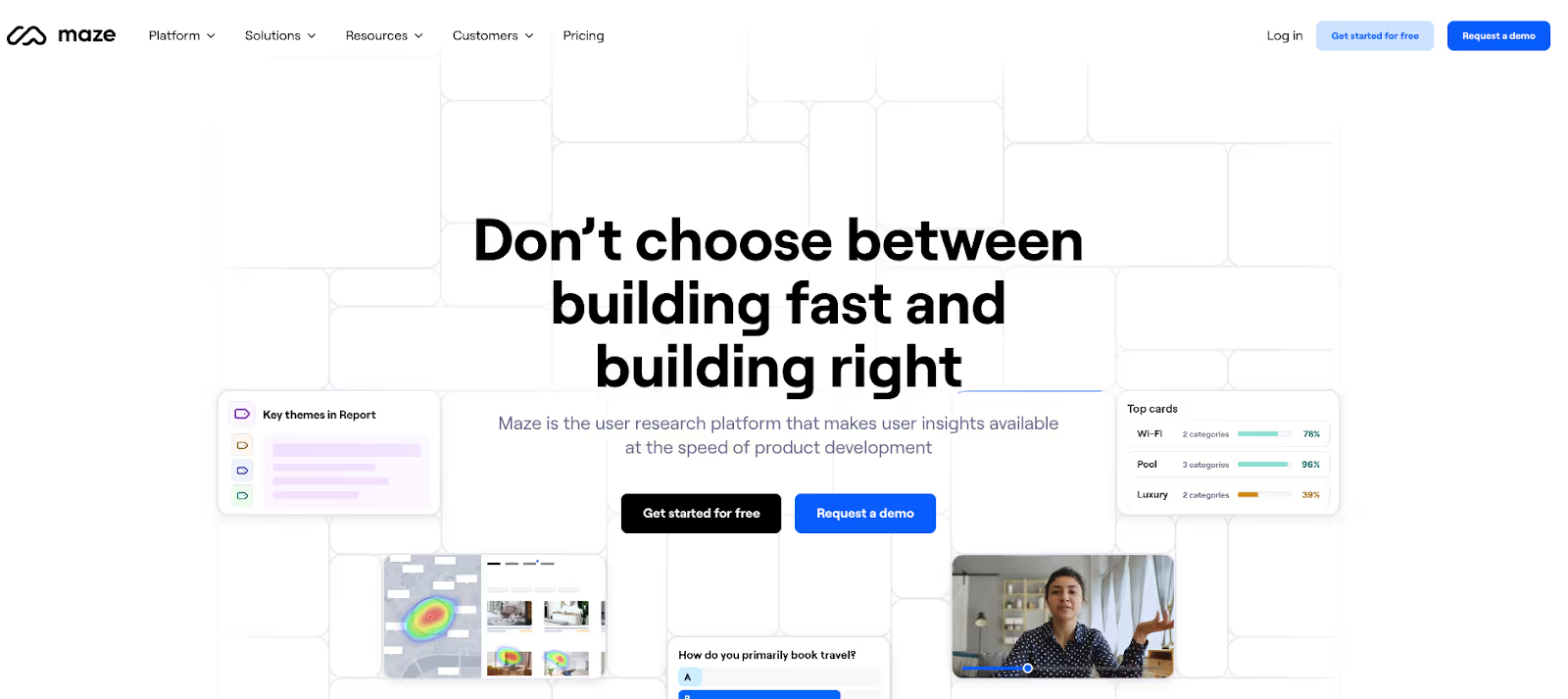
Maze is a remote testing platform built for unmoderated usability studies and concept validation. It provides video recording access and open-ended prompts to capture qualitative feedback alongside quantitative data metrics, and design tool integrations for prototype tests, card sorts, and tree tests.
Maze uses a subscription model with different tiers based on project volume and team size.
2. Loop11
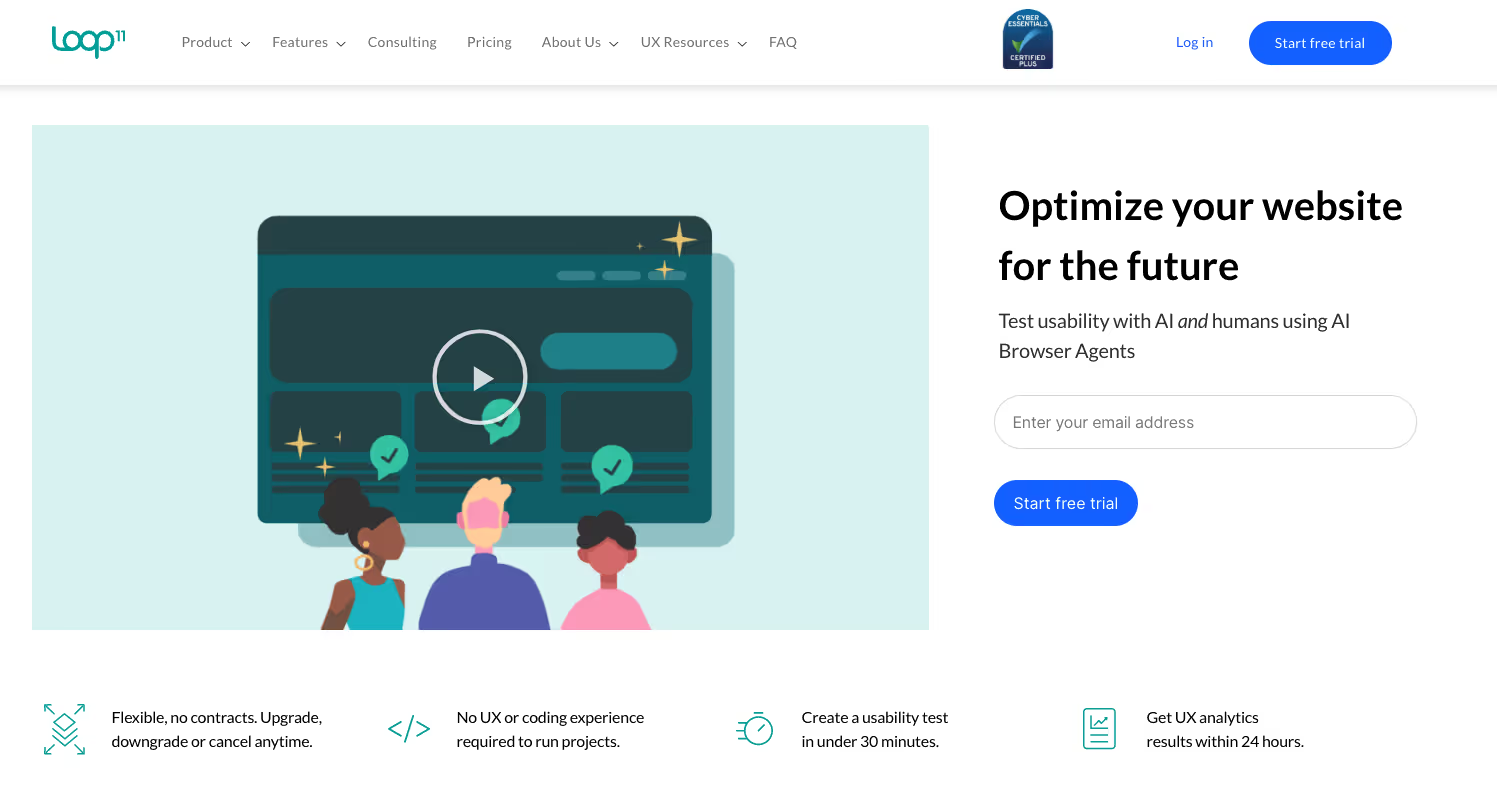
Loop11 is a usability testing platform that supports both moderated and unmoderated research. Researchers can run tasks on websites, prototypes, or mobile apps and collect behavioral data along with customer feedback.
Pricing is subscription-based, with options for individual researchers, agencies, and enterprise teams running larger volumes of studies.
3. Lookback
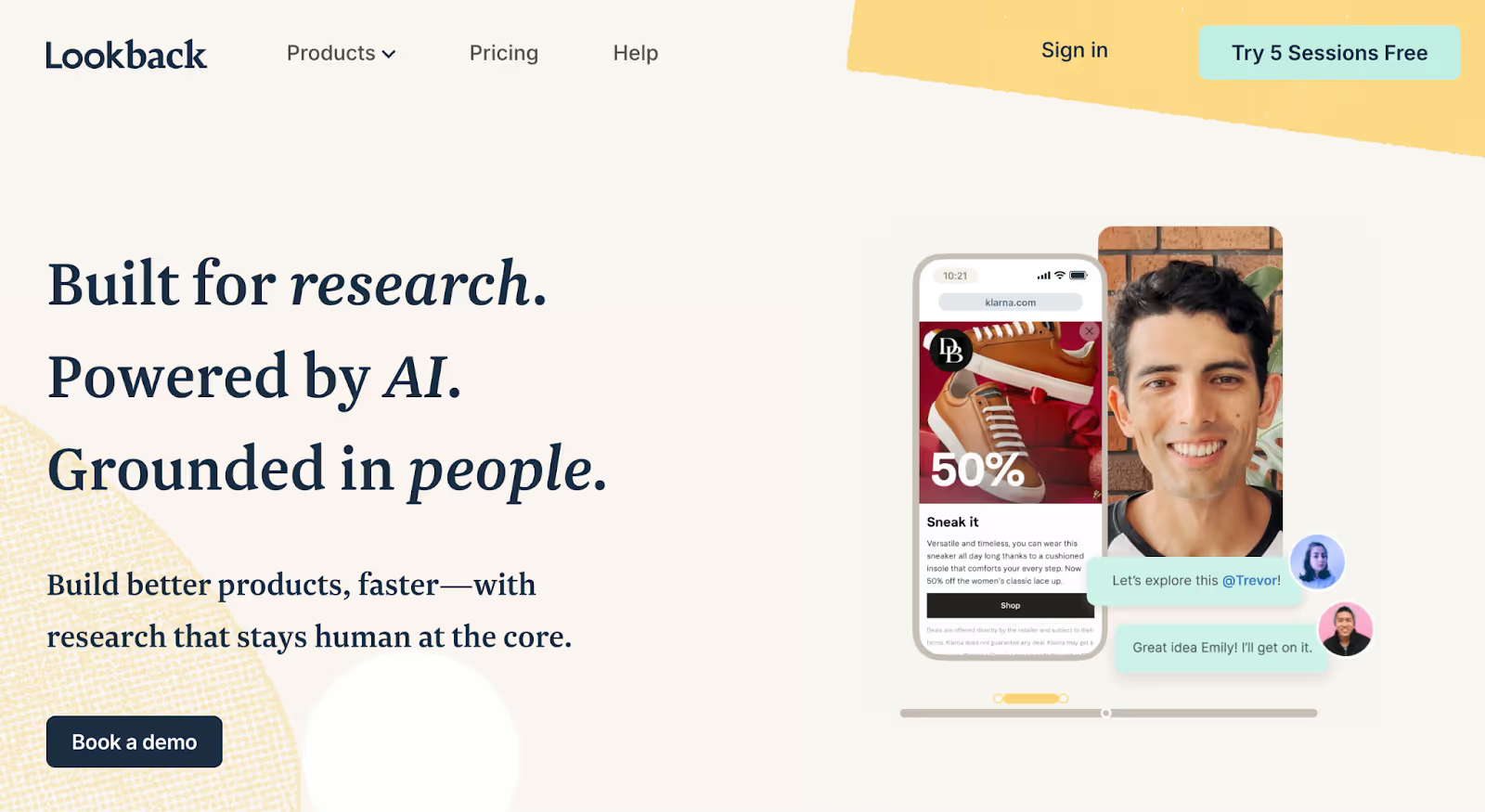
Lookback is a live research and usability testing platform designed for moderated interviews and remote observation. The platform provides tools for real-time video sessions, time-stamped note-taking, and backroom “observer” access so stakeholders can watch studies without interrupting participants.
Lookback offers monthly and annual subscriptions, with pricing that scales based on the number of sessions, researchers, and collaborators.
Top qualitative data analysis tools
After studies conclude, teams need to make sense of unstructured qualitative research data such as interview transcripts, notes, and videos. These tools facilitate this process through transcription, tagging, thematic coding, and visualization, which helps surface in-depth insights.
1. NVivo
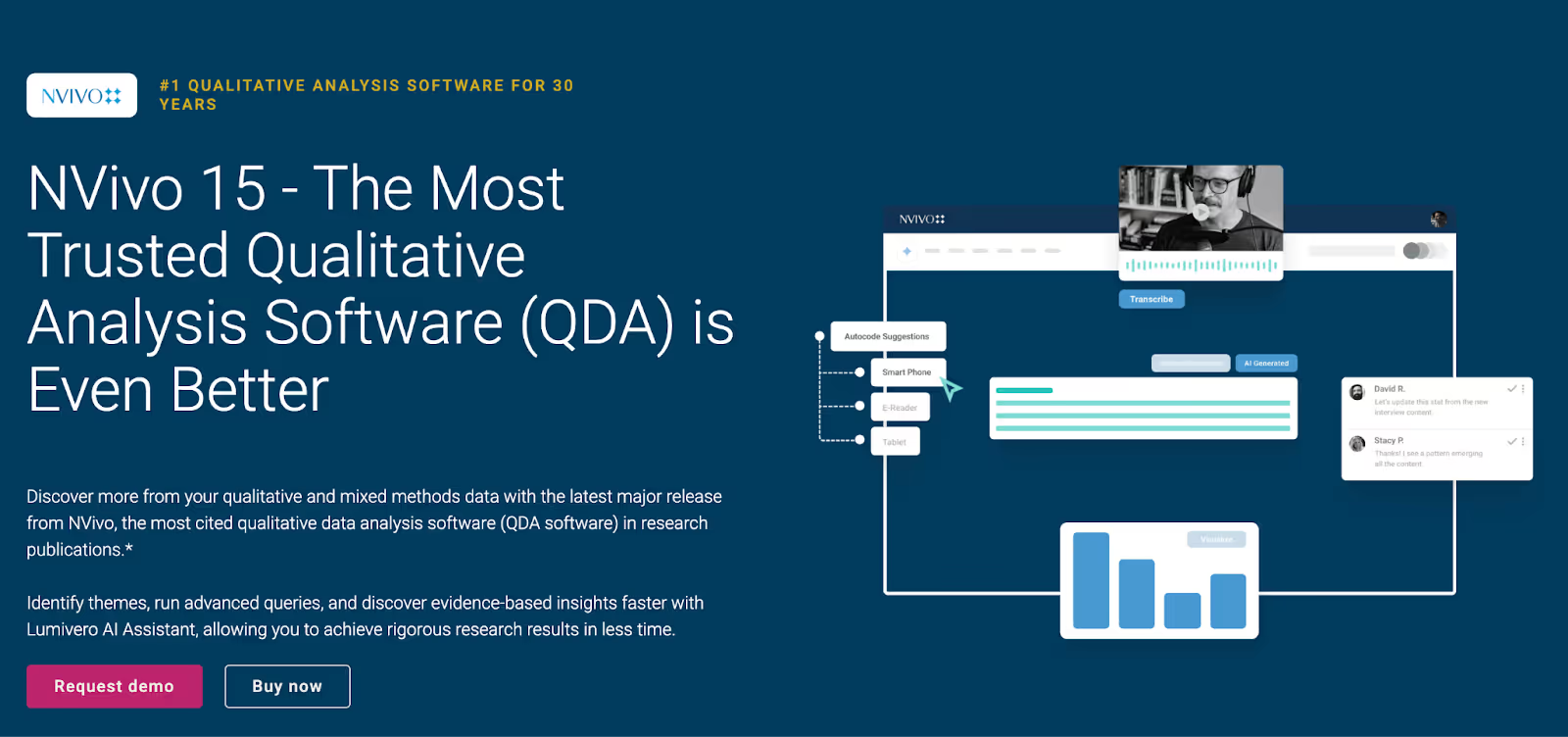
NVivo is a qualitative data analysis software, primarily used in academic, government, and enterprise research. The platform supports multiple functions, including content analysis, data annotation, and thematic analysis. Plus, it allows researchers to import large volumes of text, audio, video, and survey data to transcribe and categorize.
Owned by Lumivero, the tool is available at per-user pricing with discounts for students and institutions, plus higher-tier plans for teams and enterprise use.
2. MAXQDA
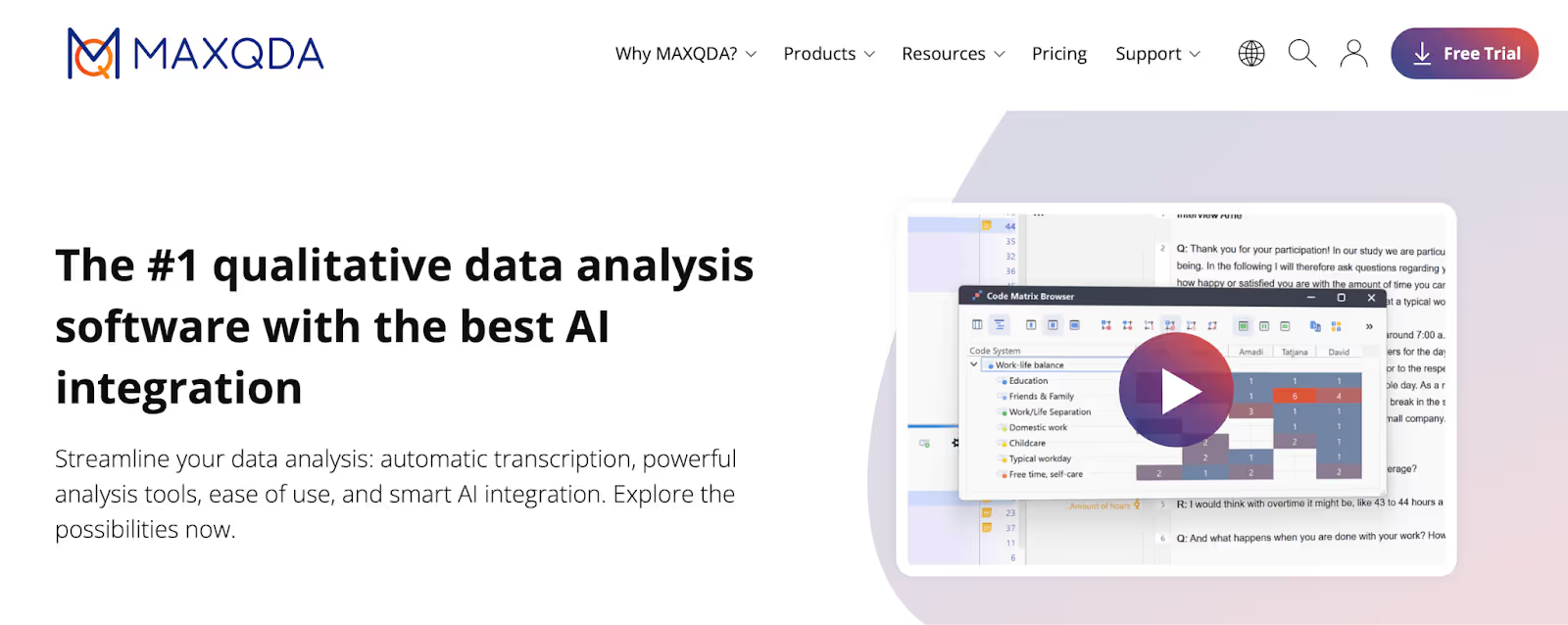
MAXQDA is a mixed-methods research and qualitative data analysis (QDA) platform with various tools for mapping themes and relationships. The QDA software supports text, audio, video, and image coding with data visualization capabilities.
MAXQDA provides varied pricing options based on requested features, team size, and research capacity. Higher-tier plans are available for larger enterprise teams.
3. ATLAS.ti
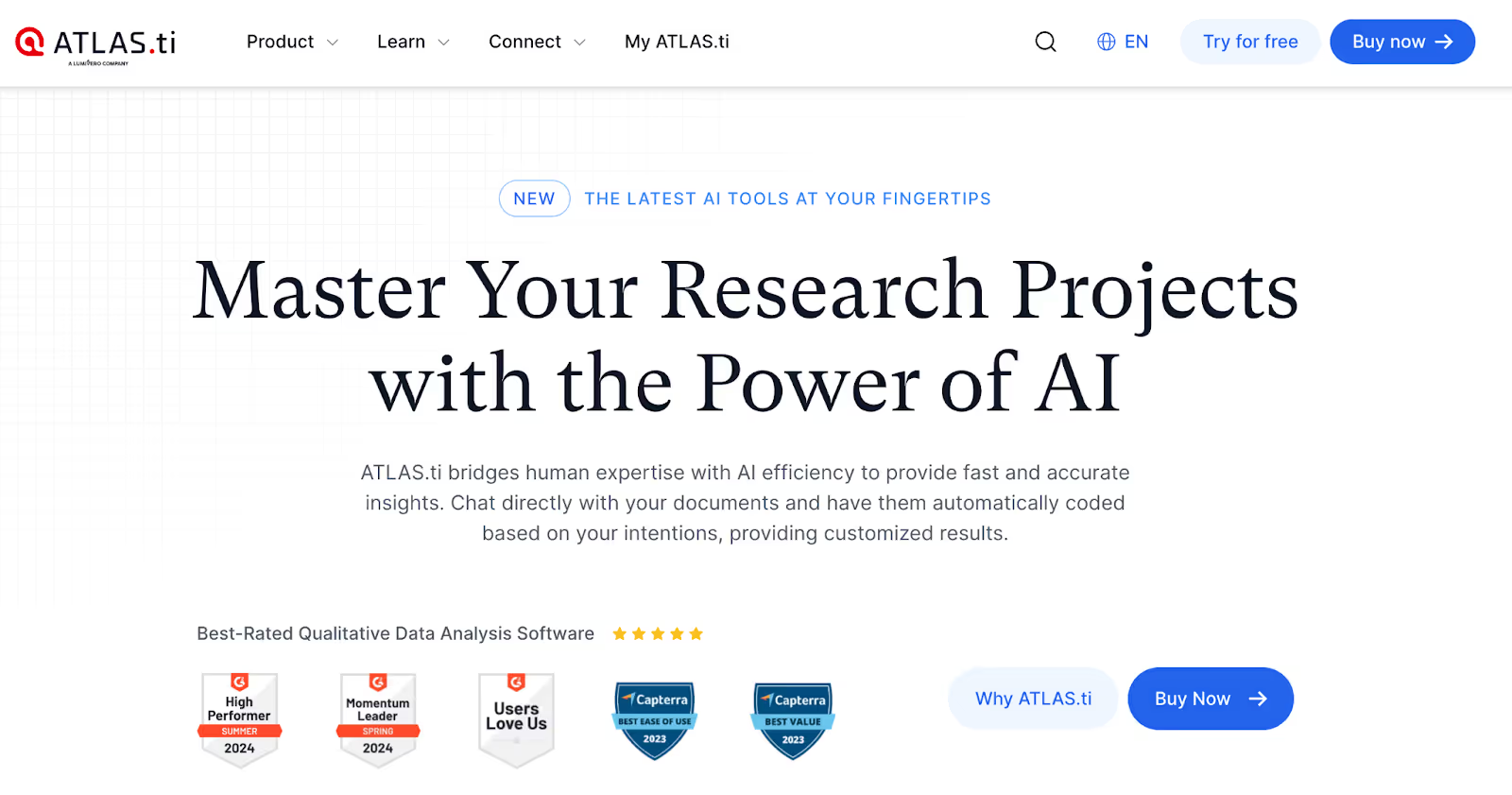
ATLAS.ti is a research platform for coding and analyzing qualitative research datasets with a user-friendly interface, visualization tools, and collaboration features for team members. Researchers can drag and drop codes across text, images, and multimedia sources, while AI-assisted transcription and auto-coding help speed up thematic and text analysis.
Subscriptions and perpetual licenses are offered for individuals, educators, and organizations, with both desktop and cloud-based options available.
4. Dedoose
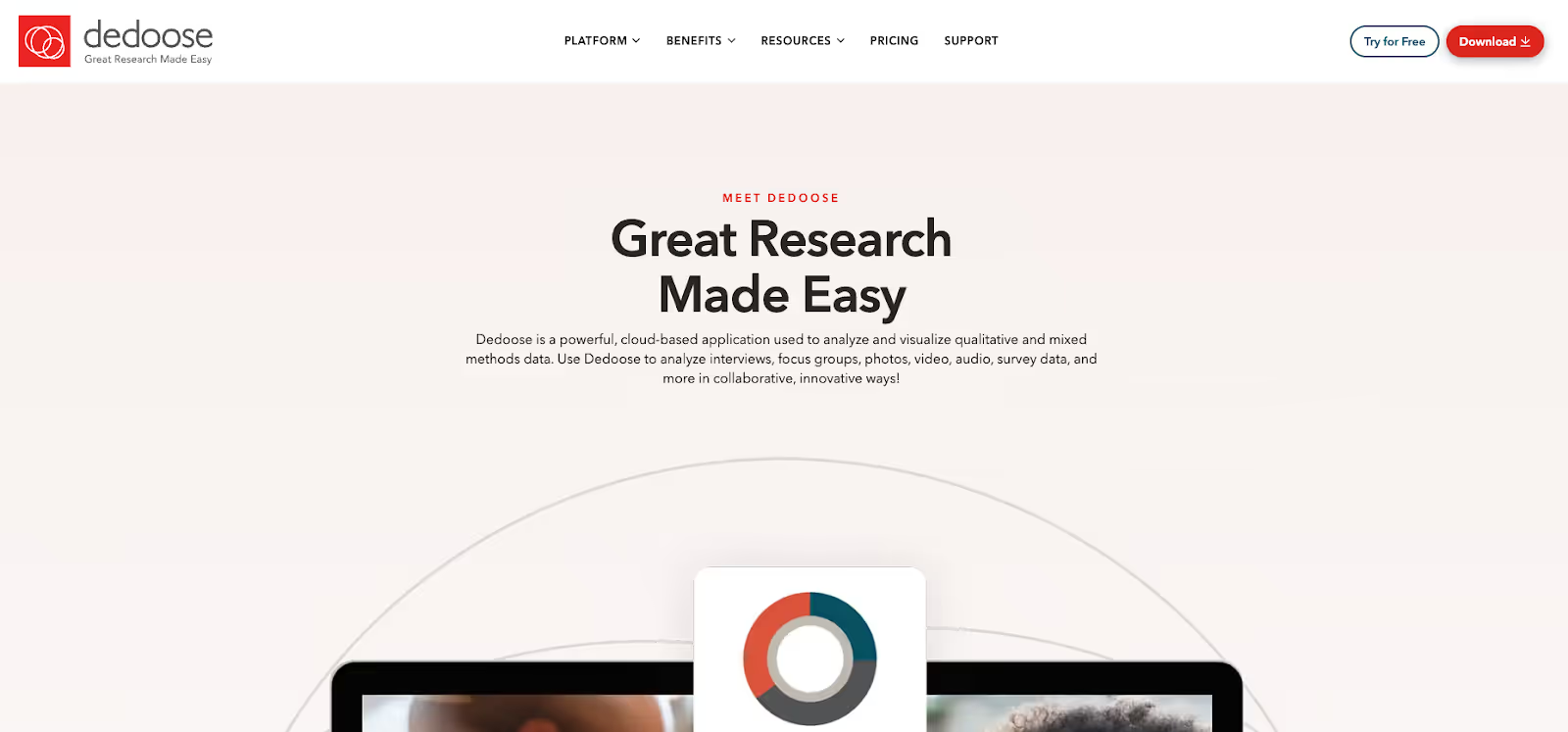
Dedoose is a cloud-based qualitative and mixed-methods research platform for teams that need to combine qualitative insights with quantitative context. The platform includes built-in sentiment analysis, interactive charts, and support for statistical analysis across mixed datasets.
Dedoose offers subscription pricing based on the total number of users and storage requirements.
Improve your qualitative research study outcomes with User Interviews
User Interviews takes the hassle out of qualitative research by combining participant recruitment, scheduling, incentives, and panel management into one platform.
Instead of switching back and forth between spreadsheets, emails, and other difficult-to-use tools, you get a single system built to help you recruit high-quality participants and keep every study on track.
Plus, our platform offers 20+ integrations with core tools like Zoom, Google Calendar, Outlook, and Salesforce, seamlessly fitting into your existing workflow.
With access to a vetted panel of over 6 million participants, automated scheduling and payments, and centralized participant history, you can run faster, more reliable studies that stakeholders will approve.
Ready to see how easy managing qualitative research can be? Schedule a demo with User Interviews today.